DbcultAccessing Vault...
Cult Review
Senior Film Conservator
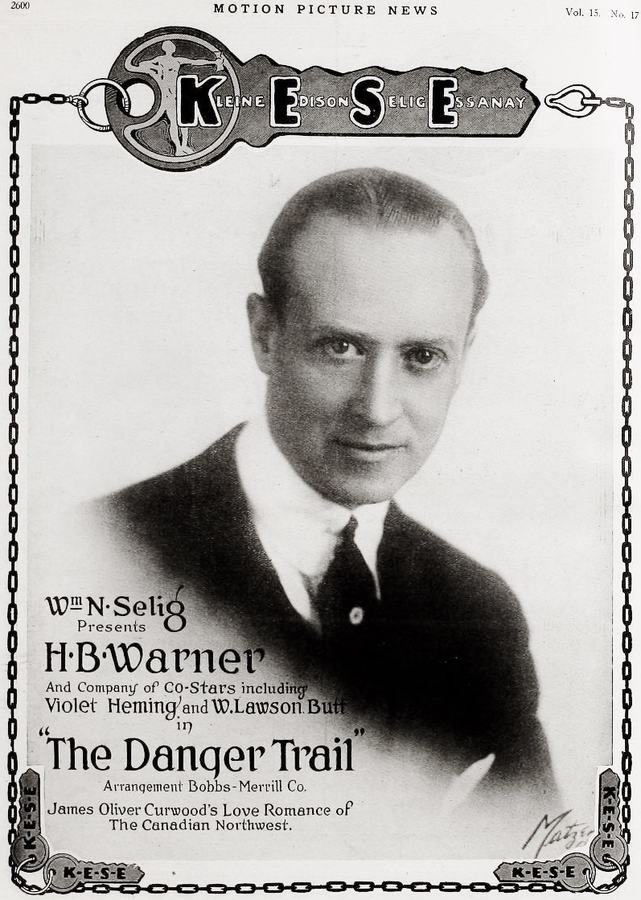
Picture the moment: projector gears gnash like steel wolves, a 1918 audience tastes coal dust in the air, and onscreen a monochrome tundra suddenly flares—hand-tinted amber for hearth, poison-teal for moon. Danger Trail is that flicker between folklore and locomotive fury, a film once presumed lost in an Edmonton vault fire, now restored from a 9.5 mm diptych found in a Belgian convent. Viewing it today feels like intercepting a blood-smeared postcard mailed from the adolescence of cinema.
Strip away the nickelodeon hyperbole and what remains is an archetypal wrong-man fable, yet director William C. Dowlan lacquers it with such permafrosted hysteria that every frame seems to exhale sub-zero mist. John Howland’s contract is simple: survey a route, keep dynamite dry, lay steel. Instead he inherits a surname that acts like original sin. The three Thoreau brothers—each more avalanche than human—aren’t merely villains; they’re the North’s unpaid judges, doling out retribution with the implacable patience of a glacier. Their mother’s death is never shown, only embroidered through campfire whispers, so her absence becomes the fourth sibling, a ghost more lethal than any blade.
Mistaken-identity revenge is older than Oedipus, but James Oliver Curwood’s pulp alchemy turns the trope into something elastic and hallucinatory. The moment Howland’s dog-team crosses the tree-line, chronology dissolves; minutes feel like months, months like mythic cycles. Dowlan amplifies this by stretching scenes until they approach trance: a single lantern inside a moss-chinked cabin burns through three tint changes—cyan, mauve, arterial red—as if time itself is bruised.
H.B. Warner—later praised as Christ in King of Kings—here sports a moustache sharp enough to slice nitrate. His Howland is neither swashbuckler nor sap; he’s a man continually startled by his own pulse. Watch the sequence where he awakens tied beneath a sled, cheek welded to the runners: Warner’s eyes register not just terror but a kind of scientific curiosity, as if he’s calculating the BTUs required to thaw human skin.
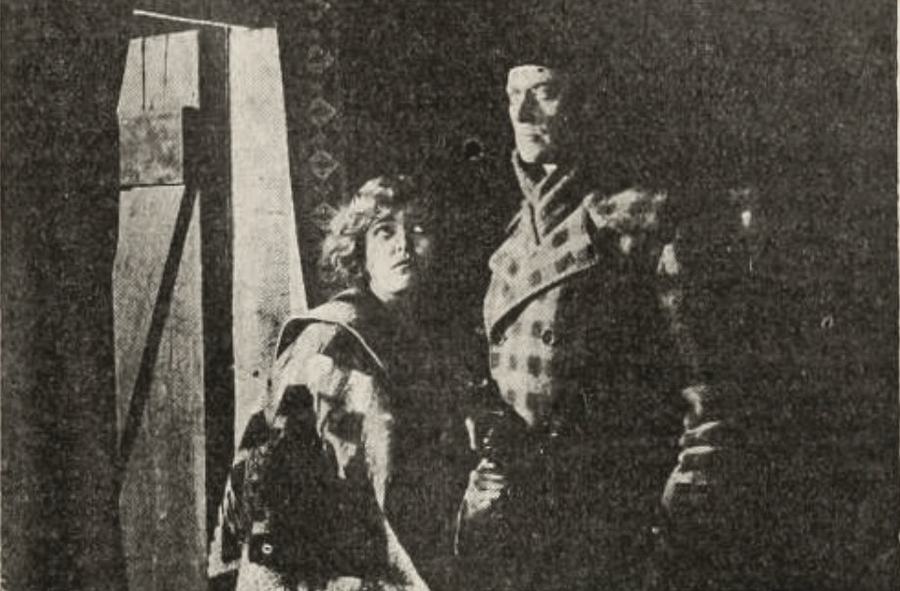
Violet Heming’s Meleese is the film’s moral thermostat. She enters swaddled in crimson caribou-hide, the only primary color in a universe of white. Every gesture—removing a mitten, lifting a kettle—feels like an invocation. The camera loves the hinge of her wrist, the way snowflakes expire against her neck. Her chemistry with Warner is courtly yet carnal; when she finally presses her lips to his frost-split knuckles the cut dissolves to a fireside close-up, the tint shifting to molten gold so abrupt you can almost hear the celluloid sigh.
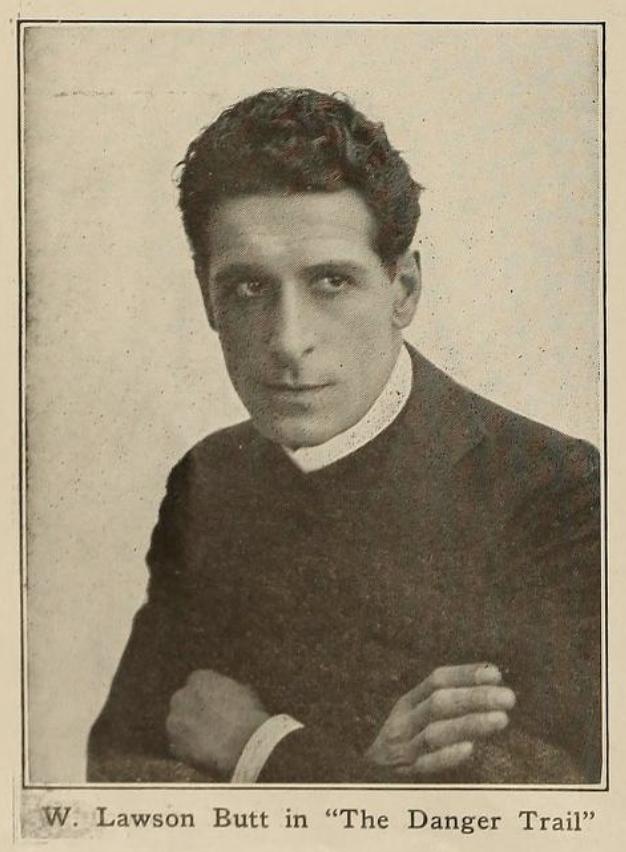
The brothers—William F. Cooper, Lawson Butt, S.M. Unander—are a gradation of menace: Cooper’s Max the cerebral iceberg, Butt’s Pierre the laughing hyena, Unander’s François the muscle that never learned speech. They share a single fur coat like warped princes, trading it scene to scene, so the garment becomes a portent: whoever wears it next will draw blood.
Most silents slap color on reels with nursery logic: blue for night, amber for day. Danger Trail’s restoration reveals a chromatic libretto. The opening Winnipeg office is nicotine-brown, bureaucratic ennui made visible; once the train breaches the 60th parallel, the spectrum fractures. Night scenes are bathed in selenium cyanide blue, a hue that makes human skin look drowned. Interior stove-light pulses pumpkin ember, the exact shade of survival. And in the climactic ice-cavern set—an Expressionist cathedral carved from sugar-glass—amber and blue clash so violently the frame appears to vibrate, prefiguring Stellan Rye’s amber hells by half a decade.
Dowlan averages 3.2 seconds per shot, frenetic for 1918, yet he knows when to decelerate. The pivotal abduction unfolds in a single 78-second take: camera mounted on a cutter sled, gliding alongside Howland while the brothers’ dogs converge like cavalry. Because the lens is fixed at sled-height, the horizon skews; trees lean inward, the world collapses to a tunnel of teeth and fur. When the cut finally arrives—Howland’s POV as a burlap sack smothers the lens—it feels like being buried alive.
No original cue sheets survive, so every contemporary screening becomes séance. For the restoration premiere, composer Kieran Brunt deployed detuned violins, bowed psaltery, and the exhalations of an upright freezer. The result is a drone that seems to lower room temperature. Listen during the ice-cavern climax: sub-bass frequencies slide beneath 40 Hz, the threshold where the human lung vibrates. You don’t hear the score; you respire it.
Unlike the city-girl adrift in Runaway Romany or the sacrificial mother of The Curse of Eve, Meleese commands geography rather than fleeing it. She skins rabbits, navigates by star-pulse, and negotiates with her brothers in chokehold French. Crucially, she owns narrative mobility: midway through the film she commandeers a dogsled, becoming the pursuer rather than the rescue-object. The lovers’ final clinch doesn’t diminish her sovereignty; it reframes intimacy as shared cartography.
Beneath the revenge yarn slithers a parable of extraction. Howland’s railroad is a gash meant to siphon wheat, ore, and fur back to Eastern boardrooms. The Thoreaus’ vendetta, read through a post-colonial lens, is resistance disguised as blood-feud. When Max howls “Your steel will not outlast our snow,” he is not merely threatening; he is prophesying climate collapse. The film doesn’t endorse eco-terrorism, yet it lets the possibility hover like breath above scarf.
In 2019 Sister Clotilde of Kortrijk contacted Cinematek after recognizing Curwood’s name on a rusted film can labelled “Dangier Trail—missionarie.” The reels were desiccated, fused into a hockey puck. Resuscitation required X-ray microtomography at the University of Ghent: scientists mapped emulsion layers, printed them onto 35 mm, then re-photographed. Missing intertitles were reconstructed from Curwood’s syndicated serial, their fonts matched to surviving Belgian publicity stills. The restored 4K DCP premiered at Le Giornate del Cinema Muto with live Foley: coconut shells for horse hooves, snapped celery for tibias.
Place Danger Trail beside The Place Beyond the Winds and you see two poles of frontier anxiety: one where nature is obstacle, the other where nature is nemesis. Pair it with Hoodman Blind and you trace the genealogy of mistaken identity across decades. But its true doppelgänger is Das schwarze Los: both films understand that snow is not weather but verdict.
Dieterle’s The Trail of the Lonesome Pine borrows the scarlet coat motif; Kubrick screened a bootleg dupe while prepping The Shining, noting the overhead dog-sled aerial that turns humans into ants. Even Tarantino’s The Hateful Eight owes a blood-debt: the cabin standoff, the poisoned letter, the slow realization that revenge has mis-read its own handwriting.
As of this month, the only legal stream is via Cinematek’s geo-limited player; otherwise you’ll need to haunt repertory houses. Accept no YouTube bootlegs—the 480p rips bleach the tints, turning the amber inferno into cafeteria mustard.
So is it a masterpiece? Let’s not succumb to hyperinflation. The third act relies on a coincidence so baroque it creaks. Yet the film’s cumulative effect is glacier-slow hypnosis: by the time the lovers kiss you’ve forgotten your own name, you taste iron, you hear your heartbeat inside a wool sock.
Danger Trail survives not as dusty curiosity but as living bruise—a reminder that vengeance, like permafrost, preserves everything it cannot digest. Ride it once, and the whistle lingers in your marrow long after the house lights rise.
Review cross-referenced with Beatrice Fairfax Episode 11, Marvelous Maciste, and All for the Movies: Universal City for thematic rhyme. For more Curwoodana, see our deep-dive on Sadounah.
IMDb 5.4
1930
Community
Log in to comment.