DbcultAccessing Vault...
Cult Review
Senior Film Conservator
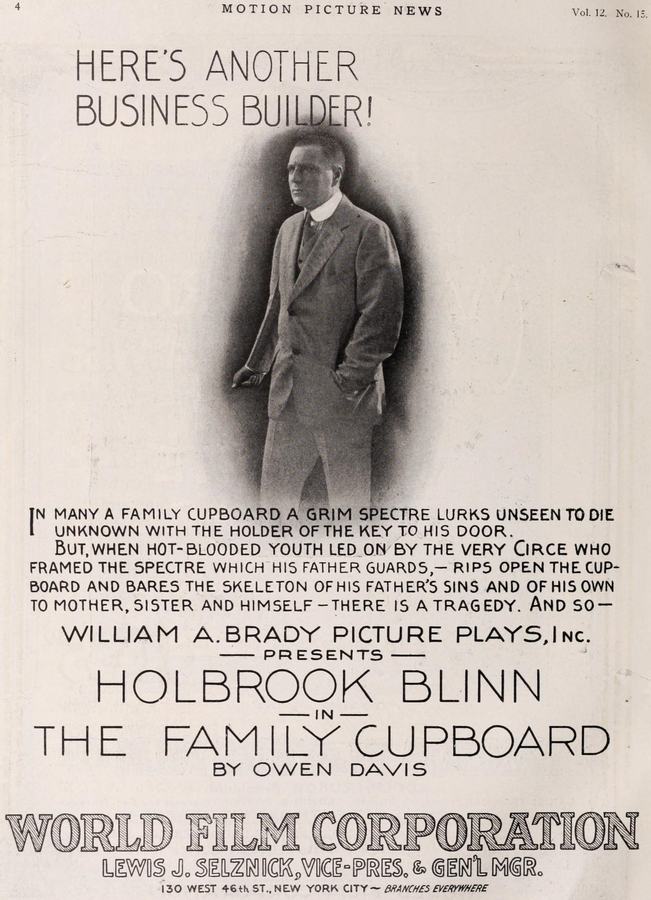
The Family Cupboard is not a film you merely watch; it is a film you overhear through transoms and keyholes, a night-whispered scandal that refuses to stay stuffed inside the chifforobe of 1915 propriety. Director Frank Hall Crane, working from Owen Davis’s ferociously candid play, treats the silent screen like lacework stretched across a wound: every thread of shadow, every glint of gilt edge, lets the pus of domestic hypocrisy leak through.
From the first iris-in on Charles Nelson’s cavernous library—its mahogany wainscoting as glossy as a coffin lid—the movie announces its preoccupation with spaces that devour people. Charles, played with stoic brittleness by Holbrook Blinn, is shot from low angles that make his starched collar resemble a protective rampart. The camera rarely dares to inch above his clavicle; when it does, we catch the tremor of a man who realizes that stocks and bonds are flimsy armor against emotional insolvency.
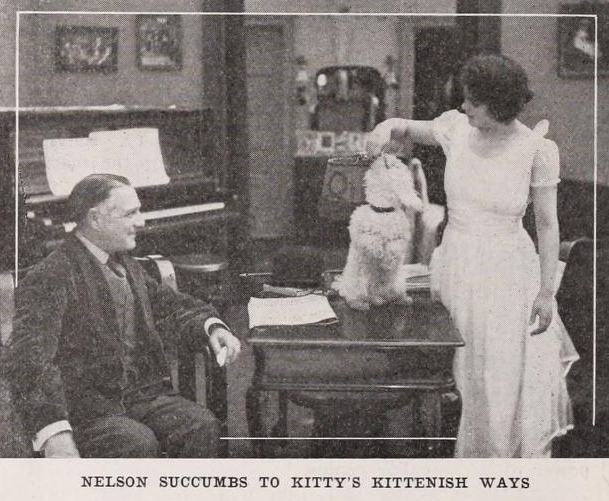
Contrasted with the cavernous mansion, the vaudeville house where Kitty Claire (Jessie Lewis) sings is all restless motion: a whirl of spangled legs, trombone slides, and footlights that paint the patrons’ faces the color of cheap apricots. Crane cross-cuts between these two amphitheaters—the house of capital and the house of carnival—until they feel like opposite magnetic poles, dragging Charles toward a liaison that is less erotic than existential. Kitty’s first close-up dissolves in like a daydream: a soft-focus halo around Lewis’s moon-pale face, but her eyes carry the hard glint of someone who has counted coins in the wings while the audience claps.
The screenplay scalds every sentimental assumption. Owen Davis, a playwright who delighted in flaying the middle class, refuses to turn Kitty into a gold-digger stereotype. Instead, she is a working woman negotiating survival within the narrow ledges available to her: the flirtation with Charles guarantees rent, yes, but also conversation, respect, a temporary respite from the pawing hands of stage-door johnnies. Notice the quiet moment when she slips off her stage shoe to massage a bunion; the gesture is more intimate than any kiss, and it quietly dismantles the Madonna/whore scaffolding on which so many melodramas totter.
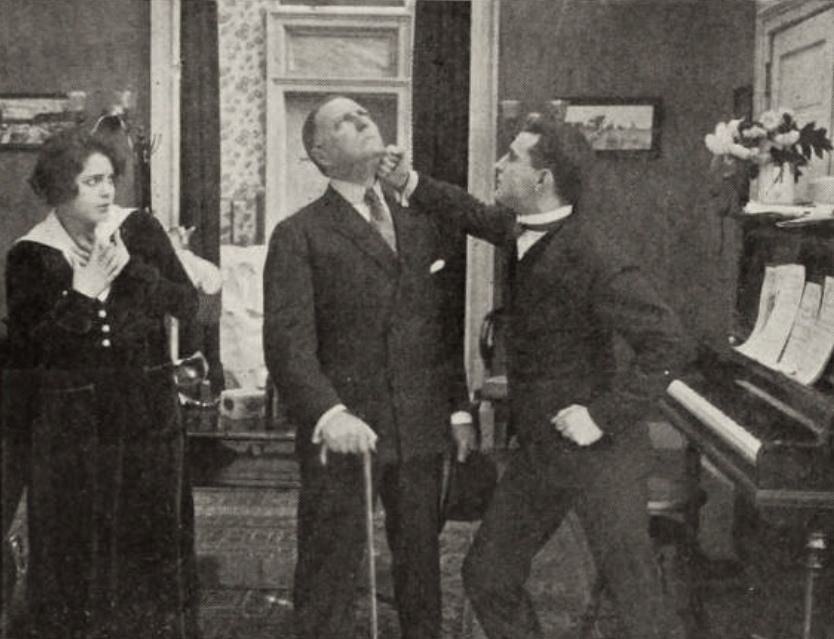
Johnny Hines’s Kenneth is introduced in a strobe of champagne bubbles and cuff-linked swagger, yet the performance modulates into something rawer once rumor metastasizes into certainty. The club scene—where a frenemy hisses that the old man is "keeping a little harem on 57th"—is staged in a single, unbroken medium shot that traps Kenneth amid polished brass and cigar haze. His hands fidget with a matchbook, tearing micro-slits that mirror the lacerations about to open in his family. The decision to play the confrontation drunk was a bold one for 1915; Hines allows his body to list slightly off-axis, so that when he barges home and snarls at Mary Burke (Grace Henderson), the camera seems to tilt with his moral vertigo.
What follows is a masterclass in domestic guerrilla warfare: Kenneth’s accusation, Charles’s curt admission, the mother (Frances Nelson) overhearing from the staircase landing like a eavesdropping duchess in a Jacobean tragedy. No intertitle cushions the blow—just a cut to the mother’s gloved hand spasming against the banister. The absence of text forces viewers to inhabit the shock in real time, a tactic that prefigures the cold marital massacres of Marionetten or the poisonous parlor silences in A Suspicious Wife.
Once the family splits, Crane’s visual scheme fragments too. The Nelson mansion is suddenly shot through doorway arches, half in velvety darkness, half in overexposed glare, as if light itself were suing for divorce. Meanwhile the Alpine Apartments—Charles’s new bachelor digs—become a study in vertical geometry: radiator grills like prison bars, elevator cages that clang shut like final judgments. Into this purgatory floats Kitty in a mink-collared coat, the fur looking borrowed, the collar turned up like a confession.
Kitty’s rejection of Kenneth’s marriage proposal is staged in a cramped dressing room papered with yellowing clippings. A cracked mirror multiplies her face into infinity, each shard reflecting a different shade of regret. When she points past the camera—"There is another man"—Crane cuts to Charles entering frame left, his silhouette eclipsing the light bulb so that his face becomes a void. The Oedipal implications detonate silently: the son undone by the very patriarch he sought to dethrone. Kenneth’s hand inches toward a pistol; the gesture feels less theatrical than inevitable, a rehearsal for the thousands of noir antiheroes who will later slouch through the 1940s.
Yet even here the film withholds easy condemnation. Charles steps forward, and instead of paternal wrath we get something closer to existential fatigue: the older man recognizes in his son’s trembling jaw his own lifelong terror of abandonment. The moment is underplayed—no melodramatic embrace, just two men sharing the same stale air of failure. It is a scene that glimmers with the same bruised empathy found in the closing reels of The Reform Candidate, though Cupboard reaches it without the balm of political redemption.
Alice, the daughter, could have been a footnote, but Estelle Mardo turns her into the film’s bruised moral gyroscope. In a late, wordless sequence she wanders the family townhouse, running her fingers over dust-coated photo frames. The camera records her POV: a childhood portrait with all faces intact, followed by a gaping void where a father has been physically scissored out. The splice in the photograph is a blunt but devastating metaphor for the erasure Charles feels, and Mardo plays the recognition with a quiver of the lower lip that never quite becomes a sob. When she finally seeks her father at the Alpine, her hat brim is pulled low, not for disguise but because shame, like gravity, bends posture.
Kitty, too, is granted a parting shot that complicates the vamp cliché. Packing her trunk in the final reel, she pauses over a pawn ticket for a locket. Instead of the expected tear, she gives a curt, almost defiant nod—an acknowledgment that affection, like jewelry, sometimes needs hocking to survive. The film’s refusal to punish her with death or penitence feels radical for 1915, a whisper of the New Woman that would soon roar through jazz-age cinema.
Surviving fragments suggest Crane and cinematographer Lucien Tainguy employed a restrained but deliberate palette: amber gaslight for the mansion interiors, colder blue gels for the Alpine hallways, and a diffused glow during vaudeville sequences that makes Kitty’s sequins shimmer like fish scales. Unfortunately, most of the original nitrate was junked in the 1932 Fox vault fire, so modern viewers piece the narrative together from a 1921 Associated Exhibitors reissue stored at the Cinémathèque de Toulouse. The extant 35 mm is scratched like a cat-scarred table leg, yet the abrasions oddly intensify the film’s aura of decay, as though the medium itself were mourning vanished families.
Compare this material fragility with the thematic robustness of Playing Dead, whose plot hinges on performative resurrection, or with the Neapolitan grit of Assunta Spina, where the streets themselves seem to bleed. Cupboard occupies a liminal register: it is both urbanely American and quietly cosmopolitan, less operatic than Italian contemporaries, more emotionally candid than most of its U.S. peers.
Owen Davis’s intertitles read like telegrams from a battlefield. When Kenneth snarls, "Everyone knows you keep her uptown," the sentence appears over a black field, the quotation marks jagged like shrapnel. Later, Charles’s laconic "Yes" to his wife’s query arrives alone on a title card, the word centered in a sea of white space—an abyss of admission. These textual caesuras train the viewer to listen to silence, to feel the reverberations of words that have detonated off-screen.
Even more daring is the sequence where Kitty rehearses a new song in an empty theater. We see her mouth move, arms flourish, but no intertitle supplies lyrics. The absence forces us to imagine the tune—perhaps something wistful in a minor key—thereby turning the audience into co-authors. It is a Brechtian device avant la lettre, reminding us that silent cinema was never truly mute; it simply shifted the soundtrack into the cranial auditorium of the viewer.
Strip away the horse-drawn carriages and whalebone corsets, and The Family Cupboard is a scalpel for today’s gig-economy dynasties where parents monetize every waking hour to bankroll Instagram lifestyles of offspring who treat them like ATMs with seasonal depression. The film’s central ache—emotional bankruptcy amid material surplus—feels ripped from a contemporary therapy blog. Swap vaudeville for TikTok fame, swap the Alpine Apartments for a Brooklyn loft, and the plot walks among us.
Gender politics, too, remain electric. Kitty’s pragmatism cuts across the virgin/whore binary that still hobbles mainstream storytelling. She is neither punished nor absolved; she simply continues, an approach echoed decades later in the ambiguous finales of The Sin of a Woman or At Bay. Meanwhile Alice’s dawning self-awareness heralds a lineage of daughters who refuse to inherit generational guilt—think of the steely nieces in Father and the Boys or the nomadic heroines in The Ventures of Marguerite.
Is the finale too tidy? Perhaps. The reconciling embrace in the hotel lobby, the mother’s sudden capacity to forgive, the son’s pistol never fired—all smack of the commercial imperative for uplift. Yet even here Crane inserts a sly poison pill: the family exits frame right while the camera lingers on the clerk’s bell, still vibrating from the recent chaos. The hum is faint but persistent, a reminder that wounds may knit yet scars keep singing.
What survives of The Family Cupboard is a shard of obsidian: black, glossy, jagged enough to draw blood nearly eleven decades after it first flickered across nickelodeon screens. Seek it out in archival uploads, squint through the scratches, and you will glimpse your own reflection—lonely provider, restless child, wanderer between mansion and garret—caught in the unforgiving mirror of silent film celluloid.
Like this review? Explore more rescued relics in our silents vault: The Burglar and the Lady, The Boundary Rider, Hampels Abenteuer, and the hallucinatory Alone with the Devil. For epic scope, revisit In the Days of the Thundering Herd or the danse-macabre Ivonne, la bella danzatrice.

IMDb 5.6
1918
Community
Log in to comment.