DbcultAccessing Vault...
Cult Review
Senior Film Conservator
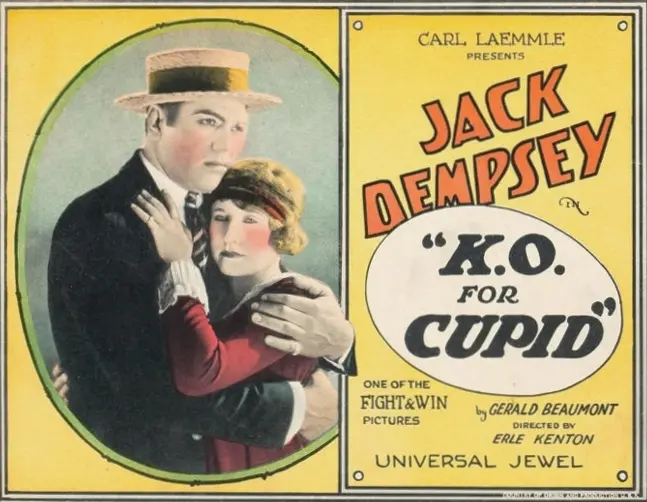
In the annals of silent cinema, where grand gestures and facial expressions carried the narrative weight, certain films stand out not just for their technical prowess but for their sheer human appeal. K.O. for Cupid, a cinematic endeavor that brought the formidable presence of boxing icon Jack Dempsey to the silver screen, is one such fascinating artifact. It's a film that leverages the public's adoration for its star while weaving a surprisingly intricate melodrama around themes of innocence, celebrity, and unwavering loyalty. More than just a vehicle for Dempsey, it offers a window into the narrative conventions and moral compass of its time, presenting a story that, despite its age, still resonates with a certain timeless charm.
The film introduces us to Tiger Jack O'Day, a character clearly modeled on Dempsey's own public persona – a champion of the people, humble despite his fame. His return to the orphanage that shaped his formative years isn't merely a plot device; it's a profound statement about roots and gratitude, a common trope in stories seeking to ground larger-than-life figures. This return sets the stage for the central romance, a tender, almost idyllic connection with Holly Malloy. Esther Ralston, portraying Holly, brings a luminous quality to the screen, embodying the pure-hearted ingenue with an effortless grace. Their mutual affection feels earned, a quiet understanding blooming amidst the clamor of Jack’s celebrity. It's a stark contrast to the calculated world of public relations and image-making that soon intrudes upon their burgeoning happiness.
Enter Queenie Millard, a Follies queen whose very name suggests a theatrical, almost predatory ambition. Margaret Quimby, in this role, crafts a compelling antagonist. Queenie isn't just a rival for Jack's affections; she represents a more cynical, transactional view of relationships, where human connection is secondary to career advancement. Her pursuit of Jack for "publicity purposes" is a thinly veiled attempt to hitch her star to his, a common enough practice in the burgeoning entertainment industry of the era. Her disfavor towards Jack's attention to Holly isn't born of genuine jealousy, but rather a cold, strategic assessment that Holly is an inconvenient obstacle. This dynamic immediately elevates the film beyond a simple love triangle; it becomes a clash between authentic sentiment and manufactured celebrity, a theme that remains remarkably relevant even today.
The narrative truly ignites when Queenie orchestrates her malicious scheme. At a welcome home party for Jack, she cunningly frames Holly, attempting to cast a shadow of disgrace upon her. This moment is a quintessential silent film melodrama, relying on visual cues and the audience's emotional investment in the innocent victim. What makes it compelling is Jack's response. Instead of succumbing to doubt, his inherent goodness and deep trust in Holly shine through. He sees past the veneer of deceit, a testament to the strength of their bond. This unwavering loyalty is a cornerstone of his character, making him not just a physical champion but a moral one. It also serves to highlight the stark contrast between his integrity and Queenie's duplicity. Such trials of fidelity were common in films of the period, often serving as a moral compass for audiences, much like in A Soul Enslaved or The Evil Eye (1920), where the protagonist's virtue is tested by external forces.
Following the attempted frame-up, Holly, perhaps out of shame or a desire to spare Jack further trouble, disappears. This trope of the vanishing heroine, often driven by a sense of self-sacrifice, adds another layer of emotional urgency to the plot. Jack's subsequent search for her forms a significant portion of the film's middle act, transforming the narrative from a romantic drama into a quest. It's during this quest that he encounters "Mike," a character whose role initially seems secondary but proves pivotal. The bond forged between Jack and "Mike" is one of mutual respect and, ultimately, life-saving intervention. The sequence where Jack rescues "Mike" from a careless engineer on a building job is a thrilling display of physical heroism, a moment designed to remind the audience of Dempsey's real-life strength and courage, even if the cinematic context is fictional. It's an action beat that breaks the melodramatic tension, injecting a dose of visceral excitement into the proceedings.
Jack Dempsey, the Manassa Mauler, was a colossal figure in American culture. His transition to the silver screen, while not always critically lauded, was a shrewd move by studios eager to capitalize on his immense popularity. In K.O. for Cupid, Dempsey's performance is, as expected, more about his magnetic presence than nuanced acting. He carries himself with a natural gravitas, his powerful physique conveying strength even in moments of tenderness. His expressions, though perhaps less varied than a seasoned actor, are earnest and convey sincerity, particularly in his scenes with Esther Ralston. One could argue that his very authenticity, his undeniable 'Jack Dempsey-ness,' is what makes his performance work. He embodies the strong, silent type, a protector whose actions speak louder than words. This approach contrasts sharply with the more theatrical performances often seen in silent films, such as those of Charlie Chaplin in The Essanay-Chaplin Revue of 1916, where exaggerated pantomime was the norm. Dempsey's strength lay in his inherent star power, a quality that transcended the need for conventional acting techniques.
Esther Ralston, on the other hand, is a revelation. Her portrayal of Holly Malloy is imbued with a delicate strength, a quiet resilience that makes her character deeply sympathetic. She navigates the emotional landscape of the film with considerable skill, conveying vulnerability without ever seeming weak. Her eyes, in particular, are incredibly expressive, capable of communicating hope, despair, and unwavering affection. Her chemistry with Dempsey, though understated, is palpable, lending credibility to their on-screen romance. She elevates the material, ensuring that Holly is more than just a damsel in distress, but a woman of substance. This kind of nuanced female performance was crucial in melodramas to give them emotional depth, similar to Ruth Roland's compelling presence in Ruth of the Rockies, where her character's agency was paramount.
Margaret Quimby's Queenie Millard is a deliciously wicked antagonist. Her calculated villainy, her cold ambition, and her theatrical flourishes provide the necessary dramatic tension. She's not just a foil for Holly; she's a representation of the corrupting influence of unchecked ambition and the superficiality of certain aspects of the entertainment world. Her performance is sharp and precise, making her schemes feel genuinely threatening. Louise Carver, though in a supporting role, adds another layer of authenticity to the orphanage setting, likely portraying a maternal figure whose warmth contrasts with Queenie's icy demeanor. The ensemble, under the guidance of writer Gerald Beaumont, crafts a world where clear moral lines are drawn, allowing the audience to fully invest in the triumph of good over ill intent.
Beyond the plot mechanics, K.O. for Cupid is a rich tapestry of themes prevalent in early 20th-century American cinema. The glorification of the humble hero, the triumph of true love over superficiality, and the importance of community (represented by the orphanage) are all central tenets. The film’s resolution, with Holly and Jack marrying and having children who join the orphanage family, is not just a happy ending; it’s a powerful endorsement of traditional values and the enduring cycle of care and compassion. It suggests that true success isn't just about individual achievement but about giving back and nurturing future generations. This communal spirit, where the individual’s success enriches the collective, echoes the hopeful tone often found in films like God's Law and Man's, which often explored moral rectitude and societal contribution.
While K.O. for Cupid might not be as widely discussed as some of its silent era contemporaries, its importance lies in its ability to capture a specific moment in cultural history. It’s a film that perfectly blends the allure of a real-life champion with a heartwarming, if somewhat predictable, narrative. Gerald Beaumont's script, while adhering to the melodramatic conventions of the time, ensures a clear trajectory of good versus evil, making the audience's emotional journey straightforward and satisfying. The visual storytelling, typical of the silent era, relies heavily on intertitles to convey dialogue and exposition, but the performances, particularly Ralston's, transcend these limitations, communicating much through gesture and expression.
Watching K.O. for Cupid today is not just an exercise in historical appreciation; it's an opportunity to connect with a simpler, yet potent, form of storytelling. It reminds us that fundamental human emotions – love, jealousy, loyalty, and redemption – are universal and timeless. The film’s earnestness, its lack of cynicism, and its clear moral compass offer a refreshing counterpoint to much of modern cinema. It’s a testament to the power of a good story, well told, even without the benefit of spoken dialogue or elaborate special effects. It's a sweet, impactful film that delivers exactly what it promises: a knockout for Cupid, ensuring that love, in the end, always wins.
The film’s portrayal of the orphanage, a place of both hardship and hope, adds a layer of social realism to the romantic fantasy. It grounds Jack's character in a relatable context, making his eventual success and generosity all the more meaningful. This attention to social backdrop was a hallmark of many films from the period, from lighthearted romps like Distilled Love, which often showed community interactions, to more serious dramas like Blandt Samfundets Fjender, which often grappled with societal ills. K.O. for Cupid balances these elements deftly, ensuring that the personal drama is always rooted in a believable world.
In conclusion, K.O. for Cupid is more than just a boxing champion's foray into acting; it is a charming and emotionally resonant silent film that encapsulates the values and narrative styles of its era. It's a delightful watch for anyone interested in classic cinema, the golden age of boxing, or simply a timeless tale of love conquering all. Its message of loyalty, integrity, and the enduring power of genuine affection continues to land a solid punch, decades after its initial release.
IMDb —
1924
Community
Log in to comment.