DbcultAccessing Vault...
Cult Review
Senior Film Conservator
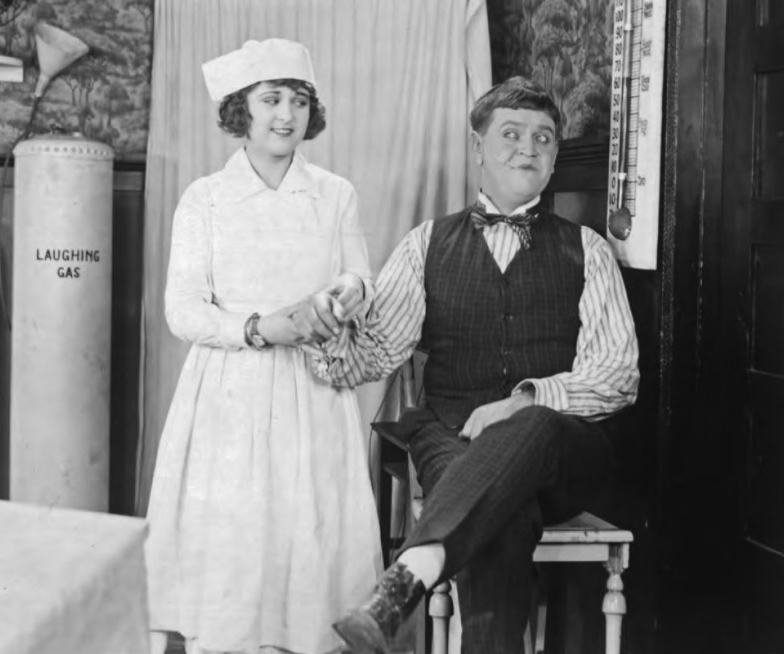
Laughter echoing through disinfected hallways—The Greenhorn weaponizes slapstick to autopsy the immigrant experience, stitching pratfall scars onto the Statue of Liberty’s hem.
Charles Reisner’s one-reel fever dream, shot in the ghost-light between 1918’s Spanish-flu hysteria and 1921’s Emergency Quota Act, feels like a bureaucratic purgatorio that Chaplin never dared enter. Lloyd Hamilton—rubber-legged, moon-faced, a walking ellipsis—incarnates every passport photo that blinks back suspicion. His character has no backstory because papers are all backstory; he is a suitcase without labels, a body to be processed, stamped, and possibly incinerated.
The quarantine station itself becomes protagonist: iron lungs wheeze like accordions, corridors stretch into Möbius strips, and every doorframe is a bureaucratic mouth that swallows hope and exhales forms in triplicate.
Reisner’s visual grammar predates Beckett’s claustrophobia: action revolves around absence—absence of exit, of logic, of dialogue. Intertitles arrive as truncated medical directives: "HOLD STILL," "REMOVE SHOES," "WAIT OVER THERE." The comedy is not situational but ontological; the immigrant’s crime is existence within a system calibrated for invisibility.
Enter the assassins: Laurel-Hardy harbingers of nativist terror. Their motives remain opaque—perhaps political, perhaps pure narrative cruelty—yet their incompetence mirrors officialdom’s own. When a dagger meant for our hero skewers a steam pipe, the hiss drowns out the scream; violence is sanitized into white noise, matching the state’s antiseptic brutality.
Kathleen Myers’ nurse floats through this septic carnival like an Art-nouveau angel armed with tongue depressors and moral clarity. Reisner frames her close-ups through circular mirrors—portals within portals—suggesting even tenderness is surveilled.
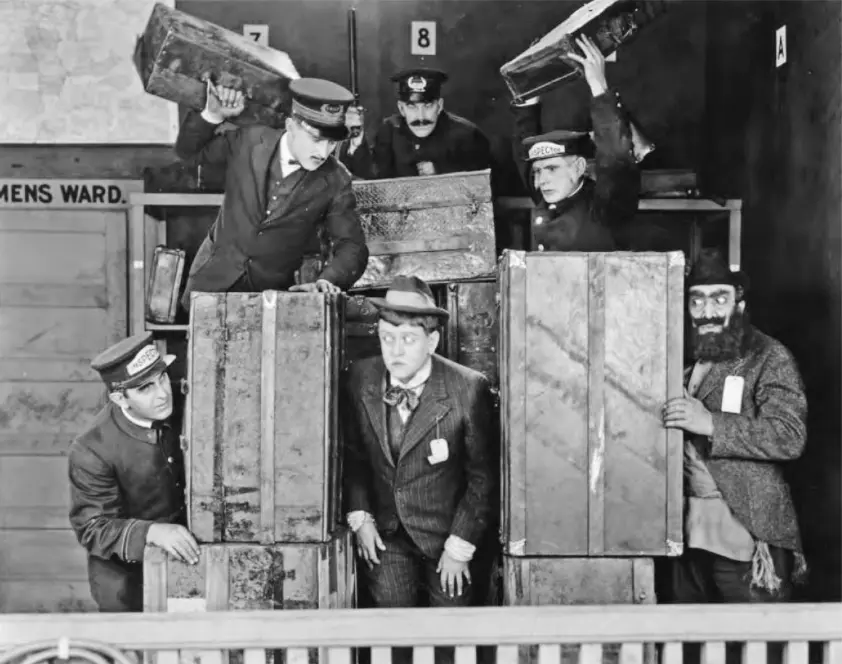
The courtship sequences invert Griffith’s melodrama: intimacy germinates not in meadows but on gurneys. A shared stethoscope becomes erotic tether; Hamilton’s ears perk, not to whispered vows, but to the lub-dub of her compassion. Their almost-kiss is interrupted by orderly forceps—an institutional chastity belt—yet the chemistry lingers in ether-saturated air.
Cinephiles will spot DNA shared with The Golem: both films conjure the immigrant as mythic clay, molded by external terrors. Where Paul Wegener’s monster lumbers with existential heft, Hamilton’s greenhorn ricochets with featherweight absurdity—same marginality, alternate register.
Comparative touchstones bloom: the Kafka-circus anticipates A Temporary Vagabond, while the bureaucratic ouroboros rivals Prudence on Broadway’s treadmill ambitions. Yet The Greenhorn’s temporal compression—barely twenty minutes—distills systemic dread into espresso-shot hysteria.
Reisner’s montage rhythm syncopates like jazz: every cut lands off-beat, denying viewer equilibrium. The effect is seasickness without ocean, a visual declaration that assimilation equals chronic imbalance.
Technical footnote: the nitrate deterioration visible on current prints—bubbling gutters, flared emulsion—accidentally enhances themes of contagion. Decay becomes collaborator, history’s smallpox scar.
Sound historians insist the film originally toured with live effects: kazoos for syringes, slide-whistles for exits, bass drum bomb blasts. Today’s silence amplifies dread; absence of acoustic cushioning traps us inside Hamilton’s skull, where tinnitus of anxiety rings eternal.
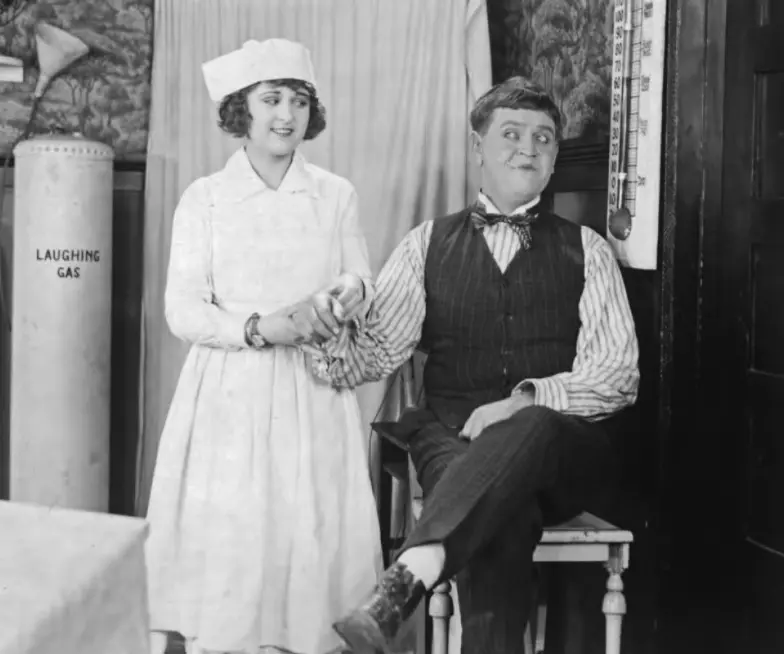
Gender critique: Myers’ nurse embodies sanctioned femininity—healer, mother, potential lover—yet her gaze wields diagnostic power. In one subversive insert, she holds X-ray plates up to light, revealing the greenhorn’s heart literally wearing stars-and-stripes; assimilation imaged as medical mutation.
The final gag—spoiler etiquette be damned—finds the hero strolling past the Statue of Liberty, only to be redirected into yet another line. Liberty herself becomes traffic cop, torch converted to bureaucratic baton. Punchline: freedom is procedural, not monumental.
Why resurrect this obscurity? Because its satire scalds post-1920s complacency. The quota gates slammed shut, Ellis Island ossified into nostalgia, yet The Greenhorn whispers: every golden door disguises a turnstile. Watch it beside The Avenging Conscience to witness guilt externalized versus institutionalized; pair with Robbery Under Arms for outlaw mobility versus state-fixed immobility.
Restoration status: only two incomplete prints survive—one at MoMA, splice-taped like Frankenstein veins; another in a Biograph vault, half-melted. Yet fragments pulse with enough voltage to rewire your assumptions about silent comedy. Call it Citizen Kane of paper cuts.
Hamilton’s legacy suffered eclipse under Keaton’s granite stoicism and Langdon’s infantile surrealism; still, his quarantine shuffle anticipates Jacques Tati’s geometric mime. Every shrug, every double-take, every gravity-defying stumble across wet corridors is a pixel in the genealogy of comic alienation.
Contemporary viewers, numbed by biometric borders and visa lotteries, may find The Greenhorn too real for comfort. Laughter catches in throat, becomes cough, becomes policy critique.
My critical verdict: nine feverish thermometers out of ten—deducting one for the lost final reel rumored to depict a marriage in a disinfected chapel, a scene perhaps too cynically perfect. Seek it in archival 16mm, project it against brick walls, let the celluloid ghosts mingle with current border anxieties. Watch the audience squirm, then laugh, then squirm again—an ouroboros worthy of the film’s own structure.
Final flourish: as the lights rise, you’ll notice exit signs glowing—green, inviting, perpetual. Yet somewhere in your cortex a bureaucrat clears throat, beckons you to wait over there. The quarantine never ended; it just changed costume. And that, dear cine-immigrant, is Reisner’s lingering prick of the needle—comedy as contagion, immunity not included.
IMDb —
1926
Community
Log in to comment.