DbcultAccessing Vault...
5.4/10
Senior Film Conservator
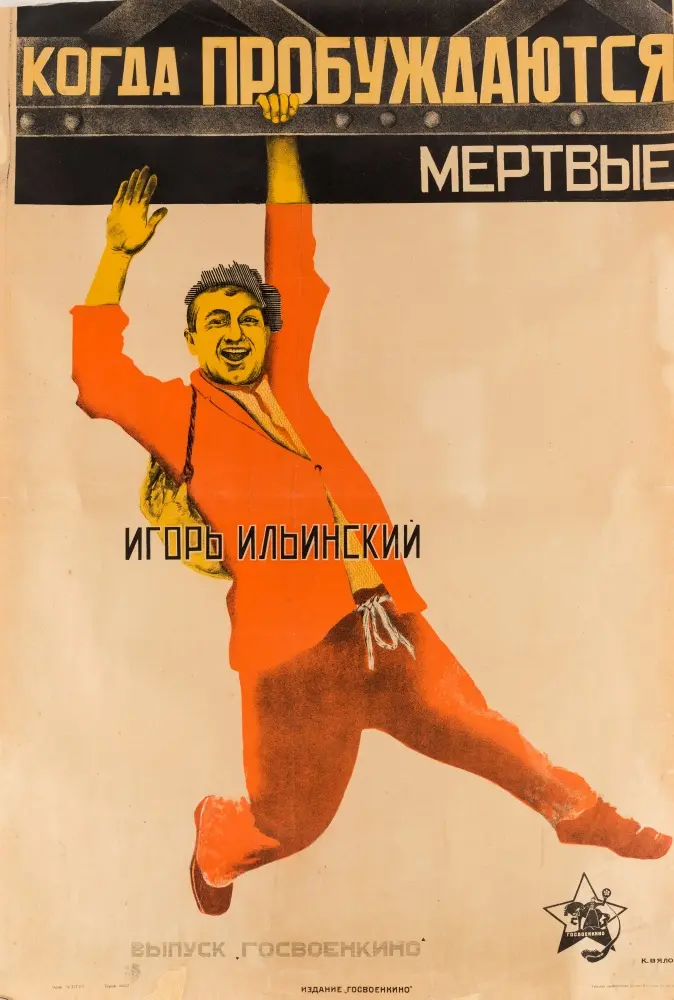
A definitive 5.4/10 rating for a film that redefined the boundaries of cult cinema. Kogda probuzhdayutsa mertvye remains a cornerstone of transgressive art.
Is 'Kogda probuzhdayutsa mertvye' worth watching today? Short answer: yes, but with significant caveats that demand a particular kind of viewer. This film is an atmospheric, slow-burn psychological horror for those who appreciate historical cinema and dread over jump scares, but it's emphatically not for audiences seeking modern genre conventions or fast-paced thrills.
This film works because of its unflinching commitment to building a pervasive sense of dread through psychological erosion rather than overt scares. It fails because its deliberate pacing and reliance on implied horror can feel glacially slow to contemporary viewers, potentially losing those without patience for its particular rhythm. You should watch it if you are a cinephile fascinated by the origins of horror, especially within early Soviet cinema, and if you appreciate a narrative that prioritizes atmosphere and character unraveling over explicit violence.
The plot of 'Kogda probuzhdayutsa mertvye' (When the Dead Awaken) is deceptively simple: a disturbance of an ancient burial ground unleashes spectral terror upon a remote village, drawing in a skeptical city investigator. Yet, the brilliance of Aleksey A. Dmitriev’s script lies in its meticulous, almost agonizingly slow unraveling of this premise. It’s less about what happens, and more about how the characters react to the creeping inevitability of the supernatural. The film doesn’t rush to reveal its monsters; instead, it allows the terror to seep into the very fabric of the landscape and the minds of its inhabitants.
Professor Dmitry Volkov, portrayed with a compelling blend of intellectual arrogance and eventual terror by Igor Ilyinsky, serves as our entry point into this world. His journey from staunch rationalist to a man haunted by the inexplicable is the film's emotional core. Dmitriev’s writing carefully plants seeds of doubt, not just for Volkov, but for the audience, blurring the lines between genuine spectral activity and the psychological toll of isolation and fear. The narrative consistently questions reality, making the viewer complicit in Volkov’s escalating paranoia.
The pacing is a double-edged sword. It is undeniably slow, a deliberate choice that allows the atmosphere to truly breathe and the psychological elements to fester. This isn’t a film built on sudden shocks, but on the gradual accumulation of unease. Think of it as a fog slowly rolling in, rather than a sudden storm. This allows moments, like the discovery of a child's toy left inexplicably on a freshly disturbed grave, to carry a weight that would be lost in a faster-paced film. It’s a masterclass in building dread through implication, a technique often forgotten in modern horror.
One particularly effective narrative device is the use of local folklore. The villagers' tales, initially dismissed as superstitious ramblings, gradually gain credibility as Volkov's scientific explanations crumble. This clash between ancient belief and modern skepticism is a recurring theme, and the film leans heavily into the idea that some truths lie beyond the grasp of empirical understanding. It’s a potent, enduring conflict that gives the film a timeless resonance, even if its setting feels firmly rooted in a specific historical context.
The strength of 'Kogda probuzhdayutsa mertvye' relies heavily on its ensemble, particularly the nuanced performance of Igor Ilyinsky as Professor Volkov. Ilyinsky, often known for his comedic roles, delivers a strikingly serious and layered portrayal here. His transformation from a confident, almost condescending intellectual to a man teetering on the brink of madness is utterly convincing. You feel his struggle, his internal conflict as his scientific worldview is systematically dismantled by forces he cannot comprehend. A specific moment that exemplifies this is a scene where Volkov, alone in his cabin, attempts to rationalize a sudden, inexplicable drop in temperature and the faint whisper of voices – his face, initially a mask of scientific detachment, slowly contorts into a grimace of fear and disbelief. It’s a subtle, powerful piece of acting that anchors the film’s psychological horror.
Vysotskij I., though perhaps in a less prominent role, brings a quiet intensity to his character, a local elder or guide who embodies the village's deep-seated connection to the land and its secrets. His performance is less about dialogue and more about presence; the knowing glances, the somber warnings, the resigned acceptance of the supernatural. He acts as a foil to Volkov, representing the ancient wisdom that the modern man initially scoffs at. The interplay between these two characters, particularly in their strained conversations about the 'unseen,' provides much of the film's dramatic tension.
Pyotr Repnin and Antonin Pankryshev, along with Nikolay Vashkevich, contribute to the tapestry of the terrified villagers. Their collective performance creates a palpable sense of community fear and desperation. They aren’t just background characters; their reactions, their hushed conversations, and their desperate pleas form the chorus of dread that surrounds Volkov. The terror isn't just experienced by the protagonist; it's a shared burden, a communal nightmare that makes the village itself feel like a character in the story. This collective fear is far more unsettling than any single monstrous reveal.
My one critique here, and it's a minor one given the film's era, is that some of the supporting performances can occasionally lean into theatricality that might feel dated to a contemporary audience. However, this never detracts significantly from the overall oppressive atmosphere. The core performances, especially Ilyinsky’s, elevate the material far beyond what a lesser cast might have achieved, cementing the film’s status as a compelling character study wrapped in a horror narrative.
The visual storytelling in 'Kogda probuzhdayutsa mertvye' is arguably its most potent weapon. The director, whose identity remains somewhat shrouded in the mists of time but whose vision is undeniably clear, utilizes the natural landscape of the Russian countryside to astonishing effect. The omnipresent fog, the skeletal trees, and the isolated, dilapidated village structures are not merely backdrops; they are active participants in generating the film’s pervasive sense of dread. Every frame feels heavy with atmosphere, contributing to a feeling of claustrophobia despite the expansive outdoor settings.
The cinematography, while likely constrained by the technology of its time, is remarkably artful. There's a stark, almost expressionistic quality to many shots. The use of deep shadows and high contrast creates a perpetual twilight, ensuring that even in daytime scenes, a sense of foreboding lingers. Consider the long, slow tracking shots through the village’s narrow, muddy paths, often culminating in a sudden, unsettling reveal of a disturbed grave or an empty window. This technique amplifies the feeling of being watched, of something unseen lurking just beyond the periphery of vision. It reminds me of the unsettling quietude found in films like The Mysteries of Myra, where the environment itself feels alive with malevolence.
The directorial choices regarding the portrayal of the supernatural are particularly astute. The film largely avoids explicit depictions of ghosts or ghouls. Instead, it relies on suggestion, on fleeting glimpses, on the unsettling manipulation of the environment. A door creaking open when no one is there, a sudden drop in temperature, the faint sound of weeping carried on the wind – these are the tools of terror. This restraint forces the audience to engage their own imaginations, making the horror far more personal and effective. It's a testament to the filmmakers' understanding that what is imagined is often far more terrifying than what is shown.
The tone is consistently somber, almost elegiac. There are no moments of levity, no breaks from the oppressive atmosphere. This unrelenting gloom might be off-putting for some, but for those who surrender to it, it creates a deeply immersive and unsettling experience. The film is a masterclass in creating a sense of inescapable doom, where the environment, the performances, and the narrative all conspire to pull the viewer into a suffocating embrace of terror. It works. But it’s flawed. The sometimes-choppy editing typical of early cinema can occasionally break the spell, but these are minor quibbles in an otherwise visually compelling and tonally consistent piece of horror filmmaking.
'Kogda probuzhdayutsa mertvye' exists as a fascinating artifact within the broader history of horror cinema, particularly within the Soviet context, where overt supernatural themes were often viewed with suspicion or relegated to allegorical interpretations. This film, whether intentionally or not, taps into deep-seated cultural fears and superstitions that predate official ideologies. It explores the enduring power of folklore and ancient beliefs against the backdrop of burgeoning scientific rationalism, a tension that was very much alive during the era of its creation.
One of the film's most compelling themes is the psychological impact of the unknown. It’s not just about ghosts; it’s about the human mind’s capacity to break when confronted with phenomena that defy logic. Professor Volkov’s deterioration is a microcosm of this struggle, representing the fragility of the human intellect when faced with the truly inexplicable. This makes the film feel remarkably modern in its psychological depth, predating many Western horror films that would later explore similar territory.
An unconventional observation is how the film subtly critiques the hubris of modernity. Volkov, with his city-bred skepticism, initially dismisses the villagers’ warnings, viewing them as uneducated and superstitious. The film, however, steadily proves the villagers right, suggesting that there are indeed forces and ancient truths that science, in its infancy or even its maturity, cannot fully grasp or control. This subversion of the 'enlightened' outsider trope is a surprisingly bold stance for its time, hinting at a reverence for ancestral wisdom often overlooked by progress.
The film also touches upon themes of grief and the lingering presence of the past. The disturbed burial ground isn't just a plot device; it symbolizes the idea that history, especially traumatic history, can never truly be buried. It will always find a way to resurface, to haunt the present. This gives the supernatural elements a deeper, more resonant meaning, transforming the ghosts into manifestations of unaddressed sorrow and forgotten injustices.
Yes, for a specific audience, this film is absolutely worth your time.
If you are a student of early cinema, particularly horror, you will find immense value here.
It's a masterclass in building atmosphere without cheap scares.
However, if you demand fast-paced plots and explicit horror, you will likely be disappointed.
This film requires patience and an appreciation for historical context.
It serves as a crucial example of psychological dread from an often-overlooked cinematic tradition.
'Kogda probuzhdayutsa mertvye' is not an easy film to recommend to a broad audience, but for those with a specific appetite for historical, atmospheric, and deeply psychological horror, it is an absolute revelation. It stands as a testament to the power of suggestion and the enduring terror of the unseen. This is a film that demands your patience, rewards your attention, and lingers in the mind long after the credits roll. It’s a chilling, thought-provoking piece that, despite its age and narrative slowness, offers a potent and unique cinematic experience. It is flawed, undeniably, but its strengths in atmosphere and performance make it a compelling, if niche, viewing. Essential for genre historians and those who cherish dread over gore.
IMDb 6
1930
Community
Log in to comment.