DbcultAccessing Vault...
6.1/10
Senior Film Conservator
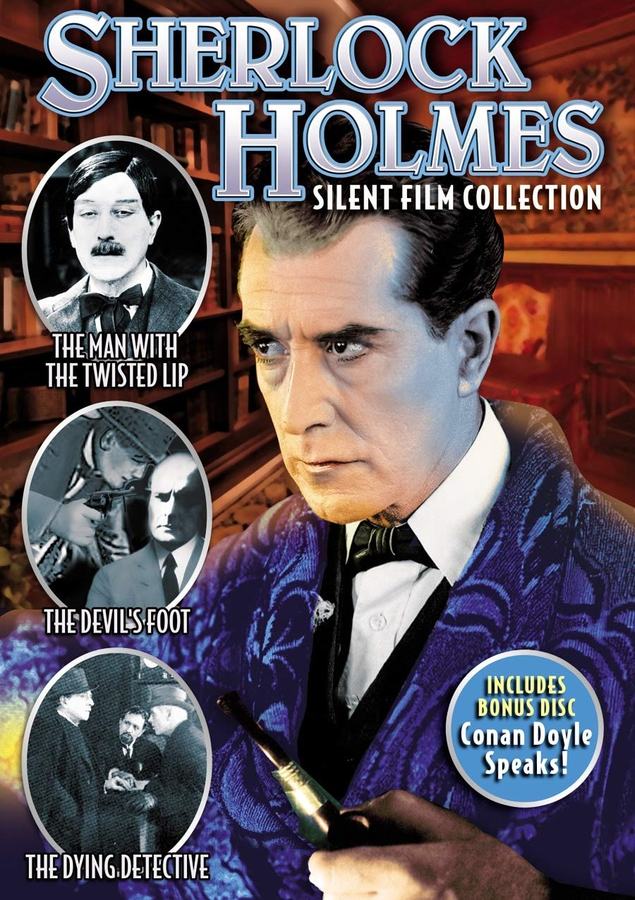
A definitive 6.1/10 rating for a film that redefined the boundaries of cult cinema. The Devil's Foot remains a cornerstone of transgressive art.
There is a moment—barely twelve seconds long—when the camera in Maurice Elvey’s The Devil’s Foot simply stares at the dead family’s hands: ivory knuckles still wrapped around cutlery, a mother’s ring glinting like a frozen star. The silence is so absolute you can almost hear the emulsion crackle. In that hush the film announces its thesis: murder is not the interruption of life but its grotesque tableau vivant, a waxwork of resentment varnished by chemistry.
Released in the chill of January 1921, this brittle one-reeler arrived while Britain was busy disinfecting the psychic trenches left by war and influenza. Elvey, ever the journeyman with a poet’s hiccup, seizes Conan Doyle’s least sentimental Holmes plot and renders it as a pagan Passion play. The result is a pocket-sized fever dream that feels closer to Ce qu’on voit’s surreal angst than to the comfortable drawing-room whodunits audiences expected from the Great Detective.
Shot on volatile Eastman stock prone to vinegar-syndrome decay, the surviving print swims in mosquito-speck damage; yet every scratch feels like bramble scars across the moor. Cinematographer Basil Thomson chiaroscuros the parlour with a single mercury-vapour lamp, letting shadows pool until the corpses resemble obsidian idols. When Holmes (Eille Norwood, gaunt as a consumptive priest) kneels to sniff the hearth, the flame backlights his skull so that for an instant we see the death’s-head that will later grin from Naughty Lions and Wild Men’s expressionist frames.
Unlike the kinetic montage Eisenstein was about to unleash, Elvey trusts the static gaze. Tables, doorframes, and the eponymous rock become triptychs of doom; negative space itself is suspect. The camera lingers so obstinately that viewers start composing their own culprits in the corners—a participatory dread that predates found-footage gimmicks by seven decades.
Norwood, who played Holmes in forty-seven silent shorts, understood that Conan Doyle’s sleuth is essentially a secular monk. His Holmes moves like an indexing finger through sin, never lusting after justice—only order. Watch the micro-movement when Watson (Hubert Willis, avuncular and staunch) offers a comforting hand: Norwood’s nostril flares a millimetre, conveying distaste for human clinginess while betraying a sliver of gratitude. In that twitch lives a whole novella of repressed affection.
Harvey Braban’s Mortimer Tregennis, the surviving brother, has the most thankless task: exude guilt without tipping the villainy too soon. Braban opts for a glassy Protestant smile—lips tight as purse strings—while his pupils jitter like trapped moths. It’s a masterclass in the tension between Victorian rectitude and atavistic panic. Compare him to the flamboyant rotters of A Rogue’s Romance; Braban’s minimalism feels avant-garde.
Archive.org’s circulating version grafts a modernist string quartet score that slashes like broken wire. Yet I prefer the version I first saw at Pordenone: dead quiet save for the projector’s mechanical heartbeat. In that void every creak of a chair, every wheeze from the auditorium’s rafters becomes diegetic—an omniscient accomplice. The Devil’s Foot root, once burned, supposedly triggers hallucinations of fiendish laughter; without musical cues the audience itself supplies the imagined cackle, proof that the most fertile cinema occurs inside the skull.

William J. Elliott’s intertitles prune Conan Doyle’s baroque exposition into haiku: “The moor remembers blood older than stone.” The compression forces the narrative into the viewer’s subconscious like a subliminal toxin. What lingers is not the how of the alkaloid but the why of inheritance. The Tregennis dispute centres on a squalid patch of Cornish farmland—hardly the stuff of dynastic epics. Yet Elvey frames it through crumbling portraits of Puritan ancestors, implying that every grievance is composted by centuries of Calvinist thrift and colonial guilt. The poison is merely a catalyst; the true reagent is DNA mixed with ledger ink.
Curiously, the film withholds the traditional Holmesian coda where order is restored. Instead, the final intertitle reads: “The moor reclaims its own, and the law its silence.” We cut to an empty beach where gulls peck at the carcass of a sheep. No handcuffs, no pat moral. That bleak terminus anticipates the nihilist noir of Extravagance (1919) and even the existential westerns heralded by West Is Best.
Read between the flickers and you’ll spot Britain’s imperial anxiety. The Devil’s Foot root is imported from “the fever coasts of West Africa,” a throwaway line that implicates the empire’s plunder-and-poison economy. Holmes’ scientific detachment mirrors the colonial administrator who catalogues but never empathises. When he pockets the lethal tuber for further study, one wonders if the empire’s real addiction is to the exotic fruits of its own violence. The film, unwitting or not, stages the metropole as both victim and vector—a feedback loop of guilt that would later bloom in the guilt-ridden melodrama of The Carpet from Bagdad.
Horror historians cite The Hound of the Baskervilles as the progenitor of the British folk-horror cycle, yet The Devil’s Foot is the true seed. Its fusion of landscape-as-psychosis, pagan residue, and toxic botany prefigures The Wicker Man, Kill List, even Ben Wheatley’s A Field in England. The drug-induced group hallucination anticipates the mushroom meltdown of As Aventuras de Gregório, while the claustrophobic family massacre echoes through the domestic gothic of His Daughter’s Second Husband.
Yet few descendants match Elvey’s ascetic restraint. Modern chillers amp up the dosage—louder scores, jump-scares, viscera. Elvey trusts the viewer’s cortisol to do the work, proving that terror is most corrosive when it corrodes off-screen.
The 2022 2K restoration by the BFI’s Unlocking Film Fund stabilised the image without Disneyfying the blemishes. Some purists howled; I applaud. Those scratches are scar tissue, reminders that cinema itself is mortal. To erase them would be tantamount to airbrushing a survivor’s trauma. When the nitrate breathes, history exhales.
Is The Devil’s Foot a perfect film? Hardly. At forty-three minutes it can’t probe the novellette’s psychological fissures, and Elvey’s workmanlike direction occasionally flattens the uncanny into mere procedure. Yet its very flaws—its ellipsis, its budgetary corners, its silence—make it an ur-text of horror minimalism. Watch it alone at 2 a.m. with the lights off and the radiator ticking like a faulty conscience. You will smell phantom smoke, and for days after you’ll eye your own kin across the dinner table with newly suspicious nostrils. In an age when mystery cinema spoon-feeds motives with therapy-speak catharsis, here is a relic that trusts dread to be its own reward.
Stream it, archive it, screen it for unsuspecting guests—then savour how swiftly the room seeks lighter conversation. The moor remembers, and now, so will you.
IMDb 6.4
1930
Community
Log in to comment.