DbcultAccessing Vault...
5.9/10
Senior Film Conservator

A definitive 5.9/10 rating for a film that redefined the boundaries of cult cinema. Komunaris chibukhi remains a cornerstone of transgressive art.
Alright, so you’ve stumbled upon Komunaris chibukhi. Is it worth watching today? For a certain kind of film enthusiast, absolutely. If you're into early Soviet cinema, silent film history, or just genuinely curious about how a huge historical event like the Paris Commune was framed by its ideological successors, you’ll find plenty to chew on. This one is for the film archaeologists and history buffs. Others? Folks looking for quick thrills or modern pacing will probably find it a bit of a slog. It’s got a very particular rhythm.
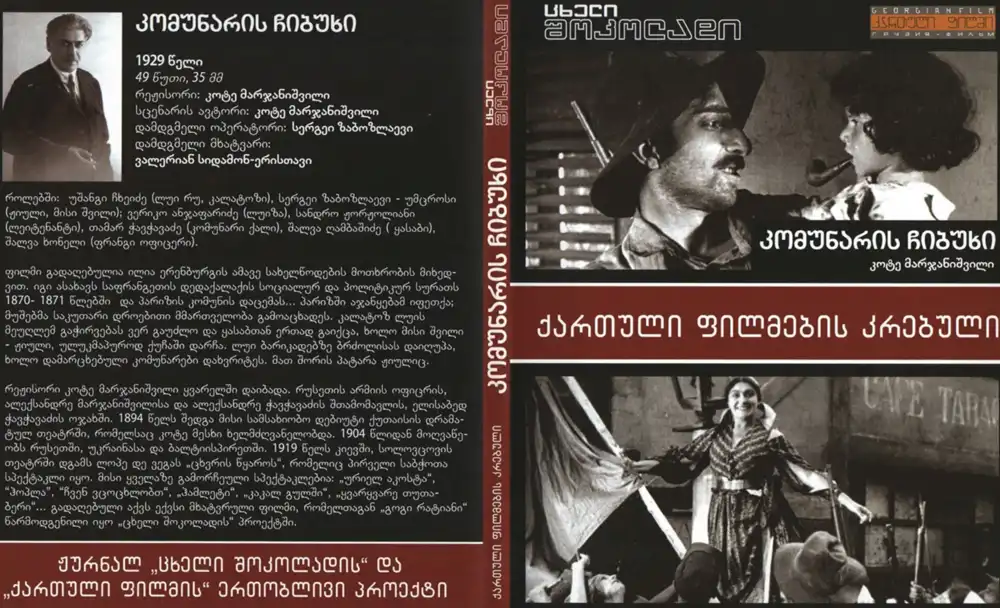
The film, which literally translates to something like 'The Communist's Pipe' or 'Flute' – the word 'chibukhi' is kinda fun and ambiguous – plunges us straight into 1871 Paris. The working class has risen, and for a short, intense time, they're in charge. It’s all about the idealism, the struggle, and the eventual, tragic fall of this experiment in self-governance. Think big ideas, not subtle character studies. ✊
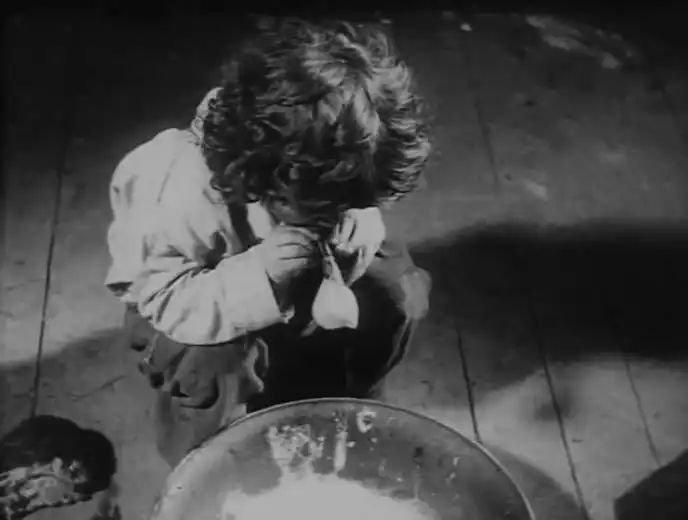
What really sticks with you is the sheer *energy* in some of the crowd scenes. You can almost feel the collective breath of the extras, even if the camera work sometimes feels a little stiff. There’s a moment where a woman, played by Veriko Anjaparidze, addresses the assembled masses, and her gestures are so large, so theatrical. It’s not 'naturalistic' acting by today's standards, not even close, but it’s incredibly effective for getting across the emotional weight of the moment. She just *commands* the frame.
Then there’s the use of faces. They linger on the faces a lot. One shot, I remember, is of an old man, perhaps a cobbler, just staring out at the city during a lull. His eyes, even through the grain and age of the print, carry so much exhaustion and hope. It's easy to overlook but it’s those little things that make you feel like you're really there, somehow.
The pacing is… well, it’s not exactly a race against time. Some scenes hold for what feels like an eternity. Like the one where they’re debating in the city hall. The back-and-forth isn’t fast, it’s deliberate. You can almost hear the *weight* of their decisions. It’s not boring, though, not really. It just asks you to slow down.
And the visuals, for its time, are pretty ambitious. There are these wide shots of Paris streets, surprisingly complex. You can almost smell the cobblestones. There’s a scene early on with banners being unfurled, and the way the light catches the fabric… it’s a simple image, but it really pops. You see the careful staging that went into it.
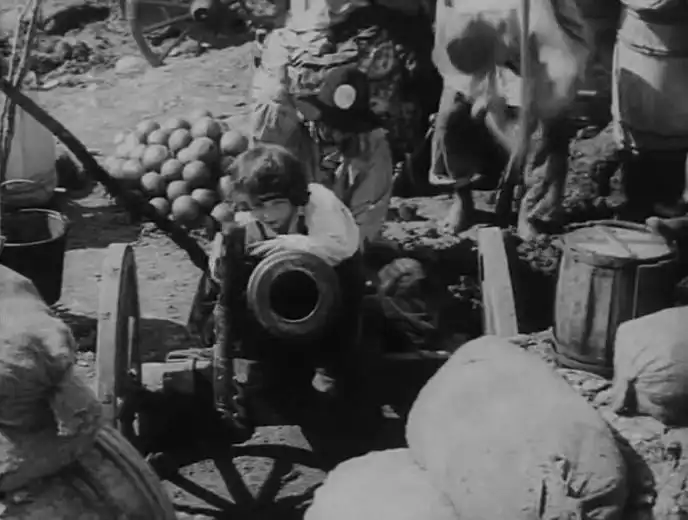
One specific detail that caught my eye: there's this recurring motif of a simple wooden pipe, or maybe a flute, I couldn't quite tell. Someone is always holding it, or it’s left on a table. It felt like a deliberate symbol, maybe for the working man’s simple pleasures or perhaps the 'voice' of the people. It’s never really explained, and that’s fine. It just kinda *is* there.
The film doesn't shy away from the brutality, either. The ending, of course, is tough. You can feel the sense of inevitability building, even if you don't know the history. There’s a sequence of soldiers marching through the streets after the Commune falls, and the way the camera tracks them… it’s chilling. The silence here speaks volumes, probably more than any dialogue could.
Sometimes the message gets a bit heavy-handed, sure. It’s a Soviet film about a workers’ uprising, so you expect a certain amount of… cheerleading for the cause. But even then, there’s a raw, almost desperate honesty to it. It’s not trying to be subtle about its politics, and that’s part of its charm, in a weird way. It knows what it wants to say and it just *goes for it*.
You can tell it was made with a lot of passion. Not every shot is perfect, some cuts feel a little abrupt, almost like they ran out of film or time, but that just adds to its raw, urgent feel. It feels less like a polished studio product and more like something made by people who truly believed in the story they were telling. ✨
It’s not for everyone, obviously. But if you're willing to engage with a piece of cinema that’s a historical document as much as it is a narrative, Komunaris chibukhi offers a unique, sometimes clunky, but ultimately fascinating glimpse into a pivotal moment through a very particular lens. It's a film that definitely makes you think, even if it sometimes makes you squint a little through the old print. Give it a shot if you dare. 🕰️

IMDb 4.3
1921
Community
Log in to comment.