DbcultAccessing Vault...
Cult Review
Senior Film Conservator
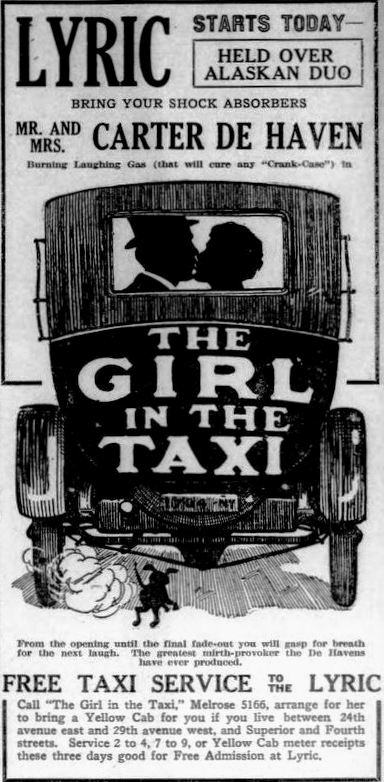
John Stewart, a man of rigid principles, regards his son Bertie as a spoiled child. When Bertie demands a higher allowance, Stewart refuses, sparking a rebellious streak that leads the boy to pawn his father’s finest garments. The narrative pivots when Bertie hides in a taxi, only to be whisked away by a mysterious, alluring young woman. The taxi, a symbol of transient escape, becomes the stage for a dance of intrigue and desire.
The scene shifts to a grand party at Stewart’s home, where the woman reappears, this time as a guest of honor. A casual lunch conversation between Bertie and her unfolds into a pivotal moment: Bertie earns his father's admiration and, simultaneously, discovers a new understanding of maturity. The plot thickens as Major Smith, the woman’s husband, appears, complicating the narrative with questions of loyalty, deception, and societal expectations.
Bertie’s transformation from a pampered youth to a self‑sufficient adult is the film’s emotional backbone. Stewart’s stern demeanor gradually softens, revealing a paternal vulnerability that mirrors the era’s shifting attitudes toward authority and autonomy. The enigmatic woman, portrayed with a mix of grace and defiance, serves as both catalyst and mirror, challenging the characters’ preconceptions.
Major Smith’s presence injects tension, embodying the conflict between duty and personal desire. His role underscores the narrative’s moral complexity, prompting viewers to question the nature of honor in a rapidly modernizing society.
Flora Parker DeHaven, the film’s leading lady, delivers a performance that balances sophistication with an understated vulnerability. Her chemistry with Freya Sterling, who plays the young woman, is palpable, creating a dynamic that feels both intimate and theatrical.
John Gough embodies the archetypal patriarch with a nuanced gravitas, while King Baggot’s portrayal of Bertie captures the boy’s restless energy with a subtlety that avoids caricature. Margaret Campbell and Tom McGuire provide supporting roles that enrich the social tapestry, each adding layers of authenticity to the film’s domestic setting.
Otis Harlan’s comic timing offers a counterbalance to the film’s more dramatic beats, ensuring the narrative remains engaging. Lincoln Plumer’s subtle presence as the Major adds a touch of gravitas, and Grace Cunard’s brief but memorable appearance injects a playful flair.

While the director’s name is absent from the credits, the film’s stylistic choices reflect a keen awareness of the silent era’s evolving language. The use of intertitles is restrained, allowing the visual narrative to speak for itself. The pacing is brisk, yet each scene is given ample room to breathe, ensuring that the emotional beats resonate with the audience.
The film’s mise‑en‑scene is meticulously crafted: from the opulent party décor to the cramped, claustrophobic taxi interior, every setting serves as a character in its own right, influencing the narrative’s trajectory.
The cinematography is notable for its fluid camera movements, a rarity in early 1920s productions. Tracking shots follow the taxi’s motion, creating a sense of kinetic energy that contrasts with the static, symmetrical shots of the party scenes. This juxtaposition emphasizes the thematic divide between freedom and confinement.
Lighting is employed with deliberate intention: the taxi interior is bathed in warm, amber tones (#C2410C), suggesting intimacy and secrecy, while the party’s exterior glow is highlighted with a golden hue (#EAB308), evoking celebration and superficiality. The sea‑blue (#0E7490) accents in the background of key scenes add a cool, reflective quality that tempers the narrative’s emotional intensity.
The film’s editing rhythm mirrors the story’s progression: quick cuts during the taxi sequence build suspense, while longer takes during the party allow characters to breathe, fostering a deeper connection with the audience.
Produced in 1920, the film captures the zeitgeist of post‑World War I America, where traditional social hierarchies were being questioned. The narrative’s focus on a father’s struggle to adapt to his son’s emerging independence reflects a broader societal shift toward individualism.
The film’s portrayal of a woman who defies conventional roles aligns with the burgeoning feminist movement of the era. By allowing her to influence the male characters’ development, the story subtly critiques patriarchal norms.

The inclusion of a military figure, Major Smith, underscores the lingering influence of wartime values, especially notions of honor, duty, and sacrifice.
When juxtaposed with contemporaneous works such as Liliomfi and The Dancin’ Fool, the Girl in the Taxi stands out for its balanced blend of romantic intrigue and social commentary. Its narrative pacing aligns closely with Hearts and Arts, yet it distinguishes itself through its nuanced character development.
The film’s exploration of class dynamics echoes the themes present in Call a Taxi, while its moral quandaries resonate with the moral complexity of The Thirteenth Chair. The interplay of romance and societal expectations also draws parallels to the more modern Les Misérables, albeit in a lighter, more comedic tone.
The film’s subtle nods to the cinematic language of Ghosts—particularly in its use of shadows and light—demonstrate a sophisticated understanding of visual storytelling that was ahead of its time.
Although the Girl in the Taxi is a product of its era, its themes remain strikingly relevant. The film’s exploration of identity, autonomy, and the negotiation of personal values continues to resonate with contemporary audiences. Its stylistic choices anticipate the cinematic techniques that would define later silent masterpieces, such as Après lui and Ultus, the Man from the Dead, which further pushed the boundaries of visual storytelling.
Modern film scholars often cite the Girl in the Taxi as a pivotal point in the evolution of character-driven narratives within silent cinema. Its influence can be seen in the later works of directors who sought to blend romance with social critique, a tradition that continues to thrive in contemporary cinema.
The Girl in the Taxi is a masterclass in silent storytelling, where every frame, every gesture, and every pause carries weight. The film’s ability to intertwine humor, romance, and social commentary without resorting to melodrama is a testament to its creators’ artistry. Its enduring appeal lies in its universal themes and the timeless allure of a story that invites viewers to question their own values while being swept along by the gentle rhythm of a taxi’s wheels.
IMDb —
1915
Community
Log in to comment.