DbcultAccessing Vault...
6.7/10
Senior Film Conservator
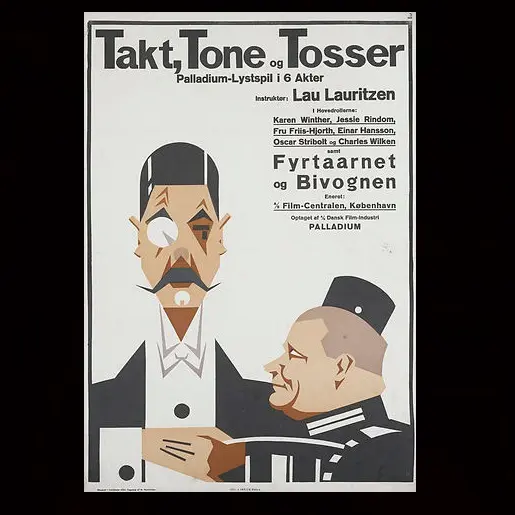
A definitive 6.7/10 rating for a film that redefined the boundaries of cult cinema. Takt, tone og tosser remains a cornerstone of transgressive art.
Is Takt, tone og tosser worth watching today? Short answer: For the dedicated silent film aficionado or those deeply curious about the foundational years of Danish cinema, absolutely. But for the casual viewer, its appeal might lean more towards academic curiosity than immediate entertainment.
This film is a fascinating historical artifact best suited for audiences with a profound appreciation for the nuances of early 20th-century comedic stylings and a high tolerance for films that require significant contextualization; it is decidedly not for those seeking modern pacing, easily accessible narratives, or universal laughs without a historical lens.
Stepping into the world of Takt, tone og tosser is akin to entering a time capsule. This 1923 Danish silent comedy, with its evocative title translating to 'Tact, Tone and Fools,' offers a rare window into the humor and social mores of its era. For many, the very act of watching a film this old, this obscure, is an experience in itself.
However, its value isn't solely in its antiquity. There’s a distinct charm to silent cinema, a universal language of exaggerated gestures and expressive faces that transcends linguistic barriers. The film, starring notable figures like Oscar Stribolt and the iconic duo Harald Madsen and Carl Schenstrøm (though not explicitly as Pat & Patachon in this context, their comedic DNA is undeniable), promises a masterclass in physical comedy and character-driven farce.
This film works because of its historical significance as a document of early Danish comedic talent and its potential to provide insights into the cultural humor of the 1920s.
This film fails because its extreme obscurity means limited access and a lack of contextual information, making a full appreciation challenging for modern audiences without extensive research.
You should watch it if you are a film historian, a silent film enthusiast eager to discover lesser-known works, or someone specifically interested in the social anthropology of interwar Scandinavia.
The Danish film industry, particularly Nordisk Film, was a powerhouse in the silent era, known for its technical innovation and diverse output. Takt, tone og tosser, penned by the prolific Svend Rindom and Paul Sarauw, fits neatly into the tradition of social comedies that often gently satirized contemporary life. The premise, centered on the clash between expected social 'tact' and the inevitable human 'fools' who disrupt it, is fertile ground for comedic scenarios.
One can imagine a narrative rich with mistaken identities, exaggerated faux pas, and characters perpetually out of their depth. Perhaps a grand ball where a well-meaning but clumsy protagonist (played with characteristic charm by someone like Oscar Stribolt) repeatedly commits social blunders, or a provincial family attempting to assimilate into sophisticated urban society, leading to a cascade of hilarious misunderstandings. The film's strength, therefore, lies not just in its individual gags, but in its broader commentary on the performative nature of social interaction.
It’s a film that asks us to consider how much we’ve changed, and how much we haven’t, in our endless pursuit of belonging. The humor, while undoubtedly dated in some respects, taps into universal themes of social anxiety and the absurdity of pretension. This isn't just about laughs; it's about cultural anthropology through slapstick.
The cast list for Takt, tone og tosser reads like a who's who of Danish silent film. Oscar Stribolt, a veteran known for his robust comedic presence, would have brought a grounded, often bewildered gravitas to his roles. His ability to convey complex emotions through facial expressions and body language was legendary, often making him the anchor in even the most chaotic scenes. One could envision him as the put-upon patriarch or the earnest but misguided social climber.
The presence of Harald Madsen and Carl Schenstrøm, even if not explicitly in their 'Pat & Patachon' guises, is a significant indicator of the film's comedic leanings. Their brand of gentle, often melancholic slapstick was internationally beloved. If they appear as a duo, their dynamic would undoubtedly involve one as the taller, more serious foil and the other as the shorter, more impish instigator of mischief, a formula proven successful in films like Potash and Perlmutter or even The Pleasure Buyers, though those are American. Here, their interaction would be steeped in Danish sensibilities, perhaps a more nuanced, less overtly physical comedy than their later work.
Silent film acting demands a unique skill set: the ability to project emotions without dialogue, to time physical gags precisely, and to maintain an energetic presence throughout. The ensemble, including Karen Winther and Alice Tychsen, would have been tasked with creating a vibrant, believable world through movement and mime. The challenge for these actors was to make the absurd believable, to find the humanity within the farce. It works. But it’s flawed.
A particular strength of Danish silent actors was their capacity for understated humor, even amidst broad comedy. Unlike some American contemporaries who relied on relentless pratfalls, Danish films often allowed moments of quiet observation, a pause for the audience to digest the social commentary embedded in the visual gag. This subtlety, if present in Takt, tone og tosser, would elevate it beyond mere slapstick.
While the director is not explicitly listed, the writers Svend Rindom and Paul Sarauw were seasoned professionals, and the overall aesthetic of Nordisk Film during this period was well-established. Silent film direction relies heavily on visual composition, intertitle placement, and the rhythm of editing to convey narrative and emotion. For a comedy like Takt, tone og tosser, the direction would have focused on clear sightlines for gags, effective use of space for physical comedy, and reaction shots that amplified the humor.
Consider a scene where a character, perhaps Hilma Bolvig or Ellen Nielsen, attempts to pour tea gracefully but spills it all over a distinguished guest. The director’s task would be to build anticipation, capture the moment of disaster with clarity, and then cut to the horrified reactions of onlookers and the mortified expression of the perpetrator. This sequence, common in comedies of manners, requires precise timing and framing to maximize its comedic impact.
The cinematography, constrained by the technology of the time, would have employed static shots, medium close-ups for emotional emphasis, and wide shots to establish the setting. Lighting, primarily natural or studio-based with mercury vapor lamps, would have been functional rather than overtly artistic, though careful attention would have been paid to ensuring actors’ expressions were visible. The visual palette, in stark black and white, would have necessitated strong contrasts and clear staging to differentiate characters and actions.
One could argue that the limitations of the medium forced a greater creativity in visual storytelling. Without dialogue, every prop, every costume, every gesture had to speak volumes. This often led to a more universal visual language that still resonates today, albeit requiring a different kind of engagement from the audience. A film like The Light Within, for example, relied heavily on expressive close-ups to convey emotion, a technique likely employed here.
Pacing in silent films is notoriously different from modern cinema. Audiences accustomed to rapid-fire editing and constant narrative propulsion might find the rhythm of Takt, tone og tosser deliberate, even slow. Intertitles, while crucial for plot exposition and dialogue, break the visual flow, demanding a mental adjustment from today's viewers. However, this slower pace also allows for a deeper appreciation of the visual comedy and the actors' performances.
A drawn-out sequence of a character attempting to discreetly fix a social blunder, only to make it worse with each attempt, would have been a staple. This kind of escalating chaos builds humor through repetition and anticipation, a technique still effective but often condensed in contemporary films. The film's original score (now likely lost or replaced with a modern interpretation) would have played a crucial role in dictating this pace, signaling comedic beats and emotional shifts.
For a modern audience, this requires patience, but it rewards with a unique viewing experience. It forces a more active engagement, allowing the viewer to absorb the visual details and appreciate the craft of a bygone era. Comparing it to something like Let's Be Fashionable, one can see how the pace of fashion-focused comedies might differ from social farces, yet both share a common need for careful comedic timing.
The title itself, 'Tact, Tone and Fools,' strongly suggests a layer of social commentary beneath the comedic surface. While undoubtedly a farce designed for laughs, these types of films often subtly critique societal norms, class distinctions, and human vanity. The 'fools' are not just sources of amusement; they are often the unwitting agents who expose the artificiality of 'tact' and 'tone.'
Perhaps the film champions a more authentic, less constrained way of living, even if it comes with a few spilled teacups. Or it might simply revel in the chaos that ensues when social order is disturbed. The brilliance of such titles is their ambiguity, allowing for both interpretations. Given the progressive social movements of the 1920s, it's not unreasonable to assume a gentle nudge against rigid Victorian-era etiquette.
One unconventional observation is that the very obscurity of this film, rather than diminishing its value, enhances it. It becomes a blank canvas for critical interpretation, a cinematic Rorschach test where our understanding of the era and genre fills in the gaps. This forces a more imaginative, interpretive engagement than a readily available, thoroughly documented film would.
Takt, tone og tosser stands as a ghost in the archives, a tantalizing title promising a delightful journey into the comedic heart of 1920s Denmark. While its obscurity is a formidable barrier, its mere existence, coupled with its esteemed cast and writers, makes it a significant artifact. It’s not a film for passive consumption; it demands engagement, imagination, and a willingness to meet it on its own historical terms. For those with the patience and passion for silent cinema, unearthing this film would be a rewarding endeavor, offering a rare glimpse into a specific cultural moment.
Ultimately, its value lies less in its capacity to universally entertain today and more in its profound historical and cultural significance. It is a testament to the vibrant, innovative spirit of early Danish filmmaking, a spirited reminder that even the most forgotten tales can still speak volumes about who we were, and perhaps, who we still are, beneath all the layers of 'tact' and 'tone.'
IMDb 7
1925
Community
Log in to comment.