DbcultAccessing Vault...
6.1/10
Senior Film Conservator
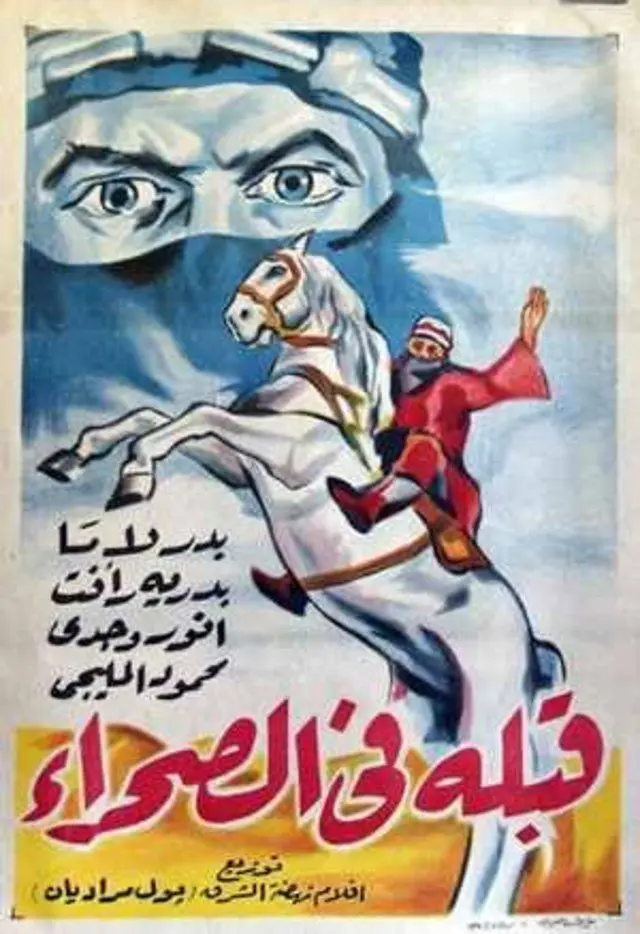
A definitive 6.1/10 rating for a film that redefined the boundaries of cult cinema. Kubla fil Sahara remains a cornerstone of transgressive art.
Short answer: yes, but with significant caveats. This early desert epic, if approached with the right historical lens, offers a fascinating glimpse into a particular style of filmmaking, blending adventure, romance, and stark injustice against a truly epic backdrop. It’s a film for those who appreciate the foundational narratives of cinema, who seek stories of primal human struggle and redemption, and who don't mind a rougher aesthetic.
It is emphatically not for viewers seeking modern pacing, complex character studies, or polished special effects. If your cinematic diet consists solely of contemporary blockbusters, the deliberate rhythm and perhaps melodramatic sensibilities of Kubla fil Sahara might prove challenging. But for the adventurous cinephile, it’s a journey worth taking.
To truly engage with Kubla fil Sahara, one must first acknowledge its context. This is not merely a film; it is a historical artifact, a testament to early cinematic storytelling in a region often overlooked by Western film history. Directed and written by Ibrahim Lama, a pioneering figure, the film attempts to weave a grand narrative of wrongful accusation, desert survival, and unwavering love amidst the harsh realities of the Egyptian landscape.
The plot, at its core, is a classic tale of the innocent man forced into a life of crime, only to find redemption through a noble act. Shafiq, portrayed by Badr Lama, embodies the archetype of the virtuous individual corrupted by circumstance. His transformation from a respected Bedouin to a guerrilla fighter is the film's central dramatic engine, mirroring the vast, unforgiving environment he inhabits.
This film works because it taps into universal themes of injustice, survival, and romantic devotion, amplified by the stark, majestic canvas of the Sahara. Its ambition, for its era, is palpable.
This film fails because its narrative economy often sacrifices nuanced character development for plot progression, and its technical limitations can sometimes hinder the immersive experience it strives for.
You should watch it if you are a student of film history, an enthusiast of early adventure cinema, or someone who appreciates tales of love and honor set against epic, natural backdrops.
Ibrahim Lama's direction, particularly in capturing the immensity of the Sahara, is arguably the film's strongest suit. One can imagine sweeping wide shots that emphasize the isolation and grandeur of the desert, making it a character in itself. The cinematography, likely a blend of practicality and artistic ambition, would have aimed to convey the sun's relentless gaze and the endless horizon, framing human drama against a truly indifferent, yet beautiful, world.
Consider the scene of Shafiq's escape into the desert. Lama likely uses long takes to underscore his journey, a solitary figure swallowed by dunes, symbolizing his severance from his past life. This isn't just a backdrop; it's a crucible. The harsh light and deep shadows, inherent to desert photography, would have lent a dramatic, almost expressionistic quality to the visuals, enhancing the sense of danger and moral ambiguity that Shafiq faces.
However, the technical limitations of early cinema, particularly in remote locations, would undoubtedly present challenges. Sound recording, especially on location, would have been rudimentary or non-existent, relying on post-synchronization or intertitles. This can create a disconnect for modern viewers accustomed to immersive soundscapes. Yet, it forces a greater reliance on visual storytelling, making every gesture and every landscape shot carry more weight.
Yvonne Goeine as Hilda, the 'foreign girl,' presents an intriguing dynamic. Her character serves as both a catalyst for Shafiq's ultimate redemption and a symbol of vulnerability in a hostile land. One can envision Goeine portraying Hilda with a blend of initial naivety that hardens into resilience after her ordeal. Her initial fascination with Shafiq would likely be conveyed through subtle glances and perhaps a quiet dignity, setting her apart from the local villagers.
Badr Lama, as Shafiq, carries the weight of the narrative. His journey from respected villager to accused fugitive and then to a man of action demands a performance capable of conveying significant internal transformation. We can infer that Lama would have used his physicality to show Shafiq's growing prowess as a guerrilla, contrasting it with the quiet intensity of his earlier, more innocent self. The moment he confronts the gang members attempting to harm Hilda would be a pivotal display of his newfound resolve, a silent declaration that his honor, though tarnished, remains intact.
The chemistry between Goeine and Lama, though perhaps constrained by the acting styles of the era, would be crucial. Their connection must feel authentic enough to justify Shafiq's perilous rescue mission. It's not just about romantic love; it's about a bond forged in mutual respect and shared adversity. Their silent communication, particularly during moments of danger or desperation, would be key to selling their relationship to the audience.
The pacing of Kubla fil Sahara likely oscillates between the tranquil, almost ethnographic portrayal of village life and the frantic, action-packed sequences of escape and conflict. The initial accusation of Shafiq's guilt would trigger a sharp acceleration, propelling the narrative forward with urgency. This sudden shift in tempo would be a deliberate choice to emphasize the abrupt disruption of peace.
The film's tone would undoubtedly be dramatic, leaning towards melodrama, a common characteristic of films from this period. The injustice of Shafiq's accusation, the danger of his new life, and the peril faced by Hilda would all be underscored by heightened emotional beats. Yet, within this dramatic framework, there would be moments of quiet reflection, perhaps during Shafiq's solitary wanderings or during moments of respite with his guerrilla companions, allowing the audience to absorb the vastness of his plight.
One unconventional observation about films of this era, especially those set in exotic locations, is their inadvertent role as cultural documents. While telling a fictional story, Kubla fil Sahara, through its depiction of Bedouin life, guerrilla tactics, and desert survival, offers a window into a specific time and place. This layer of ethnographic interest, even if not the primary intent, adds an unexpected depth to the viewing experience.
Yes. Kubla fil Sahara, despite its age and potential technical shortcomings by today's standards, absolutely holds value. It's a foundational piece of Egyptian cinema. It demonstrates ambitious storytelling. It showcases the raw beauty of the Sahara. It offers a compelling, if somewhat simplistic, narrative of good versus evil and love conquering adversity. Its historical significance alone makes it worthy of a watch, particularly for those interested in the evolution of global cinema.
It works. But it’s flawed. The film’s strength lies in its bold vision and ability to transport the viewer to a different world, both geographically and historically. It's a testament to the power of early filmmakers to craft engaging narratives with limited resources, relying heavily on the inherent drama of their stories and the natural grandeur of their locations.
Kubla fil Sahara is more than just an old film; it is a vital piece of cinematic heritage, a bold venture into epic storytelling that predates many of the conventions we now take for granted. While it undeniably shows its age in terms of technical execution and perhaps a less nuanced approach to character, its spirit of adventure, its powerful themes of justice and love, and its stunning use of the desert landscape remain compelling.
I strongly believe that films like Kubla fil Sahara deserve to be rediscovered and appreciated, not just as historical curiosities, but as testaments to the enduring power of narrative. It’s a film that asks its audience to meet it halfway, to look beyond the surface imperfections and engage with the heart of its story. For those willing to make that journey, much like Shafiq’s own arduous path through the desert, the rewards are significant.
It might not have the psychological depth of The Unguarded Hour or the intricate plotting of The Red Circle, but its raw, unadulterated vision of a man against the world, fighting for his honor and the woman he loves, is profoundly affecting. It reminds us that fundamental human dramas transcend time and technology. Go watch it, but go with an open mind and a respect for history.
IMDb —
1915
Community
Log in to comment.