DbcultAccessing Vault...
Cult Review
Senior Film Conservator
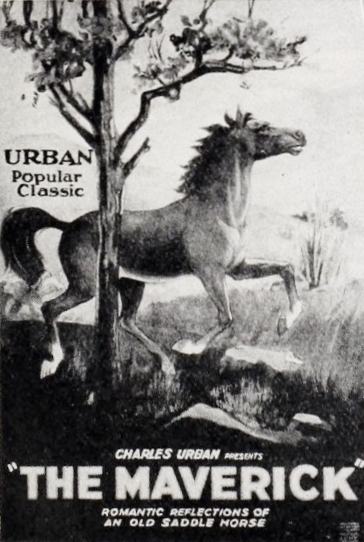
In the pantheon of early cinema, few works capture the raw, unadulterated spirit of rebellion with as much poetic ferocity as The Maverick. This film does not merely exist; it breathes, it snarls, and it challenges the viewer to look beyond the flickering grain of its celluloid. While contemporary audiences might be accustomed to the polished artifice of modern blockbusters, there is a haunting verisimilitude here that remains unmatched. The film operates on a frequency of pure emotion, stripping away the superfluous to reveal the skeletal truth of the human condition. It is an exploration of the periphery, focusing on the spaces between the notes of societal harmony.
The direction employs a visual grammar that feels decades ahead of its time. We see echoes of this stylistic audacity in later works like The Kid Is Clever, yet The Maverick possesses a certain gravitas that is uniquely its own. It eschews the whimsical for the weighty, the superficial for the profound. Every frame is composed with the precision of a Renaissance painting, utilizing natural light to create a sense of immediacy and intimacy. The protagonist is not a hero in the classical sense but a conduit for the audience's own suppressed desires for freedom.
The casting is nothing short of inspired. The lead actor delivers a performance of remarkable subtlety, conveying a spectrum of internal conflict through the mere twitch of a jaw or the narrowing of eyes. This level of restraint is rare in an era often defined by theatrical over-expression. In comparison to the more overt emotionality found in Greater Than Love, the performance here is a masterclass in minimalism. It forces the audience to lean in, to engage with the subtext, and to find the humanity within the silence.
The setting itself—a rugged, unforgiving frontier—acts as a secondary character. It is both a sanctuary and a prison. The cinematography captures the duality of the wilderness with breathtaking clarity. One can almost feel the biting wind and the scorched earth. This environmental immersion is a hallmark of the production, reminiscent of the atmospheric depth seen in Nedra, though The Maverick leans more heavily into the psychological toll of such isolation. The landscape reflects the protagonist's internal state: vast, untamable, and beautiful in its desolation.
At its core, the film is a scathing critique of the burgeoning industrial complex. It asks a fundamental question: what is lost when we trade our autonomy for the safety of the collective? This theme is explored with far more nuance than in the didactic narratives of the time, such as The Salvation Army on the Job. Instead of offering easy answers, The Maverick revels in the ambiguity of the struggle. It suggests that the price of freedom is a perpetual state of conflict, both with the world and with oneself.
The writing is lean and purposeful. Every interaction is loaded with subtext, every silence heavy with the weight of things unsaid. The dialogue—presented through sparse intertitles—is poetic and punchy, avoiding the flowery prose that often plagued silent films. This narrative economy keeps the focus squarely on the visual storytelling, allowing the images to do the heavy lifting. The pacing is deliberate, building a slow-burn tension that culminates in a finale that is as inevitable as it is heartbreaking.
When examining the film's structural integrity, it is useful to look at how it deviates from contemporary romantic comedies like Three Strings to Her Bow or the lighthearted antics of Captain Jinks of the Horse Marines. While those films sought to entertain through charm and wit, The Maverick seeks to provoke through discomfort and honesty. It shares more DNA with the psychological complexity of Enoch Arden, yet it pushes the boundaries of that complexity even further, into the realm of the existential.
The film’s handling of the 'outsider' trope is particularly noteworthy. In The Stowaway, the outsider is often a victim of circumstance, seeking integration. In The Maverick, the outsider is a product of choice, seeking liberation. This shift in perspective is revolutionary. It reframes the protagonist's journey not as a quest for belonging, but as a flight from the shackles of expectation. It is a journey of subtraction rather than addition—stripping away the layers of social conditioning until only the raw, pulsating core of the self remains.
Technically, the film is a marvel of its era. The use of shadow is particularly striking, creating a sense of depth and mystery that prefigures the noir movement by decades. The editing is fluid, moving between the expansive vistas and the claustrophobic interiors with a rhythm that feels organic. This technical proficiency is far beyond what one might expect from a standard production of the time, such as A Ticket in Tatts or Das Milliardentestament. The filmmakers were clearly experimenting with the limits of the medium, using every tool at their disposal to heighten the emotional impact of the story.
One must also mention the score—or the lack thereof in its original context. The visual rhythm of the film provides its own internal music. The way the light dances on the water, the way the dust motes swirl in a bar of sunlight, the way the protagonist moves through the world—all of these elements create a sensory experience that is deeply immersive. It is a film that demands to be felt as much as it is seen. It avoids the melodramatic pitfalls of Amleto e il suo clown, opting instead for a gritty realism that remains startlingly modern.
In the grand tapestry of cinematic history, The Maverick stands as a testament to the power of the singular vision. It is a film that refuses to play by the rules, much like its protagonist. It shares a certain DNA with the high-stakes tension of The Battle of Love or the atmospheric dread of Nuit de carnaval, but it synthesizes these elements into something entirely new. It is a film that speaks to the eternal human desire for agency in a world that constantly seeks to diminish it.
The film's influence can be seen in the works of directors who prioritize atmosphere and character over plot. It is a precursor to the 'loner' films of the 70s, a silent ancestor to the anti-heroes of the modern age. When we watch Hold Your Breath or The Barricade, we see the echoes of the Maverick's struggle. It is the archetype of the individual against the wall, the soul against the machine.
Ultimately, The Maverick is a masterpiece of early cinema that deserves a place in the conversation alongside the most celebrated works of the era. It is a film of profound beauty and devastating honesty, a work that challenges us to consider the value of our own independence. It is a reminder that even in the silence, there is a voice that cannot be suppressed. The film’s final shot—a long, lingering look at the horizon—remains one of the most powerful images in the history of the medium. It is an invitation to the unknown, a call to the wild, and a celebration of the spirit that refuses to be tamed.
Review by the Cinephile's Ghost - A journey through the shadows of the silver screen.
IMDb 6.5
1933
Community
Log in to comment.