DbcultAccessing Vault...
5.5/10
Senior Film Conservator
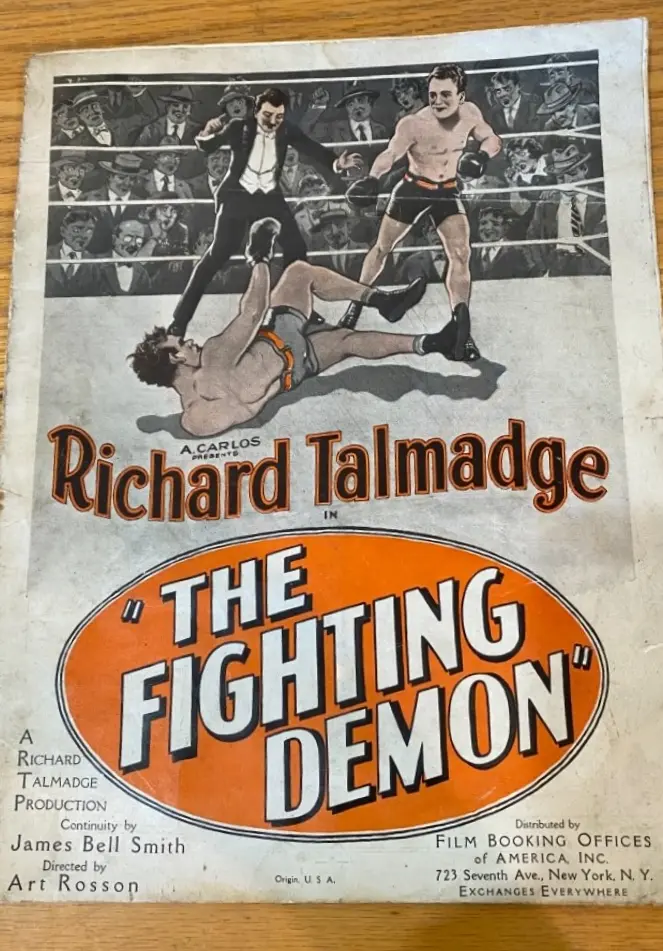
A definitive 5.5/10 rating for a film that redefined the boundaries of cult cinema. The Fighting Demon remains a cornerstone of transgressive art.
The Fighting Demon arrives like a thunderclap in the annals of 1930s adventure cinema, a film that marries the visceral energy of boxing with the cerebral tension of a heist thriller. Set against the sunburnt backdrops of South America, it tells the story of John Drake, a college athlete whose naivety becomes his greatest vulnerability. Director Jack Hill crafts a narrative that is both a character study and a genre hybrid, where the protagonist’s fists and intellect become equally vital tools in his fight for survival and honor.
The film’s opening acts are a masterclass in misdirection. John Drake, portrayed with a mix of earnestness and simmering frustration by Charles Hill Mailes, is promised a prestigious career in vault construction. His journey to South America is tinged with optimism, but this is swiftly shattered by the revelation that he is a pawn in a criminal conspiracy led by the enigmatic Isaac Belding. The script, penned by Charles Metz, laces this betrayal with a sense of inevitability—Drake, with his technical knowledge and athletic prowess, is the perfect target. His passport and wallet are stolen, leaving him stranded in a foreign land, a man stripped of identity and agency.
It is here that the film pivots into its most compelling phase. Drake’s desperation propels him into an exhibition bout with Dynamite Díaz, the South American boxing champion. This sequence is not merely a spectacle; it is a metaphor for his internal struggle. The ring becomes a microcosm of his larger conflict—each punch a metaphor for the punches life has dealt him. The fight is choreographed with a raw, almost chaotic energy, contrasting sharply with the clinical precision of the vault heist scenes. This juxtaposition is intentional, highlighting the duality of Drake’s journey from victim to avenger.
When Belding kidnaps Drake and forces him to open the Darcy family bank’s vault, the film reaches its narrative zenith. The vault scene is a technical marvel, with meticulous attention to the mechanics of safe-cracking. Yet, the true brilliance lies in the psychological tension. Drake’s decision to lock the criminals inside the vault is not just an act of defiance; it is a moment of moral clarity. This act of sabotage, coupled with his timely alert to the police, underscores the film’s central theme: justice is not passive, but an active, often violent, pursuit.
The resolution is both satisfying and ironic. Dolores Darcy, the banker’s daughter, who initially represents the unattainable ideal, becomes the voice of Drake’s vindication. Her declaration of love is not a sop to narrative convenience but a testament to his transformation. The final boxing match against Díaz, which cements Drake’s status as a local hero, is a cathartic release. The film refuses to romanticize violence; instead, it frames it as a necessary evil in the face of systemic corruption.
Thematically, The Fighting Demon is a product of its era. The 1930s were marked by economic uncertainty and a fascination with the underdog narrative, both of which the film exploits. However, its enduring appeal lies in its refusal to simplify its characters or situations. Drake is not a paragon of virtue; his decisions are driven by survival as much as justice. This complexity elevates the film from a mere B-movie to a nuanced exploration of human resilience. The supporting cast, including Peggy Shaw as Dolores and Frank Elliott as Belding, provide nuanced performances that ground the film’s more extravagant scenes.
Visually, the film is a blend of stark realism and stylized artifice. The Latin American settings are rendered with a painterly attention to detail—sunset hues bleed into the frames, while the vault’s cold, metallic surfaces contrast sharply with the warmth of the outside world. Jack Hill’s direction ensures that these elements are not just aesthetic choices but narrative tools. The color palette reflects the moral landscape: the fiery reds and oranges of Drake’s fury, the cool blues of institutional power, and the golden hues of redemption.
In terms of legacy, The Fighting Demon occupies an interesting space in film history. It shares thematic DNA with other 1930s heist films like Youth to Youth and Pay Me!, yet distinguishes itself through its grittier tone and focus on personal agency. Its influence can be seen in later action-thrillers, where the protagonist’s physical prowess is as crucial as their moral fortitude. However, the film’s true innovation lies in its ability to balance spectacle with substance—a rare feat in the genre.
Critics at the time praised the film’s pacing and direction, though some found the climax rushed. Modern reevaluations have highlighted its underappreciated craftsmanship, particularly in the boxing sequences and vault mechanics. For contemporary audiences, the film offers a window into the socio-political anxieties of the 1930s, where trust was a currency as volatile as gold. It also raises questions about the ethics of heroism—are Drake’s actions justified, or do they cross into vigilantism? These questions linger long after the credits roll.
Ultimately, The Fighting Demon is a film that transcends its era. It is a tale of survival, justice, and the cost of integrity, told with a raw energy that resonates even today. For fans of Heart of Gold and Madeleine de Verchères, this film is a must-watch—a testament to the enduring appeal of the underdog story, even when the underdog is a man in a boxing ring, staring down both a champion and his own demons.
IMDb —
1927
Community
Log in to comment.