DbcultAccessing Vault...
Cult Review
Senior Film Conservator
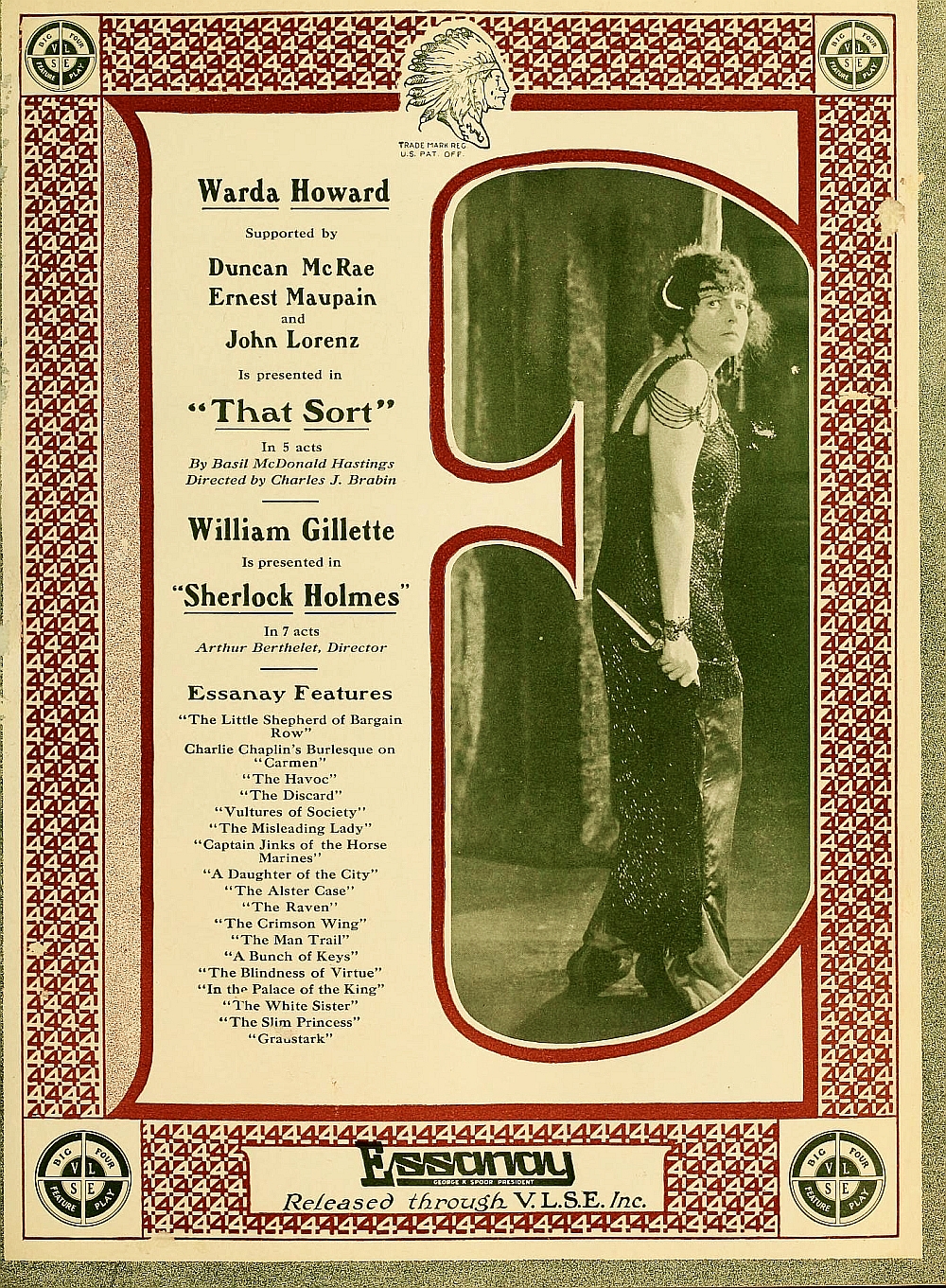
Charles Brabin’s That Sort (1914) arrives like a tarnished locket fished from the mud of pre-Hays-Code cinema—its hinge still clicks, its portraits still blink back at us, water-stained yet recognizable. The film is only five reels, but every celluloid inch throbs with the migraine of a woman who once believed the spotlight could double as sanctuary. Basil Macdonald Hastings’s scenario, adapted from his own stage success, refuses the moral spoon-feeding that would soon ossify into Hollywood convention; instead it doles out empathy in jagged shards.
Forget the tidy parabola of sin-suffer-repent; That Sort opts for a Möbius strip. Diana’s ascent from provincial ingenue to West End comet is relayed in staccato tableaux—footlights flaring like magnesium, bouquets hurled like boomerangs. Marriage to John Heppell is sketched in a single iris-shot: a veil dissolving into a pram hood, the camera recoiling as if embarrassed by the speed with which eros curdles into ownership. When John reverts to his rake’s calendar of club fumatories and chorus-girl balconies, the film doesn’t villainize him so much as expose the structural entropy of patriarchal wealth: boredom as birthright.
Diana’s flight with Goodier is rendered through a travelogue montage so modern it could slip unnoticed into a 2020s indie breakup drama—steamer trunks, border stamps, hotel ledgers fluttering like hurt pigeons. Each European capital chews her a little, spits out a more feral version of the last, until the continent itself becomes a predator. The epiphany is not thunderbolt but erosion: one morning she catches her reflection in a Monte Carlo champagne glass and sees not a femme fatale but a middle-aged woman whose currency is evaporating faster than the bubbles.
Warda Howard, unjustly confined to footnote status, delivers a masterclass in calibrated collapse. Watch her hands in the early reels: they orchestrate sentences, flick open fans, conduct laughter like a petite maestro. By the time she’s gauged the depth of her fall, those same hands tremble as if the air has weight. The close-up—a device still novel in 1914—becomes her confessional booth; she doesn’t over-mug for magnification but lets the grain do the work, permitting flecks of iris pigment to read as remorse, a twitch of cheek muscle as the memory of a slap.
John Lorenz as Heppell has the harder task: embodying feckless entitlement without caricature. He chooses inertia as performance—hands plunged in trouser pockets, shoulders shrugging off consequence like dandruff. It’s a daring minimalism that makes his sporadic flashes of cruelty feel like ice water flicked across the viewer’s face.
Surviving prints are monochrome, yet the cinematography (credited to That Sort’s opaque committee of cameramen) is steeped in chromatic suggestion. Interior scenes in the Heppell townhouse are staged against onyx paneling that drinks in light, forcing faces to levitate like cameos on jet velvet—an aristocratic void. Contrast this with Diana’s continental exile, where white stucco walls ricochet sunlight until every room feels overexposed, sins lacking shadows to hide in.
Brabin repeatedly frames doorways as proscenium arches: characters enter, exit, but the threshold itself remains charged, a limen between public mask and private rot. The governess re-entrance into Heppell’s domain is shot from the vestibule’s interior, Diana’s silhouette hesitating until the doorjamb bisects her body—half penitent, half predator.
What shocks is not adultery but the film’s refusal to extract penitence on male terms. Diana’s sexual history is neither sanitized nor punished with death—a fate that would become de rigueur once the Hays office began wielding its scissors. Instead, the narrative engineers a sacrifice that feels genuinely sacrificial: a mother severs the last artery binding her to her child, knowing the wound will never clot. The camera doesn’t swoon; it observes, almost cruelly, as she packs her single battered suitcase while rain tattoos the windowpane like impatient typists.
Compare this to the contemporaneous Anna Karenina (1914) where the fallen woman’s train-track terminus is couched as cosmic justice. That Sort dares a more unsettling thesis: redemption is possible, but it tastes of rust and is purchased with irreversible amputation.
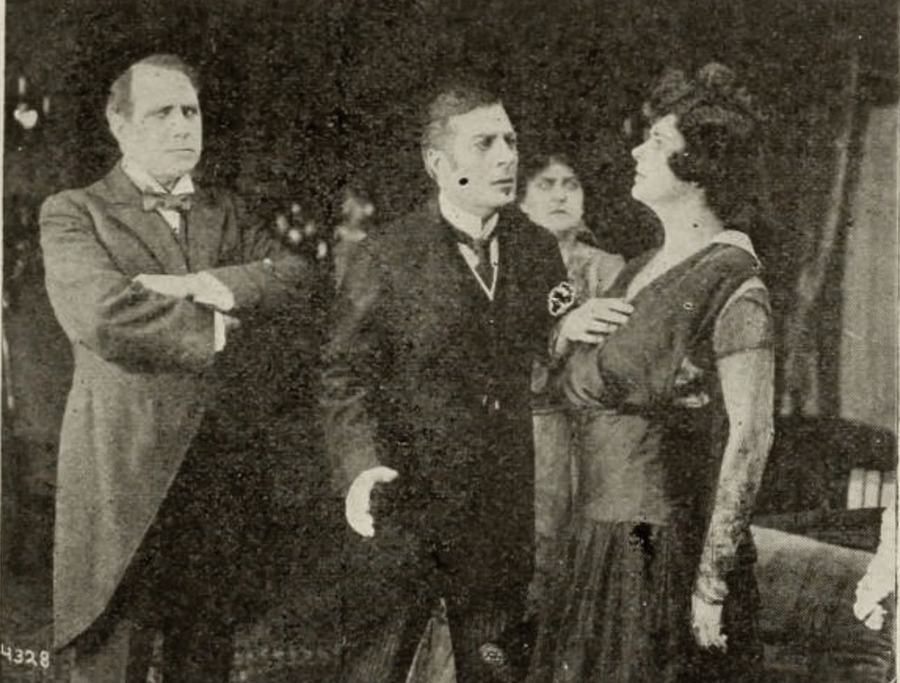
Though the original score is lost, modern restorations often pair the film with compositions ranging from Satie-esque gymnopédies to doom-laden cello drones. Either choice works because Brabin’s pacing is musical—long decrescendos of domestic ennui punctuated by staccato bursts of revelation. The climactic confrontation between Diana and Goodier unfolds in a static two-shot lasting nearly three minutes, an eternity in 1914 syntax, allowing every micro-gesture to resonate like a plucked string whose vibration refuses to fade.
Hastings’s theatrical text was notorious for flouting the Lord Chamberlain’s edicts—so much so that several regional UK companies refused to license it. Transposing the material to screen necessitated circumlocution; the censors of 1914 balked at the word “mistress,” yet allowed a scene implying it if the intertitle merely read “Those who once danced.” Thus the film becomes a palimpsest: carnality overwritten with inference, silence as titillation.
Financially, the picture performed modestly, outgrossed by froth like Brewster’s Millions yet lingering in second-run urban cinemas due to word-of-mouth notoriety. Trade papers praised its “adult situations,” a euphemism that packed nickelodeons with curiosity-seekers and reform-minded clergy alike—an uneasy alliance that previewed the culture wars soon to engulf Hollywood.
Viewed today, That Sort feels eerily contemporary. Diana’s predicament—professional woman punished for ambition, sexual autonomy weaponized against her—rhymes with every think-piece about Hollywood’s double bind. The film even anticipates the “cool girl” monologue Gillian Flynn would write a century later: Diana’s lament that men want “a star they can fold into pocket lint once the curtain falls.”
Meanwhile, Doctor Maxwell’s ethical gymnastics—befriending, blackmailing, and spiritually midwifing—presage the complicated ally figures populating Peak TV. He is neither savior nor predator but a node in a web of obligations, his motives alloyed of old-boy loyalty and something that might be love filtered through Victorian goggles.
Only fragments survive in European archives: a 35mm nitrate reel at EYE Filmmuseum, a 9.5mm reduction print in a Parisian flea-market find. The opening credits are missing, so restorers spliced in a facsimile based on period typography—an act of cine-paleontology. Yet even in its mutilated form, the film pulses with a vitality that many pristine silents lack. Scratches dance like fireflies across night scenes, and the occasional chemical bloom resembles blood seeping through gauze—an unintended metaphor for the narrative’s wounded heart.
Streaming options are scarce; your best bet is specialty festivals or the occasional YouTube upload that disappears faster than Diana’s reputation. A crowdfunding campaign to reconstruct the missing reel three—containing the suicide attempt—has stalled at 60%, hampered by rights limbo. (The negative was melted down for its silver content during WWI shortages, a fate more ignominious than any censor’s cut.)
That Sort is more than a curio; it is a cracked mirror held up to our perpetual discomfort with female agency. It asks whether redemption can exist without restitution, whether a woman’s past must always be a ball chained to her ankle. The answer it offers is neither comforting nor defeatist, but a trembling maybe—an intertitle written on dissolving paper.
Seek it out, even in fragments. Let the emulsion flicker against your retinas, and notice how the darkness between frames feels alive, whispering that the sort of woman society discards might, in fact, be the sort who keeps its conscience breathing.
IMDb 6
1927
Community
Log in to comment.