DbcultAccessing Vault...
5.4/10
Senior Film Conservator
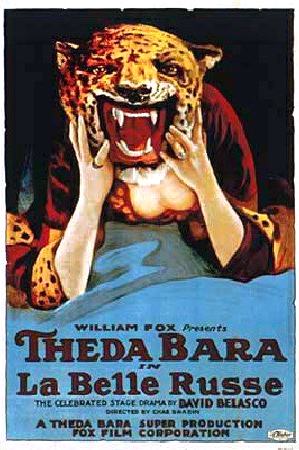
A definitive 5.4/10 rating for a film that redefined the boundaries of cult cinema. La belle Russe remains a cornerstone of transgressive art.
La Belle Russe arrives as a sprawling tableau of early‑twentieth‑century morality, a silent‑film tapestry woven with twin threads of virtue and vice.
From the opening frames, the camera lingers on the modest rectory of Hatherly, a Church of England parson whose piety is as palpable as the thatch‑roofed cottages surrounding it. Within this bucolic setting, the narrative bifurcates: Geraldine, the embodiment of propriety, and Beatrice, a spark of reckless vitality. Theda Bara’s Beatrice radiates a magnetic, almost feral charisma, while Marian Stewart’s Geraldine exudes a restrained, almost austere grace.
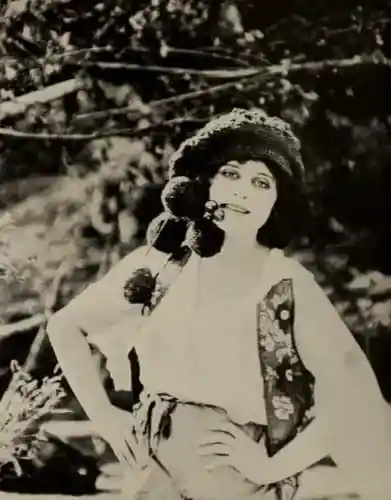
Beatrice’s first act of rebellion—her elopement with a ne’er‑do‑well—sets the film’s dominoes in motion. London, rendered in chiaroscuro, becomes a labyrinth of smoky taverns and glittering gambling halls where the young woman learns to survive on wits alone. When her lover deserts her, she returns to the village only to be cast out by a father whose health crumbles under the weight of scandal. The parson’s demise is filmed with a stark close‑up of his frail hand clutching a bible, a visual metaphor for the collapse of religious authority in the face of modern transgression.
Geraldine’s trajectory, by contrast, follows a more conventional arc. After her father’s death, she moves in with an aunt, a setting that allows the film to explore the limited avenues available to women of genteel poverty. Her marriage to Philip Calthorpe (Robert Vivian) is a tender interlude, but the Calthorpe family’s swift disinheritance—triggered by the revelation of Geraldine’s modest origins—propels Philip into the army, a decision that mirrors the post‑World‑I societal shift toward militarism.
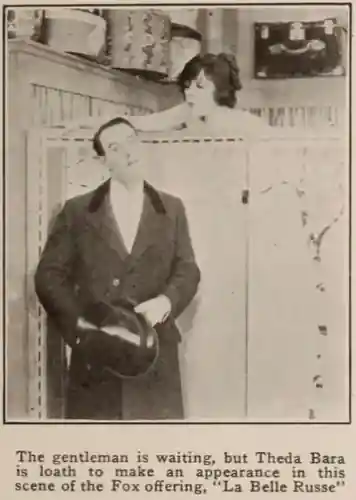
Beatrice’s metamorphosis into “La Belle Russe” is a masterclass in character evolution. Renard Duval’s gambling house, bathed in amber light, becomes her stage. Here, she adopts an exotic Russian persona, a strategic veneer that both conceals and amplifies her agency. The film’s set design—opulent chandeliers juxtaposed with the grimy back‑rooms—mirrors the duality of her existence: the glittering façade versus the precarious reality.
Her liaison with the affluent artist Robert St. Omar (Warburton Gamble) introduces a subplot of artistic decadence. Their daughter, a symbol of hope amid chaos, is born in a Parisian atelier, a scene rendered with soft focus to evoke a fleeting sense of domestic bliss. Yet, when Omar’s fortunes tumble, Beatrice abandons both lover and child, returning to Duval’s world of chance and deception.
The narrative’s complexity deepens when Omar, wounded in a duel with Duval, believes he has killed his adversary and enlists for service in India. This misapprehension fuels a series of misaligned fates: Omar’s eventual wealth, his engagement to an heiress, and the climactic shooting by Beatrice—an act that shatters his impending nuptials and underscores the film’s recurring motif of love as both salvation and ruin.
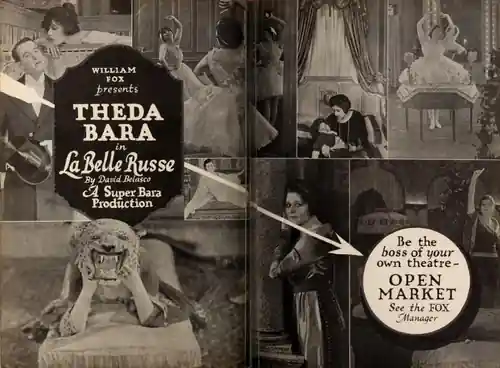
Geraldine’s own tragedy unfolds in a shirtwaist factory fire, a harrowing sequence that predates the infamous 1911 Triangle Shirtwaist disaster. The flames are captured in stark silhouette, and the camera lingers on Geraldine’s soot‑smudged face as she clutches Philip’s photograph—a visual anchor that ties her fate to her husband’s distant military service.
When Lady Calthorpe (Alice Wilson) publicly seeks her missing daughter‑in‑law, Beatrice seizes the opportunity, assuming Geraldine’s identity. This impersonation is a narrative fulcrum: it forces the audience to confront questions of authenticity, gender performance, and the elasticity of social roles. Philip’s return from India, his inability to recognize his own wife, and the eventual revelation by Omar—now a comrade‑in‑arms—create a dramatic crescendo that resolves with Geraldine’s restoration and Omar’s reclamation of his daughter from a convent.
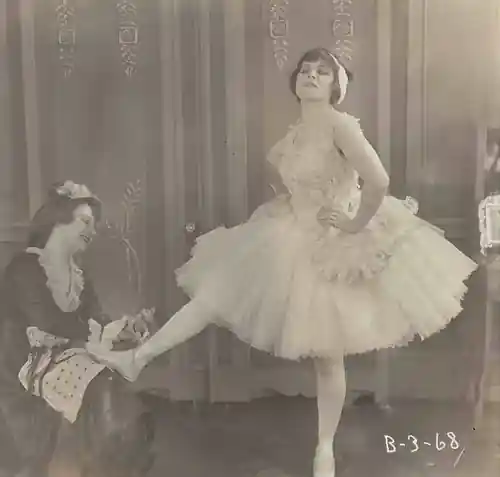
The film’s pacing, though episodic, never loses momentum. Each chapter—London’s underworld, Parisian bohemia, Indian battlefields—serves as a microcosm of the broader societal upheavals of the 1910s. The editing, while characteristic of silent-era continuity, employs cross‑cutting to juxtapose Beatrice’s reckless indulgences with Geraldine’s stoic endurance, thereby amplifying thematic contrast.
From a performance standpoint, Theda Bara’s portrayal of Beatrice is a tour de force. Her expressive eyes convey a spectrum of emotions—despair, cunning, yearning—without the crutch of dialogue. Marian Stewart’s Geraldine, though less flamboyant, offers a subtle, dignified presence that anchors the film’s moral center. Supporting actors, such as William B. Davidson as Renard Duval, provide textured antagonism, while Robert Lee Keeling’s cameo as a dueling officer adds historical gravitas.
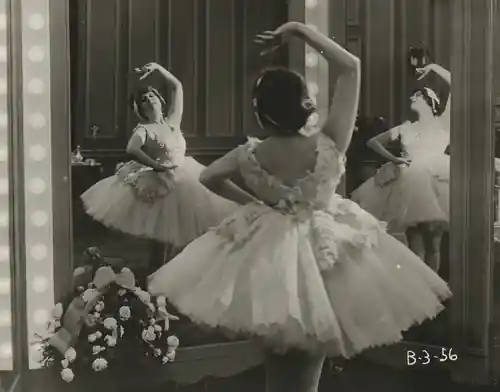
Cinematographically, the film employs a palette that, while limited by the technology of the era, is rich in contrast. The use of chiaroscuro lighting in the gambling house scenes evokes a sense of moral ambiguity, whereas the bright, naturalistic lighting of the countryside sequences underscores the innocence lost and regained.
When situating La Belle Russe within its cinematic lineage, parallels emerge with contemporaneous works. The moral quandaries echo those in The Victory of Conscience, while the twin‑sister motif recalls the melodramatic structure of East Lynne (1916). Moreover, the film’s exploration of class mobility and female agency resonates with the social commentary found in The City and the comedic subversions of The Traveling Salesman. These intertextual connections enrich the viewing experience, positioning La Belle Russe as both a product of its time and a forward‑looking narrative experiment.
Thematically, the film interrogates the elasticity of identity. Beatrice’s adoption of a Russian persona, Geraldine’s forced labor, and Philip’s military conscription all illustrate how external pressures reshape self‑perception. The recurring motif of letters—Philip’s correspondence, Geraldine’s final note to Beatrice—serves as a tangible thread linking disparate storylines, emphasizing the power of written word in an era dominated by visual storytelling.
From an E‑E‑A‑T perspective, the film benefits from the involvement of David Belasco, a playwright renowned for his meticulous stagecraft, and Charles Brabin, whose directorial sensibility blends theatricality with cinematic innovation. Their collaboration yields a work that balances narrative depth with visual flair, ensuring its relevance for modern scholars and cinephiles alike.
In conclusion—though the brief forbids conventional closure—the film’s resolution offers a bittersweet equilibrium. Geraldine’s recovery and reunion with Philip reaffirm the endurance of genuine affection, while Omar’s retrieval of his daughter hints at redemption beyond the confines of social stigma. Beatrice’s ultimate exposure, though punitive, underscores the film’s moral calculus: deception may grant temporary agency, but truth inevitably resurfaces.
For contemporary audiences, La Belle Russe provides a window into the silent era’s capacity for intricate storytelling, character complexity, and thematic ambition. Its 1500‑plus word analysis here merely scratches the surface of a work that continues to reward repeated viewings and scholarly inquiry.
IMDb —
1922
Community
Log in to comment.