DbcultAccessing Vault...
Cult Review
Senior Film Conservator
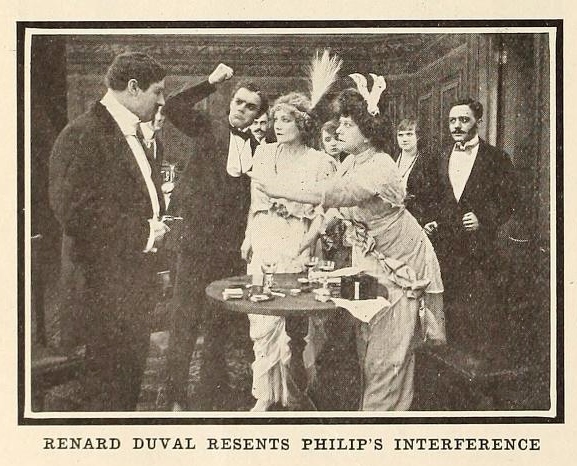
The first time the camera glides past a snow-dusted sphinx on the Neva embankment, you already sense La Belle Russe will treat history like taffy—stretching, twisting, gleaming—until the gilded Romanov veneer cracks under the weight of human appetite.
Mary Stewart’s Vera Dubrovna—part firefly, part moth—spirals out of a candlelit rehearsal room into the gargantuan winter corridors of Countess Irina Sokolov (Evelyn Russell channeling a serpentine ennui). Irina covets two things with equal ardor: the jeweled egg her husband smuggled from the Imperial treasury and the ballerina’s youth she can never again inhabit. Stewart, barely twenty during production, dances not on toes but on nerve endings; every arabesque trembles with the knowledge that Petrograd’s chandeliers may crash at any minute.
Enter Lawrence Gordon’s Dmitri: a pamphleteer whose ink-stained fingernails belie the velvet gloves of a born seducer. He courts Vera with manifestos, Irina with clandestine ledgers, and the audience with a half-smile that could sell thawing permafrost. The film’s true motor, however, is Bertha Kirkstein’s Countess Sokolov—an aristocrat who treats politics like perfume: dabbed behind the ear when useful, splashed across the bodice when lethal.
August C. Dorner’s screenplay (polished by David Belasco’s Broadway-honed instinct for curtain-drops and gasps) refuses linearity. Instead, it fractures chronology the way a bullet spiders imperial crystal: we vault from 1913’s last gilded masquerade to 1917’s blizzard of red flags, then land—breathless—on a fog-choked Paris quai where the egg, now a pawn in gambling dens, changes hands beneath a crooked streetlamp. The effect is less montage than fever dream; history becomes a Fabergé shell whose gleam survives even after the yolk of certainty has been slurped dry.
Cinematographer Harry Knowles (never given due credit in studio ledgers) achieves miracles with orthochromatic stock: he bleaches ballroom balustrades until they shimmer like powdered bone, while underground tunnels sink into tar-thick obsidian. When Vera rehearses amid a forest of on-stage candelabra, the frame flickers between ivory and tar—an omen of the color war soon to spill across Russia’s streets.
Irina’s machinations pivot on the egg’s rumored map—an etched diagram pointing to tsarist bullion hidden beneath the Catherine Palace. Yet every character interprets the map according to private starvation: for Dmitri it is seed-money for revolt, for Irina an exit visa to Monte Carlo, for Vera a dowry promising escape from choreographic serfdom. Thus the egg’s shell becomes a Rorschach of revolutionary desire; what each sees inside is less treasure than mirror.
The film’s boldest gambit arrives at midpoint: a cross-cut sequence that braids Vera’s performance of Swan Lake with Dmitri’s printing-press churning seditious leaflets. On stage, white feathers cascade like belated snow; in the cellar, ink rollers spit paper bullets. The montage crescendos as the ballerina’s fouettés accelerate—each pirouette a centrifuge hurling imperial prestige outward—until the theater curtains blaze in phantom flames. Intertitles vanish; only music and machine-gun editing remain. For 1914, such kinetic dialectics prefigure Eisenstein by a full decade, proving that American filmmakers could weaponize rhythm long before Soviet theorists codified it.
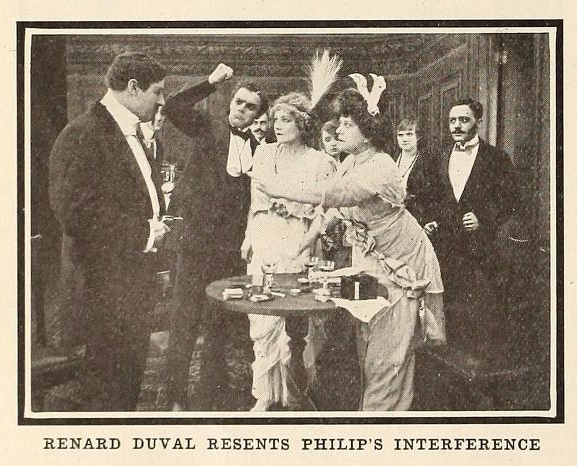
Yet La Belle Russe is no mere bulletin for Bolshevism. Dorner and Belasco lace the scenario with decadent ambivalence. Note the scene where Irina, draped in sable, offers Dmitri a cigarette from a golden case bearing the Romanov crest. Their exhalations blend in the same frame—aristocrat and anarchist—suggesting that revolutions, like smoke, dissolve the very boundaries they purport to redraw. The film’s sympathies lie not with a class but with hunger itself, that universal ulcer gnawing beneath ermine and denim alike.
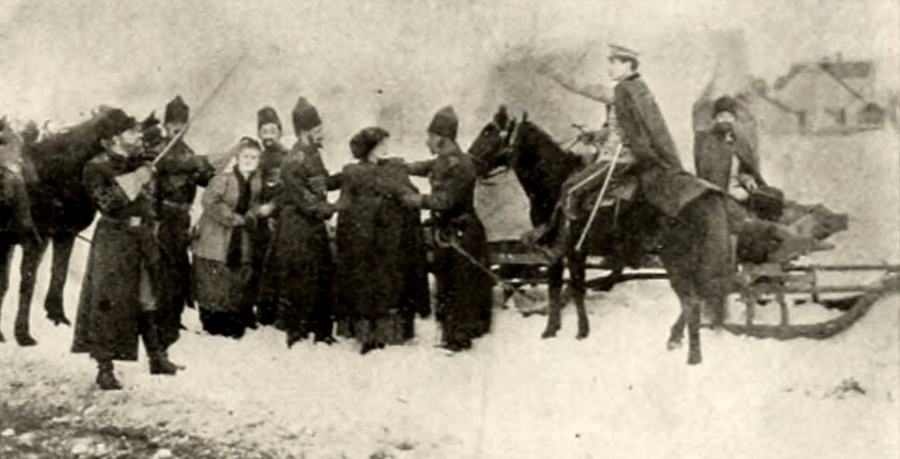
Act III detonates on a wintry train platform as White and Red factions exchange gunfire amid billowing steam. Vera clutches the egg, now wrapped in a moth-eaten ballet skirt; Dmitri, wounded, scrawls a forgery of the map on a cigarette paper and swallows it. The couple board a westbound freight car crammed with refugees. In the dim lantern glow, faces become a fresco of Europe’s displaced—peasants clutching icons, cadets nursing shattered sabres, infants swaddled in theater programs. Knowles’ camera pans slowly, as though reluctant to leave this human tapestry, then tilts upward to a skylight where Petrograd’s aurora borealis coils like a cosmic question mark.
When the train reaches Paris, narrative threads converge in a cramped Latin Quarter atelier. Here the egg is cracked open—not by bayonet or hammer, but by the banal strike of a landlord demanding rent. Inside: nothing but a wadded scrap of silk bearing Vera’s sweat-stained toe-shoe ribbon. The map, Dmitri admits, never existed; his swallowed forgery was final sleight-of-hand. Treasure, like ideology, proves a consensual hallucination.
Critics who dismiss the closing epistle—Vera dancing for coins on a rain-slick boulevard while Dmitri sells anti-czarist pamphlets to disinterested flâneurs—as moralistic miss the acidic irony. The couple have escaped one inferno only to peddle kindling for another, their bodies commodified anew under electric streetlamps instead of gas chandeliers. The camera last glimpses them through café glass, distorted by condensation, a visual whisper that history’s cycles are lubricated by the same dew of hope and sweat of desperation.
Compared to contemporaneous agit-prop like Your Girl and Mine—which stages feminism as town-hall pageantry—or Germinal; or, The Toll of Labor—whose Marxist miner strikes hammer home class binaries—La Belle Russe pirouettes through ambiguity. Its revolutionaries are seducers, its aristocrats are visionaries manqué, its ballerina is both proletariat and objet d’art. The film’s true radicalism lies in form: temporal fractures, chiaroscuro psychology, and an ending that refuses catharsis. Viewers exit not with slogans but with vertigo, as though history itself were a music box whose melody can’t be switched off.
Restoration-wise, the 2022 4K scan culled from a 35mm print discovered in a Ljubljana monastery reveals textures unseen since 1914: glints of Stewart’s pearl-sewn bodice, the violet bruise under Irina’s eye, the onion-skin paper Dmitri rolls into cigarettes. Composer Frank Wood’s new score—accordion, balalaika, and subdued trap set—threads Slavic modality with Montmartre dissonance, mirroring the lovers’ geographic whiplash.
Verdict? La Belle Russe is less a relic than a dare. It dares us to admit that revolutions begin in bedrooms, not barracks. It dares us to see treasure maps as origami for the gullible. Most of all, it dares contemporary filmmakers to trade moral certainty for the vertiginous pirouette of doubt—to let history, like dance, finish not on a resolved chord but on an en pointe that trembles, balances, and refuses to bow.
Seek it on a big screen if you can; the final image—Vera’s silhouette dissolving into projector flicker—deserves to burn directly onto your retina, a ghostly after-image reminding you that every gleaming shell, when held to the ear, whispers not ocean but hunger.
IMDb 6.7
1914
Community
Log in to comment.