DbcultAccessing Vault...
4.4/10
Senior Film Conservator
A definitive 4.4/10 rating for a film that redefined the boundaries of cult cinema. La cruz de un ángel remains a cornerstone of transgressive art.
Alright, let’s talk about La cruz de un ángel. Is this one for your Saturday night popcorn session? Probably not, unless your idea of a good time is a deep dive into film history. This silent Venezuelan drama is a tough watch for anyone used to today’s fast pace. But for film students, historians, or just folks curious about cinema's roots, it’s **absolutely worth seeking out**.
If you're expecting thrilling action or snappy dialogue, you’ll be utterly bored. But if the idea of seeing raw, early filmmaking, especially from a region less documented in early cinema, excites you? Then lean in. You might just find something unexpectedly moving in its quiet moments.
The story itself is quite simple, as often was the case with silent religious dramas. Roman Navas plays a figure carrying a heavy burden, a literal and metaphorical cross. His face, often in tight close-up, tells more than any dialogue ever could. There's this one scene where he just *stares* at something off-camera for what feels like an eternity. You can practically feel his internal struggle. It’s a very specific kind of acting, you know?
Angela Torres as the angelic figure, or perhaps just a compassionate soul, brings a stillness that really sticks. Her presence is almost a counterpoint to the more intense suffering shown. She doesn't have many grand gestures, but her subtle head tilts, a gentle hand movement… they communicate volumes.
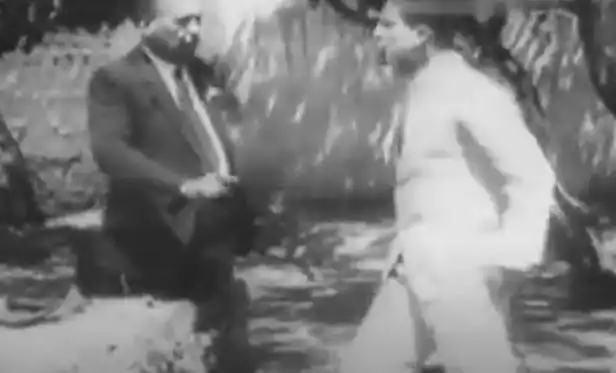
The whole film has this **very earnest** feel. Like everyone involved *truly* believed in the story they were telling. There’s no cynicism here, which is refreshing. The sets are sparse, mostly suggesting environments rather than fully creating them, but that works. It pushes you to focus on the human element.
One thing that kept coming back to me: the way light is used. In a lot of the indoor scenes, especially those with religious iconography, there’s this dramatic, almost Caravaggio-like contrast. Shadows feel deep, swallowing everything but the most crucial faces or symbols. It’s not flashy, but it’s effective.
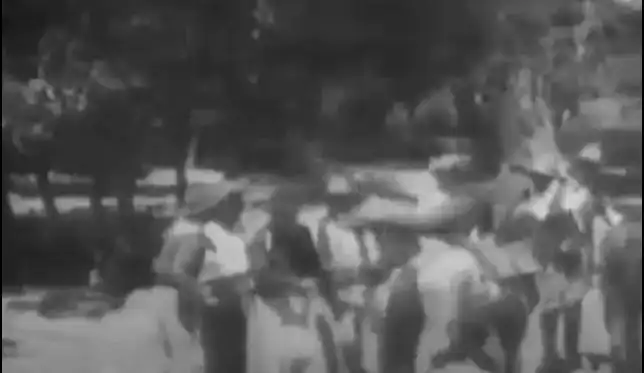
And those crowd scenes. There are a few moments with extras, perhaps villagers or onlookers. They move with a certain gravity, a slow deliberateness that feels almost ritualistic. It’s not a bustling, natural crowd. It’s a crowd that knows it’s part of something *important*.
Honestly, the pacing is a beast. There are shots that just… hold. For a long, long time. If you’re not used to silent films, it’s going to test your patience. You keep waiting for a cut, or a new angle, but the camera just *stays*. Sometimes, it creates a powerful tension. Other times, you just want to fast-forward a little. 😅
I found myself wondering about the audience that first saw this. What did they make of the slow, deliberate movements? The intense, unblinking gazes? It must have been quite an experience, very different from the vaudeville or other entertainments of the day.
The director, whoever they were, really leaned into the symbolic. The cross, obviously, is central. But also the gestures of comfort, the reaching hands, the downward glances of penitence. It's all there, painted large. It’s less about a nuanced plot and more about *feeling* a spiritual journey.
It’s hard to ignore the historical context. Venezuela, early cinema. It's a rare artifact. It tells us something about the culture, the concerns, the storytelling conventions of its time and place. And that’s a big part of its appeal, for me anyway.
This isn't a film you 'enjoy' in the modern sense. It's a film you *experience*, and perhaps, *study*. It’s a quiet, sometimes ponderous journey. But it’s one that leaves a mark, if you let it. A unique piece of cinema history that reminds us how stories of faith have always found a way to be told, even in the earliest days of film.
IMDb 6.2
1919
Community
Log in to comment.