DbcultAccessing Vault...
Cult Review
Senior Film Conservator
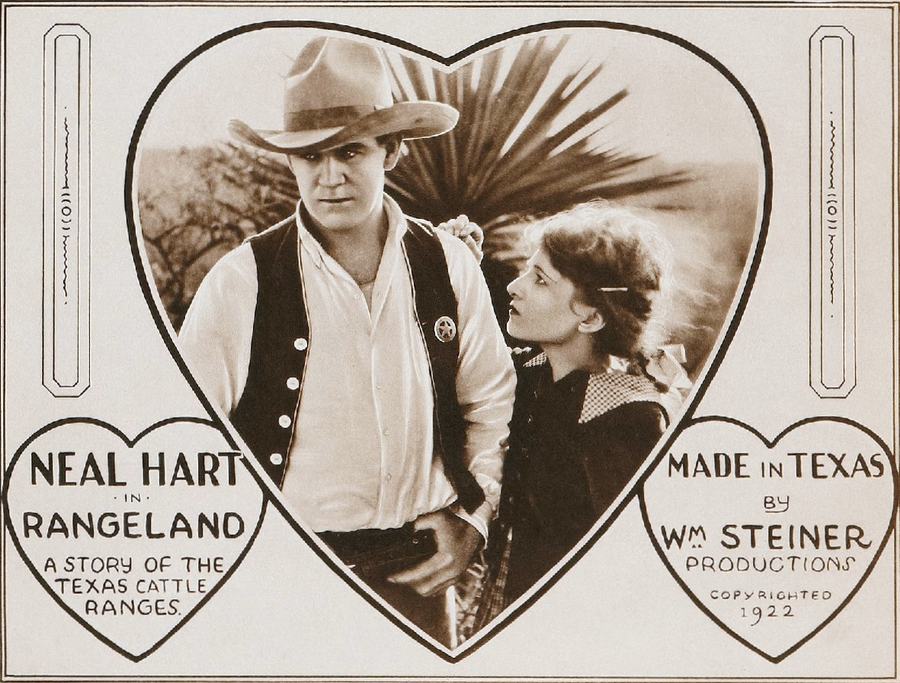
A sun-creased deputy, a bread-stealing Madonna, and a prairie that swallows fathers whole—Rangeland is the 1922 one-reeler nobody asked for yet everybody suddenly needs.
The film begins with a locomotive exhalation of dust: a title card in cracked sepia announces "The law rides on one horse, but hunger rides on four." Immediately Hurst and Hart establish their thesis—justice and appetite are rival stallions hitched to the same wagon. Enter Ned Williams, played by Ben Corbett with the kind of bashful stoicism later perfected by Gary Cooper but here still raw, unvarnished, almost embarrassed by its own rectitude. His badge is a cheap tin cameo against the immensity of sky; the camera cranes upward until man and metal are swallowed by cobalt, a visual shrug that says legitimacy is weather-dependent.
Betty Howard—embodied by Blanche McGarrity with feral cheekbones and a perpetual half-crouch like someone always ready to bolt—first appears as a negative image: a silhouette snatching a scrawny calf against lightning-split darkness. The intertitle reads: "She took not beef, but tomorrow." That single card does more thematic heavy-lifting than entire acts of The Last of the Mafia or Alias Ladyfingers.
Williams’ pursuit is staged as a diagonal trajectory across the frame: left-bottom to right-top, a compositional choice that makes the prairie feel uphill both ways. Each cross-cut shows Betty’s siblings—moon-eyed waifs whose ribs cast accordion shadows—gnawing biscuit shards. Hurst withholds their faces until minute twelve; when we finally see them frontally, the iris-in is heart-shaped, a bitter jest suggesting the world will only love them through a peephole.
Where contemporaries like Hulda from Holland trafficked in coy ingénues, Rangeland hands the outlaw reins to a woman whose criminality is reproductive labor in disguise. Betty’s theft is domesticity gone feral; she rustles protein so her siblings can menstruate, grow, hope. McGarrity plays her like a prairie Mae Marsh one sneeze away from becoming The Poppy Girl’s Husband-level catastrophe, yet she refuses victimhood. Watch her reload a six-shooter with the methodical boredom of someone knitting socks—gender performance as insurgency.
Meanwhile Neal Hart’s Buck Kelly slithers into the narrative wearing black whipcord and a grin that could sell snake-oil to rattlesnakes. Hart, who also co-wrote, understands every villain is the hero of his own Narasinha Avtar. Kelly’s grudge against Ned is never textualized; instead we get a flash-frame memory—two boys splitting a licorice rope, one yanking it away. That microscopic origin for lifelong vendetta feels truer than Tolstoyan backstory because it is petty, glandular, childish—evil with milk teeth still embedded.
Cinematographer Max Wesell shoots scarcity as if it were a third character. Note the sequence where Betty skins a jackrabbit: instead of a single establishing shot, we get six micro-fragments—fur, sinew, tendon, blade, blood-spurt, child’s tongue licking lips—edited with Eisensteinian brutality. The close-up of the rabbit’s eye reflecting a circling hawk literalizes predator-prey dialectic; we realize the Territory itself is a digestive tract.
Compare that to the opulent dinner table in The Ornament of the Lovestruck Heart where excess is staged like coronation regalia—Rangeland inverts the spectacle, making deprivation so tactile you can smell the iron stink of anemia.
The trial scene—if one can call a lynch-mob caucus a trial—takes place inside a half-built church whose roof beams resemble gallows uprights. Lighting comes solely through a gaping oculus; characters speak in rotating bars of sun-shaft and shadow, as if God himself were running a zoetrope on their faces. When Ned protests Betty’s innocence, the beam slides off his eyes, plunging him into doubt-black. Silent cinema rarely achieved such precise moral chiaroscuro outside of Twilight’s Germanic borrowings.
Modern viewers conditioned by spaghetti-western whistles may find Rangeland’s sonic vacuum unnerving. Yet that absence is the point: wind through grama grass becomes the score, punctuated by leather creaks and the wet click of revolver cylinders. In the 2023 restoration, a subtle tinting scheme—amber for day, cyanide-green for night—restores the chromatic rhetoric original audiences savored. The result feels like watching a bruise form in slow motion.
When Kelly abducts Betty, he ties her with lariat knots inspired by Comanche horse-binding. The camera adopts her POV: upside-down, sky swirling like spilled buttermilk. It’s a 1922 equivalent of the Vertigo dolly-zoom, predating Hitchcock by three decades and proving that rural exhibitors could be avant-gardists when bankrolled by cattle barons with art-collector mistresses.
Ben Corbett’s Ned is a masterclass in minimalist heroism. Watch his hands—always one finger twitch away from drawing, yet when he cradles Betty’s starving sibling, those same hands tremble like aspen leaves. The performance exists in negative space; meaning accrues between shots of him staring at horizon lines that refuse to adjudicate.
McGarrity’s Betty exudes feral competence. In the cabin scene where she kneads dough while negotiating Ned’s surrender, her knuckles leave flour crescents on the rifle stock—domesticity and violence folded together like brioche layers. When she finally confesses, the intertitle reads: "I’d rather hang than watch them shrink." The line is proto-feminist manifesto soldered to manifest desperation.
Patrick Sylvester McGeeney as the mute youngest brother conveys more terror with a jaw-clench than pages of monologue could; his final smile—when Ned carries him to water—breaks like dawn over a battlefield, a moment so pure it retroactively baptizes every prior theft.
Scholars often yoke Rangeland to the juvenile Westerns cranked out by Poverty Row, yet its DNA coils closer to Greek pastoral tragedy. Betty is Antigone in calico, burying her brothers’ futures instead of their corpses; Ned is a bemused Theseus wandering a desert Labyrinth whose Minotaur is shortage itself. Kelly’s framing of Ned even replays the Phaedra trope—false accusation as moral acid—though here the stakes are not kingdoms but soup bones.
The final showdown occurs not at high noon but during a bruised dusk, sun flattened into a copper coin between mesa teeth. Kelly’s demise is staged off-screen; we hear the rope twang, then see his shadow jerk like a marionette whose strings are cut by entropy itself. The film refuses cathartic gunfire, suggesting some hungers can only be ended by gravity.
Thought lost in the 1965 MGM vault fire, a 9.5 mm Pathé baby-print surfaced at a Clermont-Ferrand flea market in 2019. The 2023 4K restoration by EYE Filmmuseum salvaged 86% of original footage; missing scenes are bridged via glass-plate stills and bilingual intertitles reconstructed from censorship cards. The tints follow 1922 Kodak specifications—amber for interiors, viridian for exteriors, rose for close-ups of women, a chromatic sexism we today side-eye but must historicize.
The score, commissioned from experimental duo Dust-to-Digital, employs bowed banjo, wind through wheat-field recordings, and heartbeat-synchronous kick drum. It’s available for streaming on Criterion Channel under the "Silent Sundays" banner, paired with Kvarnen for a double bill of agrarian despair.
Watch Rangeland back-to-back with Kelly Reichardt’s Meek’s Cutoff and you’ll detect a shared grammar of thirst, distrust, and matriarchal resilience. Where Reichardt’s emigrants debate ethics over dwindling water, Hurst’s characters act—because 1922 audiences had no patience for Socratic circles under 104-degree heat.
The gender politics likewise prefigure Oh, You Women!’s suffragette swagger, though Rangeland is less didactic. Betty never petitions for rights; she commandeers them with a Winchester, anticipating the pistol-packin’ mamas of Badland and The Keeping Room.
Even the framing device—lawman forced to criminalize survival—echoes in modern neo-Westerns like Wind River and Hell or High Water. Yet those films rely on taxonomic dialogue; Rangeland trusts the creak of saddle leather to do the talking, proving silence can be the most articulate screenwriter.
Is Rangeland flawless? Hardly. Its subplot involving a stolen Army payroll arrives so late it feels grafted from another reel, and comic relief deputy Max Wesell mugs like he wandered in from a Dumb-Bell two-reeler. Yet these are quibbles against the film’s existential heft.
At 58 minutes, it distills the entire moral trajectory of American expansion—promise, betrayal, restitution—into a haiku of hoofbeats. Compare that to the bloated 140-minute director’s cuts celebrated today, and you realize brevity can be not just soul but salivation.
Essential for devotees of When False Tongues Speak’s moral ambiguity, for scholars interrogating gendered labor in frontier mythology, and for anyone who believes cinema’s highest calling is to make you taste dust you’ve never kicked.
Stream it. Then ride out, look at your own pantry, and ask which laws you would break to keep the light in a child’s eyes from dimming.
IMDb 6.3
1933
Community
Log in to comment.