DbcultAccessing Vault...
Cult Review
Senior Film Conservator
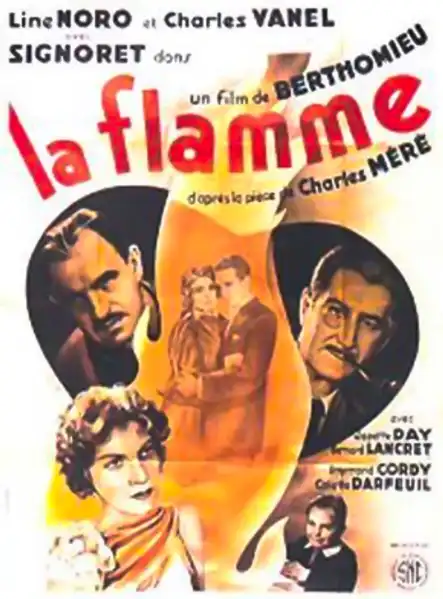
So, La flamme. If you’re someone who genuinely enjoys digging through older French cinema, particularly from the 1930s, then yeah, this might just be a **curiosity** worth your time. Anyone expecting a sleek, modern drama with rapid pacing or big action will probably bounce off it pretty hard. This one’s for the patient, the explorers.
It’s one of those films where you can just *feel* the era. The way the characters talk, the specific set designs, it’s all very much… of its time. Not a bad thing, just something you really need to settle into.
Charles Vanel, of course, he’s got this incredible **gravitas** even then. He carries so many of the scenes just with his presence. You genuinely can’t take your eyes off him, even when the dialogue gets a little much for modern ears. He just commands the screen. 🔥
The title itself, *La flamme* (The Flame), it really makes you think about what that 'flame' actually is. Is it passion? A destructive desire? Sometimes it feels like it represents a person, other times just a concept hanging over everything. It’s quite poetic, in a way.
There’s this one moment, quite early on, where a character simply *stares* out a window for what feels like ages. No words, just this quiet, heavy silence. It’s almost too long, honestly, but then it kinda clicks into place somehow. It makes you lean in, even if you’re not sure why.
And then other bits, like a particular argument scene with Blanche Denège, where everyone is just so **loud**. You wonder if that was just how they did things back then, or if it was meant to be particularly intense. It’s a definite shift in volume, let me tell you. 🗣️
You know, watching these old films, you start noticing the really small things. The way a door creaks just so, or how a character’s shadow falls perfectly on a wall. It wasn’t always slick, but sometimes those imperfections add a certain *charm* to it all.
It’s not trying to be flashy, not at all. It’s a very contained story, focused on just a few people and their internal struggles. No big spectacle, which is honestly kinda refreshing sometimes. Just pure human drama.
Don’t go into this expecting a thrilling plot with twists and turns every five minutes. It’s more about the slow burn, the way emotions play out in a slightly theatrical way. A bit like the quiet intensity you might find in Faint Hearts, but with a distinct French flavor.
The whole thing feels a bit like a stage play sometimes, translated directly to film without too many cinematic tricks. You get a lot of close-ups on faces, trying to convey everything through intense expression. It’s all in the eyes, you know?
Some scenes really do hit home, even with the aged quality of the film. Others, you might find your mind wandering for a second, waiting for the next *big* emotional beat to drop. It’s an **uneven** watch, for sure. But that's part of its character.
It’s a curious watch if you’re genuinely exploring film history and want to see how stories were told back then. As pure entertainment today? Probably not for everyone. But it does stick with you, a bit like a lingering scent from an old, beloved book. 📖
IMDb 6.5
1929
Community
Log in to comment.