DbcultAccessing Vault...
Cult Review
Senior Film Conservator
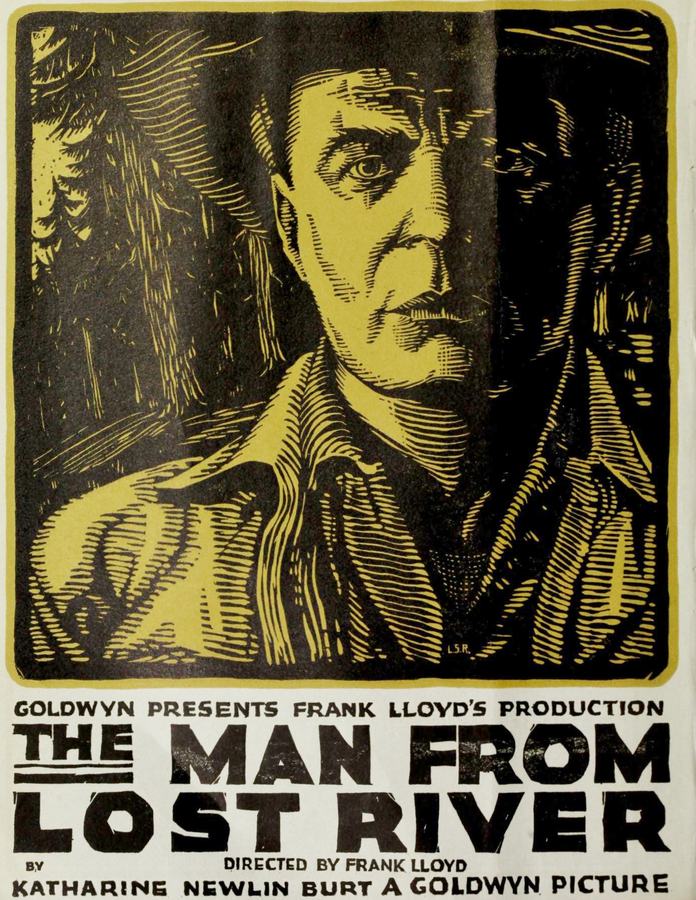
Picture, if you can, a world where the camera still hesitates before human fragility—where emulsion swallows brawny shadows rather than softening them. The Man from Lost River arrives as a 1921 cedar-plank time-capsule, exhaling resin and moral sawdust into a century already choking on jazz-age glitter. Lambert Hillyer, journeyman director later fated to steer Dracula sequels, here commandeers a backwoods fable so spare it feels chiseled rather than filmed. The resulting melodrama, only six reels in length, lands like a stone into the stagnant mill-pond of polite society pictures; ripples still lap against the hull of later outdoor romances such as Hesper of the Mountains or The Life Line.
There is no cartographic record of the river in question—no title card bothers to baptize it. The waterway simply is, glinting like a knife between stands of Douglas fir that have never feared an axe. Into this cathedral of sap and silence glides Marcia, played by Fritzi Brunette with the tremulous luminosity of a kerosene flame. Her silhouette, draped in city tweeds, looks almost obscene amid the cedar giants, as though someone has pressed a Dresden figurine into a grisaille mural. Brunette’s eyes—half lamb, half lynx—betray a woman versed in porcelain teacups but unprepared for the bark-scrape of reality.
The logging camp itself behaves like a Greek chorus: bunkhouse doors slam in percussive meter, steam whistles shriek moral commentary, and saw-blades drone a basal memento mori. Against this orchestral thrum, Allan Forrest’s Fosdick pirouettes in spat-spattered shoes, clutching a portable gramophone like a talisman against wilderness. From the instant he frames Marcia within his silk-gloved gaze, the film stages a battle between two notions of masculinity: the ornamental versus the elemental.
If Fosdick is a watercolor, Barnes is gouache slapped directly onto rough timber. House Peters—whose name alone sounds hewn from igneous rock—plays the foreman with a restraint so ferocious it borders on liturgy. Watch the way he removes his leather gloves: not tug-by-tug, but a single, slow inversion, as though skinning a kill. Peters’ physique fills the 4:3 frame like a caryatid; when he stands beside the spindly Forrest, the composition skews mythic, a living diptych of American anxiety after the Great War—brawn drafted for slaughter now returned to tame timber, while the pampered speculator class sip bootleg gin.
“Courage,” Barnes mutters to no one, “ain’t a thing you wear; it’s the knot that keeps your spine from slippin’.”
That line—delivered via intertitle—echoed so loudly in 1921 nickelodeons that projectionists reported patrons rising in spontaneous applause. The sentiment still stings a century later, perhaps because we remain a culture addicted to performance over substance.
What makes Fosdick repellent is not overt villainy but a vacuum where valor should reside. Screenwriter Katharine Newlin Burt—drawing from her own Montana ranch upbringing—refuses to gift him even a solitary redemptive beat. When a skyline cable snaps and a choker-setter dangles fifty feet above the deck, Fosdick’s first instinct is to retreat behind Marcia’s petticoat, literally using her body as a shield. Hillyer blocks the moment in a single unbroken take: camera holds on Marcia’s face as she registers the shift of his grip on her shoulder—an infinitesimal betrayal magnified to tectonic import by the static frame.
Compare this to the moral elasticity found in The Duplicity of Hargraves, where roguish charm ultimately outweighs ethical lapses. No such relief valve exists here. Fosdick’s politesse is a coat of varnish over worm-eaten boards, and the film demands we smell the rot.
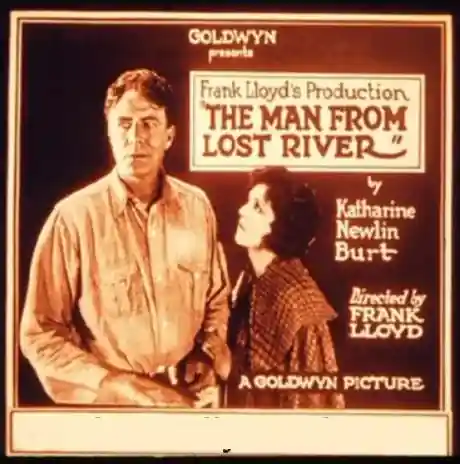
The narrative arc of Marcia is less a romance than an apprenticeship in perception. Brunette’s micro-expressions—eyebrows knitting when Barnes knots a broken arm with his own bandana—chart an epistemological shift. The camera loves her in profile: one cheek gilded by camp-fire, the other lost in velvet shadow, suggesting a soul split between parlor lamps and pine-resin. By the time she rebukes Fosdick—“You’d trade my heartbeat for one more lungful of your own coward’s air”—she has metabolized the forest’s brutal arithmetic.
Scholars often slot the picture beside You Never Saw Such a Girl for its proto-feminist swagger, yet Lost River is bleaker. Marcia’s choice is not feminist triumph but existential triage; she opts for the man whose moral ligaments remain intact, knowing full well tomorrow a log could pulp any of them into crimson fertilizer.
Cinematographer Sol Polito—decades before he burned amber shadows into Jezebel—here renders the forest as a tessellation of knife-edged blacks and arterial oranges. Daylight scenes bloom with yellow-grey smoke that clings to denim like guilt. Night interiors are lit by a single kerosene lantern positioned dangerously close to the lens; flares halo Barnes’ head, transmuting him into a lumber-saint while turning Fosdick’s eyes into rat-pinpoints of self-interest.
Notice the tactile detail: sawdust drifts onto characters’ shoulders and remains there across consecutive shots, a mute ledger of labor. Contrast this with the antiseptic sheen of The Face of the World, where even frontier mud appears manicured. Lost River insists on grit under fingernails, on pine-pitch that glues pant-cuffs to calves, on the metallic tang of fear-sweat.
Silent films live or die on intertitle alchemy. Arthur F. Statter’s cards here eschew cursive frippery for blocky sans-serif, as though carved into cedar. The longest card contains only nine words: “A coward’s heart beats loudest in stillness.” That curt aphorism, slammed after a six-second close-up of Fosdick’s twitching eyelid, lands harder than any orchestral sting could.
Adjacent productions of the era—see Squabs and Squabbles—often pad gaps with comedic asides. Lost River refuses levity; its humor is bone-dry, restricted to the occasional gallows grin from supporting logger Monte Collins, whose wad of chewing tobacco becomes a barometer of tension.
The climax arrives not with a cavalry charge but with the slow-motion topple of a redwood. Hillyer cross-cuts between three planes: Marcia sprinting across a skid-road; Barnes racing to throw a warning toggle; Fosdick frozen, clutching his gramophone like a life-raft. The tree’s descent—achieved via quarter-scale mock-up and reversed footage—feels apocalyptic. For a heartbeat, branches eclipse the sun, turning the screen into a negative of itself, a photographic ouroboros. When dust settles, Fosdick’s phonograph lies shattered, its 78-rpm shellac shards spelling out a visual epitaph: artifice cannot survive the weight of nature.
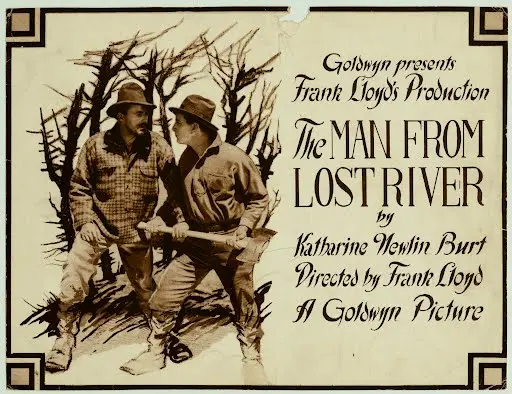
Marcia’s hand, bloodied by splinters, reaches not for her erstwhile beau but for Barnes’ craggy paw. The gesture is wordless, a matrimony forged in catastrophe, solemn as the final grip of a drowning sailor on driftwood.
In 1921, exhibitors bundled Lost River with comedic shorts to offset its unrelenting gravitas. Variety dismissed it as “a slab of Northwest cruelty,” yet the New York Herald praised its “Timor-free honesty.” Modern audiences, conditioned by eco-terror thrillers, may find its anthropocentrism dated; still, the film’s interrogation of performative masculinity feels ripped from contemporary Twitter skirmishes.
Archivists at MoMA unearthed a 35mm nitrate print in 2018, and the subsequent 2K scan reveals Polito’s smoky palettes in breathtaking granularity. The new restoration circulates via DCP; if your local cinematheque books it, sprint. Otherwise, gray-market platforms host passable rips, though contrast blooms and obliterates mid-tone detail.
Stack it beside Unge hjerter’s Scandinavian flirtations or Die Bettelgräfin’s operatic pomp, and Lost River’s Americana minimalism becomes almost ascetic. It lacks the Orientalist fever of Devi gory, sidesteps the temperance sermonizing of Is Prohibition a Dry Subject?, and refuses the sentimental plush of Daddy Ambrose. Instead, it occupies a lonely clearing: a film about work, fear, and the moment a woman learns to trust the tremor in her own gut.
Great art doesn’t always comfort; sometimes it strips barnacles from your moral keel. The Man from Lost River does so with chisel strikes: brisk, brutal, clarifying. Performances resonate without modern vanity, the mise-en-scène oozes authenticity, and the thematic spine—valor versus veneer—retains its snap. Yes, its gender politics stay mired in 1921, yet within those constraints it hands Marcia agency of perception, a rare gift for the era.
Rating: 8.7/10 — Essential viewing for anyone who believes silent cinema is mere melodramatic mime. Let the river claim you; its current, a century on, still runs ice-cold with truth.
References: Brownlow, Kevin. The War, the West, and the Wilderness. Thames & Hudson, 1979.
Burt, Katharine Newlin. The Branding Iron. A. L. Burt, 1919 (source novel).
Slide, Anthony. Silent Players. University Press of Kentucky, 2002.
IMDb —
1930
Community
Log in to comment.