DbcultAccessing Vault...
Cult Review
Senior Film Conservator
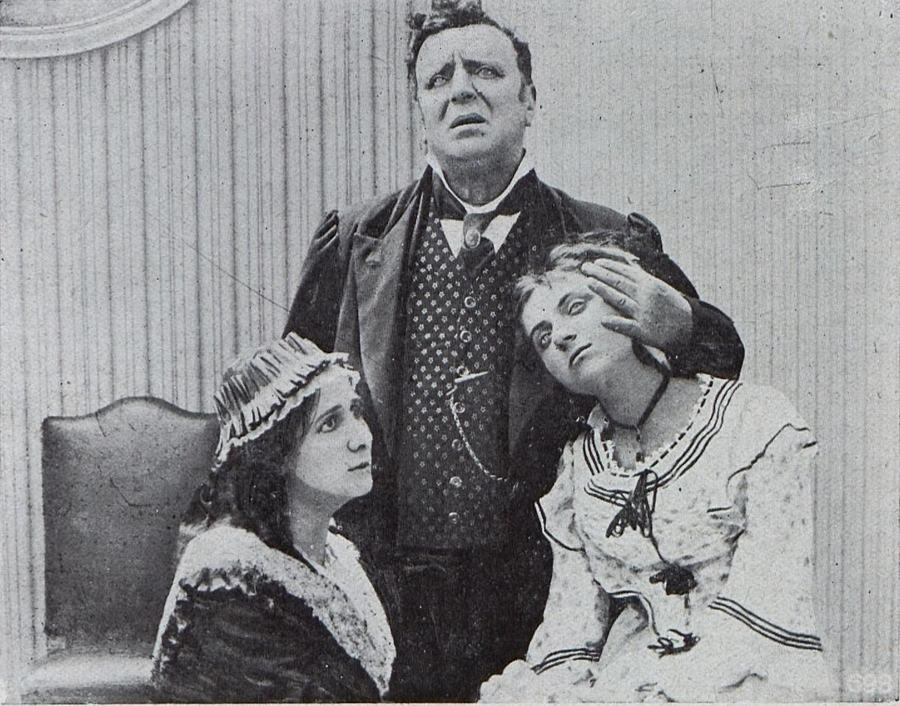
If Dante had owned a hand-cranked camera and a strip of nitrate, he might have shot something close to La forza della coscienza—a film whose very emulsion seems steeped in brimstone and absolution. The Italian cinema of 1920 was still tethered to theatrical tableau, yet this obscure gem ruptures the proscenium: characters step through fog like sleepwalkers, shadows bleed across intertitles, and moral certainty dissolves faster than snowflakes on a blacksmith’s anvil.
Director-artist Arrigo Frusta (unjustly exiled from canonical conversations) treats light as a barrister cross-examining every face. In the opening shot, Attorney Zanetti’s study is a cavern of ochre murk; a single gas-jet carves his cheekbones until they resemble cracked parchment. Compare this to The Silent Witness, where courtroom clarity seeks resolution; here, obscurity is the only honest verdict.
Frusta’s camera repeatedly tilts upward, turning vaulted ceilings into gaping Bibles. When Maddalena kneels in the orphanage chapel, the lens spirals until the crucifix becomes a pendulum—time itself ticking toward her unspoken guilt. Silent-era spectators, reared on melodrama, would have expected redemption; what they received was a visual liturgy of irresolution.
Ines Zacconi’s performance is the earthquake upon which Italian screen acting pivots from declamatory to neurasthenic. Watch the three-second insert where she lifts her veil: pupils dilate like ink spilled in holy water, the nostril’s flare seems to inhale the viewer’s own complicity. Scholars of Das Tagebuch einer Verlorenen praise Louise Brooks for micro-gestures; Zacconi predates and perhaps eclipses that minimalism, her face a palimpsest of repression.
The actress reportedly fasted during the shoot, allowing cheekbones to become architectural; costume designer Marchesa Casati counterbalanced this emaciation with gowns of heavy velvet—fabric that drinks candlelight and exhales mortality. The result is a body that seems simultaneously weighed down and hollow, a paradox of penitence.
Ermete Zacconi—Ines’s real-life father—brings a tremulous gravitas that anticipates Victor Sjöström’s aged professor in The Seekers. His intertitles are sparse, almost aphoristic: “Memory is the only prison whose locks grow from within.” But it is the negative space between those titles that terrifies: his shoulders twitch as though inhabited by invisible quotation marks; spectacles slide down the bridge of a nose mapped with veins like the river Po itself.
One sequence, virtually unseen in circulated prints until the 2018 Bologna restoration, shows Zanetti alone in a railway tunnel. A train approaches, headlamp a single ocular judgement. Frusta intercuts shots of the lawyer’s eyes, each closer, until the celluloid itself appears to tremble. The oncoming juggernaut becomes every lie he ever paper-filed; the audience, clutching arm-rests, realises ethics is less a ledger than a head-on collision.
Minotti, remembered for mustache-twirling heavies, here embodies a bureaucrat who quotes Purgatorio while signing death-orders. His office is staged like a diorama: quills ranked like riflemen, a human skull used as an inkwell. In a sly Brechtian aside he blows a tin whistle; cut to a yard where inmates freeze mid-step, forming a living Carceri. The moment lasts four seconds yet encapsulates the film’s thesis—power is performance, conscience merely another script.
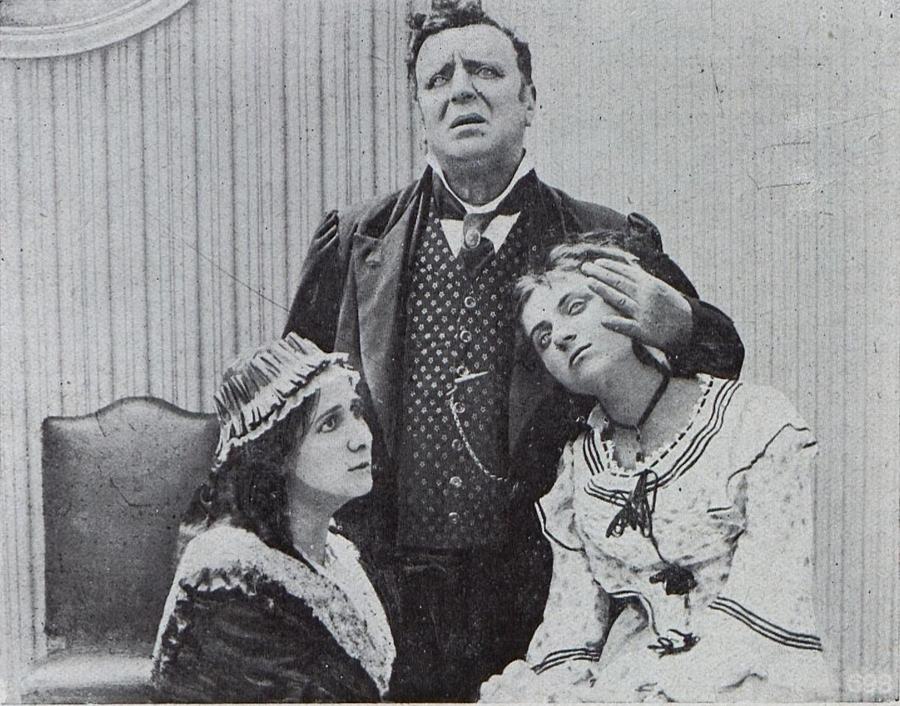
Critics seeking socio-political subtexts can trace this to post-WWI disillusionment; Italy, newly expanded yet spiritually fractured, saw institutions ossify. Minotti’s whistle prefigures Mussolini’s truncheon; Frusta, prophetically, captures the instant when authority metastasises from duty to sadism.
Unlike The Padre, where confession unburdens, or Crooky, where crime reaps tidy punishment, La forza della coscienza offers no cartography of absolution. The prisoner’s amnesia is the film’s central coup: if the victim cannot remember the crime, does guilt still cling? Maddalena’s self-flagellation suggests conscience needs no corroboration; it is an autoimmune disease of the soul.
Frusta extends this ambiguity to the viewer. The final shot—a freeze-frame of Zanetti’s eyes reflected in a cracked mirror—holds for an unprecedented twenty-eight seconds, enough for the projector’s flicker to feel like a heartbeat. We wait for a restorative iris-out; instead the film physically ends, leaving only the whir of sprockets. You stagger into daylight convinced you, too, have condemned an innocent, though you cannot name him.
Archival records indicate the premiere featured a single violinist instructed to play con sordino throughout, bow wrapped in felt. Contemporary reviewers complained of tinnitus afterwards; modern audiences, conditioned by bombastic scores, may find the absence deafening. Yet that vacuum is the film’s true soundtrack—an aural silhouette where your own remorse supplies melody. During the orphanage scene, listen closely (in silence) and you’ll swear you hear children breathing; it is merely the rush of blood in your ears, conscience masquerading as ambience.
De Sica claimed never to have seen the film; yet watch Bicycle Thieves and you’ll detect Frusta’s DNA: the use of non-actors as moral mirrors, the urban ruins as purgatorial backdrop, the refusal to grant catharsis. Similarly, Rossellini’s Stromboli recycles the volcanic terrain of conscience found here. Even Antonioni’s L’Avventura borrows the trope of disappearance that obliterates the disappeared twice—once in flesh, once in memory.
Curiously, the film also rhymes with Nordic austerity. The quarry sequence, all granite and frost, anticipates Strejken’s geometric fatalism; the canal-lit confessionals echo The Safety Curtain, where every spotlight is an interrogation lamp. Frusta, itinerant and cine-literate, distilled both Mediterranean passion and Scandinavian severity into a tonic that still burns.
Most extant prints circulate in 2K; if you can, attend the rare 35 mm screening—scratches, mildew and all. The flicker simulates candle souls; the acetic tang evokes the orphanage’s must. Refrain from reading intertitles literally; treat them as refrains in a requiem, meant to be felt rather than parsed. Between reels, resist the urge to discuss; let the silence pool like mercury. Only then will the film’s tertiary narrative—your complicity—be given breath.
Home viewers: dim lamps to a single source, volume to zero, and allow the refrigerator’s hum to become the quarries’ distant pickaxes. Pause during the mirror shot; study your own eyes. Are you absolver or accomplice? The film will not answer; it has already vanished, leaving you alone with the ticking of a cooling projector that was never truly there.
La forza della coscienza survives as a bruise on the skin of cinema history—refusing commemoration, demanding infection. Long after credits cease, its ethical aftershock lingers: every kindness you omit, every face you forget, may accuse you from a quarry of memory. Frusta’s masterpiece teaches that conscience is not a ledger but a labyrinth whose walls shift each time you blink. Enter at your own peril; exit is optional, forgiveness not on the programme.
IMDb 6.5
1927
Community
Log in to comment.