DbcultAccessing Vault...
Cult Review
Senior Film Conservator
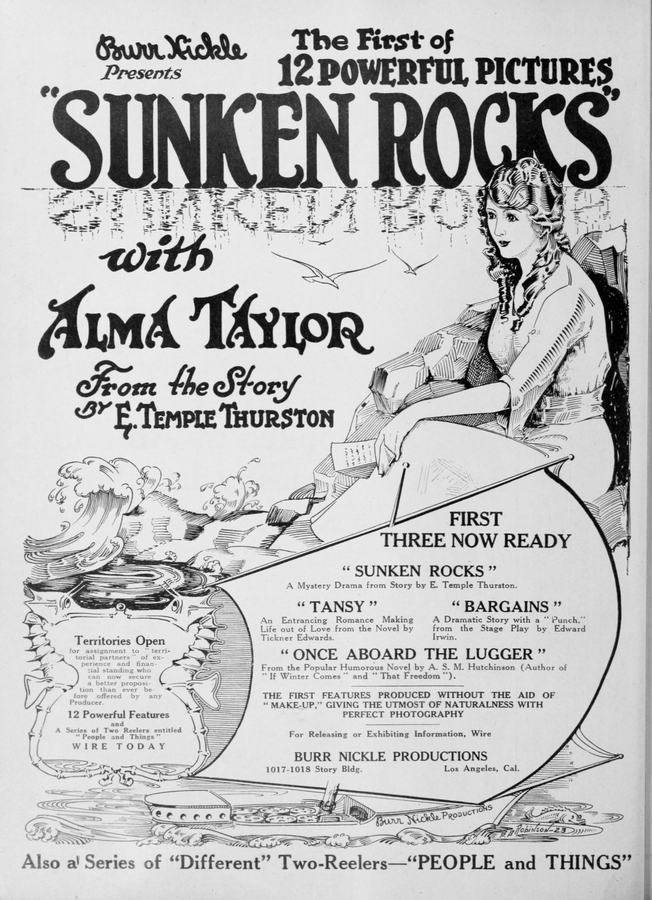
Stepping into the shadowy world of 1920 cinema, one encounters Sunken Rocks, a film that, even a century later, retains a disquieting potency. It’s a narrative less concerned with grand explosions or overt villainy and more with the insidious creep of a meticulously planned moral transgression. The genius, or perhaps the horror, of E. Temple Thurston's original vision, translated to the screen, lies in its audacious premise: a doctor, a figure traditionally associated with healing and life, perverts his very essence to orchestrate a macabre charade for love, or rather, for possession. This isn't merely a tale of crime; it's a chilling dissection of ambition curdled into obsession, played out against the backdrop of a society grappling with its own nascent understanding of psychological manipulation.
John MacAndrews, portraying the titular Dr. MacAndrews, delivers a performance that is, by silent film standards, remarkably nuanced and deeply unsettling. His doctor is not a raving psychopath, but a man of calculated, chilling composure. The film opens not with a dramatic declaration of intent, but with the subtle, almost imperceptible shift in his demeanor upon witnessing the unfortunate demise of the local drunkard. It's a testament to MacAndrews' skill that we see the gears turning in the doctor's mind, not through dialogue, but through the slight tightening of his jaw, the flicker in his eyes, the deliberate, almost surgical movements as he begins to tamper with the scene. The film avoids the temptation of making him overtly villainous from the outset, instead building his monstrousness through a series of cold, logical steps. This approach creates a far more disturbing character, one whose actions resonate with a terrifying plausibility. Unlike the more overt machinations seen in a film like Intrigue, where the plot twists are often external and dramatic, Sunken Rocks delves into an internal 'intrigue,' a battle fought solely within the doctor's twisted moral landscape.
Central to the doctor's nefarious scheme is the unwitting object of his obsession: the widow. Alma Taylor, a prominent figure of the era, imbues this character with a fragile vulnerability that is utterly heartbreaking. Her grief, initially uncomplicated by suspicion, becomes a canvas upon which Dr. MacAndrews paints his masterpiece of deceit. Taylor masterfully conveys the transition from shock to sorrow, then to a hesitant gratitude towards the 'benevolent' doctor who appears to be her only solace. Her performance is a masterclass in silent era emotional expression, relying on subtle gestures, the tilt of her head, the welling of tears in her eyes, to communicate a profound sense of loss and subsequent bewilderment. The tragedy lies not just in her husband's death, but in her innocent susceptibility to the doctor's manipulation. She is a pawn in a game she doesn't even know is being played, her reliance on MacAndrews growing with each fabricated clue and feigned comfort. This emotional resonance is what elevates Sunken Rocks beyond a mere thriller; it's a poignant study of trust betrayed, reminiscent in its emotional intensity to the raw human suffering depicted in something like Isterzannye dushi, albeit with a different kind of torment.
The film's reliance on visual storytelling is, of course, a hallmark of the silent era, but Sunken Rocks employs it with exceptional skill. The cinematography, though perhaps rudimentary by modern standards, effectively uses shadow and light to create an atmosphere of impending doom and moral ambiguity. Close-ups on the doctor's hands as he alters evidence, or on the widow's face as she receives false comfort, amplify the psychological tension. The intertitles, rather than merely advancing the plot, are crafted with a literary elegance that enhances the film's artistic merit, sometimes hinting at the deeper moral quandaries without explicitly stating them. There's a delicate balance between showing and suggesting, allowing the audience to piece together the doctor's escalating depravity. This subtlety in building suspense is a far cry from the more overt action-driven narratives of the time, such as The Whirl of Life, which relied on physical dynamism. Here, the 'whirl' is entirely internal, a vortex of conscience and calculated evil.
The narrative, penned by E. Temple Thurston, is nothing short of brilliant in its dark ingenuity. It's a testament to his storytelling prowess that a plot so morally reprehensible can be so utterly captivating. Thurston doesn't just present a crime; he meticulously details the psychological steps leading to it, and the subsequent layers of deception required to sustain it. The film doesn't rush to a dramatic reveal, but rather allows the audience to witness the slow, agonizing construction of a false reality. The supporting cast, including Nigel Playfair, Gerald Ames, James Carew, and Minnie Rayner, each contribute to this complex tapestry, lending credibility to the provincial setting and the unfolding drama. Their reactions, their unwitting participation in the doctor's charade, serve to ground the extraordinary plot in a believable social context. This intricate plotting, where every detail serves a purpose, can be compared to the deliberate construction of a legal argument, much like the intellectual challenges presented in a film like The Professor, though with far more sinister implications.
Sunken Rocks probes uncomfortable questions about human nature, ambition, and the fragility of truth. It forces the audience to confront the idea that evil can wear a benevolent mask, and that trust can be weaponized. The film's title itself is a powerful metaphor: the hidden dangers beneath a seemingly calm surface, the unseen malevolence that can wreck lives. This thematic depth elevates it beyond a mere melodramatic thriller, placing it in conversation with films that explore the darker aspects of the human psyche and societal structures. One might draw parallels to the way House of Cards, years later, would dissect political ambition and manipulation, or how The Man Who Woke Up might explore shifts in perception and reality. Here, the 'waking up' would be the widow's horrifying realization of the truth, if it ever comes.
While not as widely remembered as some of its contemporaries, Sunken Rocks deserves a place in the pantheon of early psychological thrillers. Its ability to create profound suspense and moral tension with the limited tools of the silent era is remarkable. It doesn't rely on grand gestures or sensationalism, but on the quiet, chilling unfolding of a man's descent into calculated depravity. The performances, particularly from John MacAndrews and Alma Taylor, are compelling, drawing the viewer into their respective orbits of villainy and victimhood. The film serves as a potent reminder of the enduring power of narrative to explore the darkest corners of the human heart, and how even the most mundane settings can harbor the most insidious plots. It’s a compelling cinematic artifact that speaks volumes about the anxieties and moral complexities of its time, and indeed, of all time. The insidious nature of the doctor's plot finds echoes in the themes of social climbing and moral compromise explored in A Little Brother of the Rich, albeit with a far more murderous twist. Similarly, the quiet desperation and hidden lives in films like The Little Dutch Girl or The Bachelor's Romance hint at the unseen depths of human motivation that Sunken Rocks so boldly uncovers.
The film's exploration of deception and its consequences extends beyond the personal tragedy of the widow. It subtly critiques the ease with which appearances can be manipulated, and the inherent trust placed in figures of authority, like a doctor. This societal vulnerability to well-crafted lies is a theme that resonates across decades, proving that while technology advances, the fundamental flaws of human perception and susceptibility remain constant. One might consider the broader implications of such deception in contexts like For King and Country, where larger-scale deceptions impact nations, or the personal betrayals in Blue Blood. In Sunken Rocks, the canvas is smaller, more intimate, but the moral stain is no less profound. It’s a film that lingers, prompting reflection on the darkness that can lurk beneath the most respectable exteriors, much like the hidden dangers of the titular rocks, unseen until they cause irreparable damage. The precision of the doctor's machinations, the careful arrangement of details to create a false reality, is almost a perverse form of artistry, a dark ballet of manipulation that leaves a lasting impression on the viewer, long after the final fade to black. It's a triumph of silent cinema's capacity for intricate psychological drama, demanding attention not through noise, but through the profound eloquence of its visual narrative and the chilling implications of its central conceit.

IMDb 6.2
1936
Community
Log in to comment.