DbcultAccessing Vault...
Cult Review
Senior Film Conservator
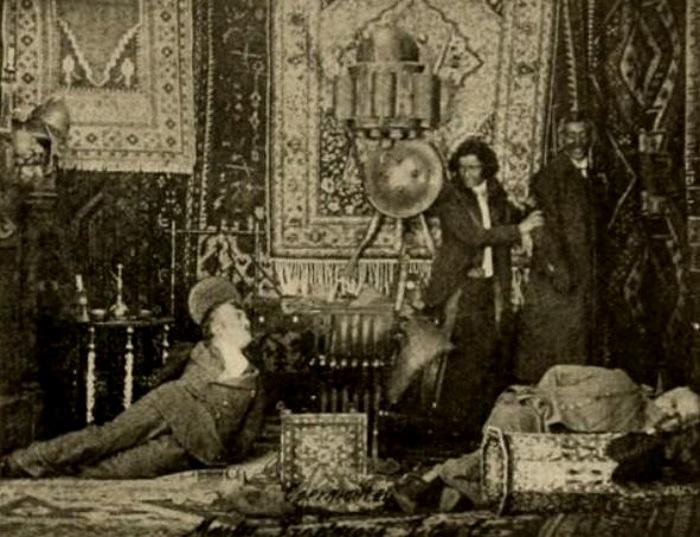
Harry Piel’s The Hindu Nemesis arrives like a lacquered music-box missing half its teeth: the melody lurches, the cylinder sticks, yet the discord that spills out is so hypnotically wrong you cannot wrench your ear away. Shot in the bruised twilight of 1914, when European streets were already echoing with enlistment drums, this German curio exports its angst to drawing-room London and lets it fester under turmeric-colored gaslight.
The film’s prologue is a master-class in serrated nostalgia: Mr. Deleron—ivory-haired, top-hat bristling with banker's hubris—retires to become a full-time patriarch, only to discover that the past keeps banker’s hours. Piel stages the abduction inside a cavernous set that reeks of mahogany and moral rot; the camera lingers on the grandfather clock’s pendulum until it resembles a scythe. When the clockmaker smuggles Hassen into the house, time itself becomes an accessory to crime—cogs swallow footsteps, hands swallow faces. The moment Edward is yanked behind the portiere, the drape billows like a lung exhaling its last innocent breath.

Most silents would splice in a calendar leaf montage; Piel burns the years away with a single iris-in on Helen’s mourning portrait. The grown woman who emerges is no Gibson-girl ingénue but a pre-Raphaelite fever dream: eyes ringed kohl-heavy, lips bruised plum, as though she already knows desire is a form of self-immolation. Her engagement to Herbert Garwood—lawyer, future parliament seat, walking résumé of respectability—feels less a match than a manacle with monogrammed cufflinks.
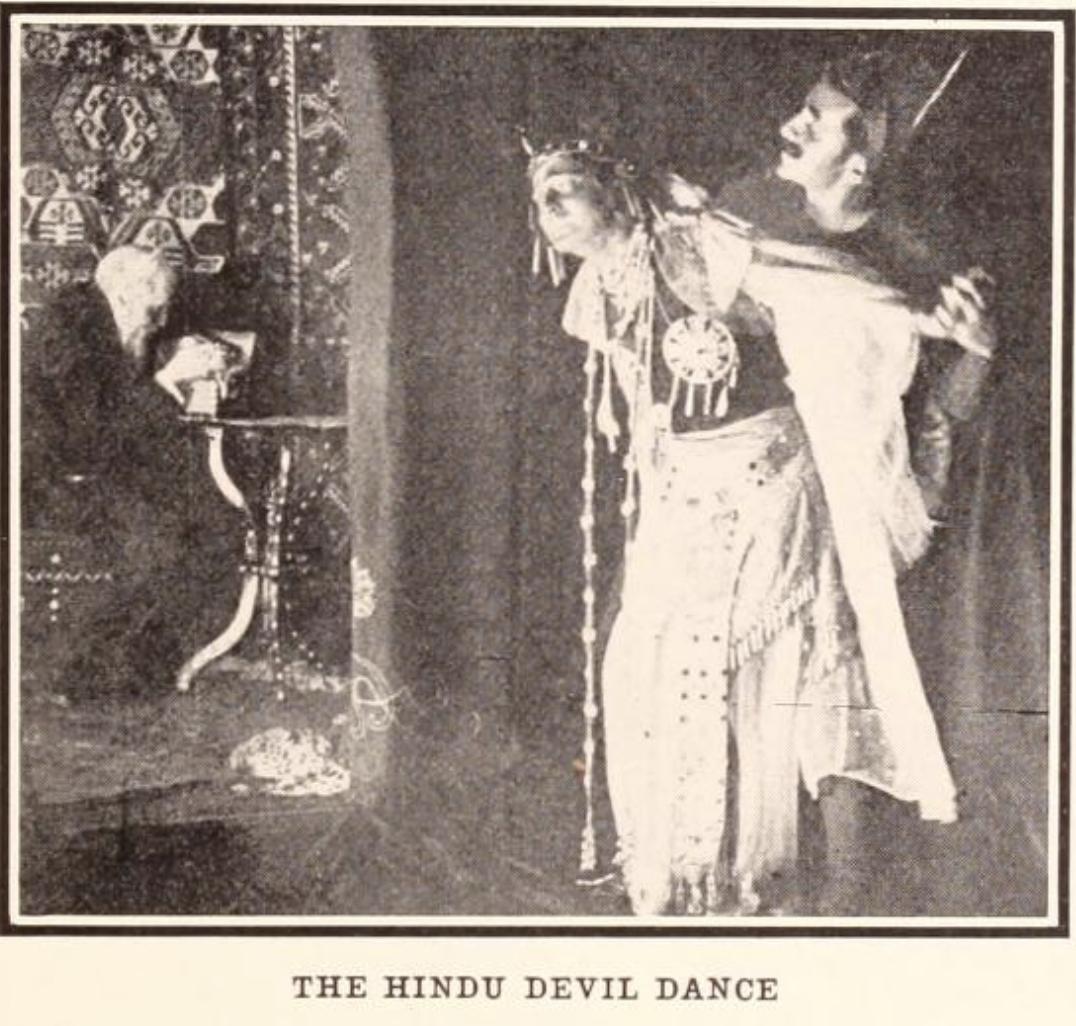
Enter the East Indian Theatrical Company, a caravan of ostrich plumes and diabolical gongs. Their revue The Mephisto Dance is staged like a satanic Mass choreographed by Diaghilev’s id: dancers whirl in spirals that echo the double-helix of the siblings’ impending doom. The drunkard who assaults Helen outside the theater is so plastered his shadow can’t keep vertical; when Olaf intervenes, the rescue is shot in low-angle heroics that prefigure cape-swirling Batman panels by three decades. Yet the real predator wears stage kohl and a smile like a paper-cut.
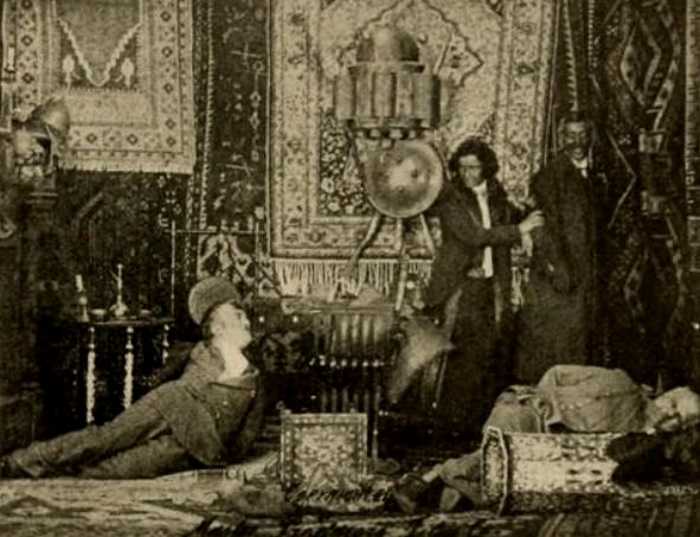
What makes The Hindu Nemesis still squirm-worthy is how coolly it inventories taboo. Olaf’s courtship of Helen is shot with lace-gloved sensuality: fingers grazing the rim of a teacup, a piano duet that turns into a thumb-brush across knuckles. Piel withholds the recognition twist until after the betrothal kiss—an act that curdles the swoon into nausea. The reveal arrives not via exposition but through a necklace: the same locket Edward clutched in the prologue now gleams between Helen’s collarbones, a trinket become genetic fingerprint.
Stream any contemporary true-crime doc and you’ll spot Hassen’s DNA: trauma coded into revenge, metadata of suffering weaponized. Piel, however, refuses the comfort of catharsis. The final rooftop scuffle—shot against matte-painted chimneys belching soot—feels like a fever dream of industrial modernity: two humans reduced to balance-sheet entries, chasing each other across the ledgers of tenement roofs until gravity audits them both. Compare that to the redemptive arc of Old Brandis’ Eyes or the moral didacticism of The Curse of Greed; Piel offers only the cold comfort of symmetry.
Though monochrome, the film hallucinates chromatic violence. Intertitles flare arterial red whenever Hassen speaks; the tinting shifts to bile-green during the clockmaker’s confession. When Helen and Olaf speed toward the cliff, the footage is hand-painted with phosphorus streaks that anticipate neon noir by decades. One reel, believed lost until 2018, was discovered in a Buenos Aires basement soaked in arsenic-blue—chemical decay that accidentally echoed the characters’ cyanide fate.
The actor playing Olaf (credited only as “H. S. Devi”) performs with the brittle swagger of a man who has rehearsed humanity but never lived it. Watch his eyes in the elopement scene: they flicker left—not at the road but at the camera, as though seeking directorial absolution. Ruth, the spurned trouper, delivers jealousy not with fists but with fan: each snap of silk is a mini guillotine, her final rooftop wail a siren that predates Kadra Sâfa’s feral intensity.
Modern restorations append a tintinnabulum score—cymbals scraped with violin bows, tablas sampled at quarter-speed. During the clock-hiding sequence, the metronome is amplified until heartbeat and pendulum sync; by the time Hassen steps out, the audience’s own pulse has been privatized by the film. In the 1923 Berlin re-release, riot police were summoned when viewers fainted during the locket close-up—proof that silence, weaponized, can draw blood without cutting.
Piel never topped this diabolical peak; he went on to pulp detective serials that played like Doctor Nicholson light. Yet The Hindu Nemesis haunts every sibling-reveal twist from Oldboy to Game of Thrones, every revenge saga that discovers payback is a Möbius strip. The film’s true terror lies not in what is shown but in the after-image that brands your retina: two corpses laid symmetrically on a riverbank, their blood mingling until you can’t tell which tragedy belongs to which generation.
So if your algorithm feeds you glossy revenge pulp tonight, remember Piel’s century-old warning: vengeance is a clock you wind for someone else, but the chime always rings in your own nursery. Stream it—if you dare—then check your own family portraits for any locket that might have gone missing. Sometimes the past doesn’t haunt; it simply cashes the debt you forgot you signed.

IMDb 4.3
1935
Community
Log in to comment.