DbcultAccessing Vault...
Cult Review
Senior Film Conservator
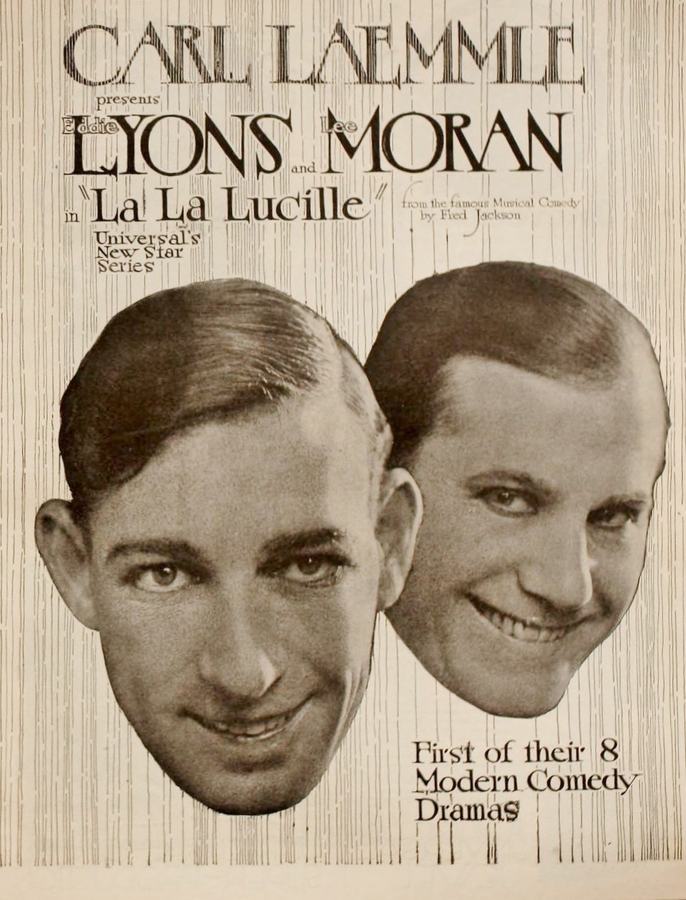
Nobody strolls out of La La Lucille unscathed by its champagne-whipped lunacy; the film sprays seltzer in the face of propriety and then hands you the wet towel as a souvenir. Directed with break-neck brio by an unheralded committee of gag-men, this 1926 one-reel expansion of a Broadway trifle is both time-capsule and live grenade. You can almost smell the greasepaint, the bootleg gin, the carbon-arc projectors humming like hornets above the orchestra pit.
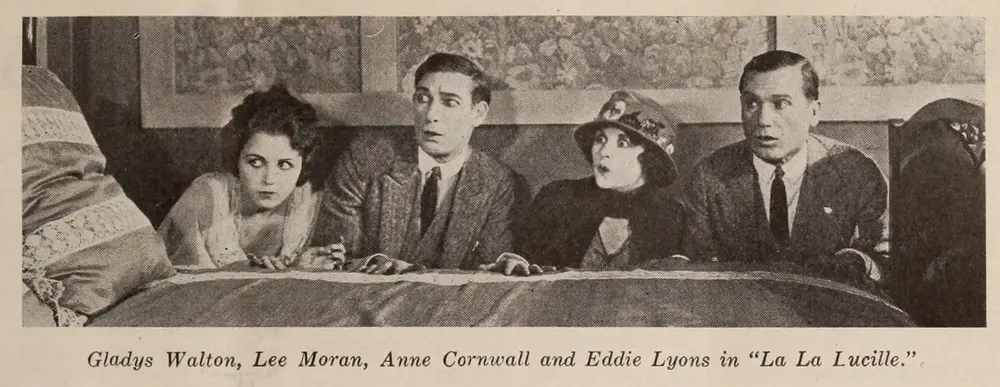
At its molten core lies the marriage of John and Lucille, a union soldered by footlights and frayed by the chill breath of capital. Lee Moran’s John—moon-faced, perennially flustered—embodies the middle-class terror of losing both love and liquidity. His eyebrows perform an entire Chekhov play every time the word “inheritance” is uttered. Opposite him, Gladys Walton’s Lucille radiates the plucky resilience of a woman who has already survived tabloid scandals and second billing at the Palace; when she belts the reprise of “My Honolulu baby,” her voice (via intertitle) ricochets off the screen like a gold coin skipping across marble.
Money, the film whispers, is only a social stain when love is treated as laundry.
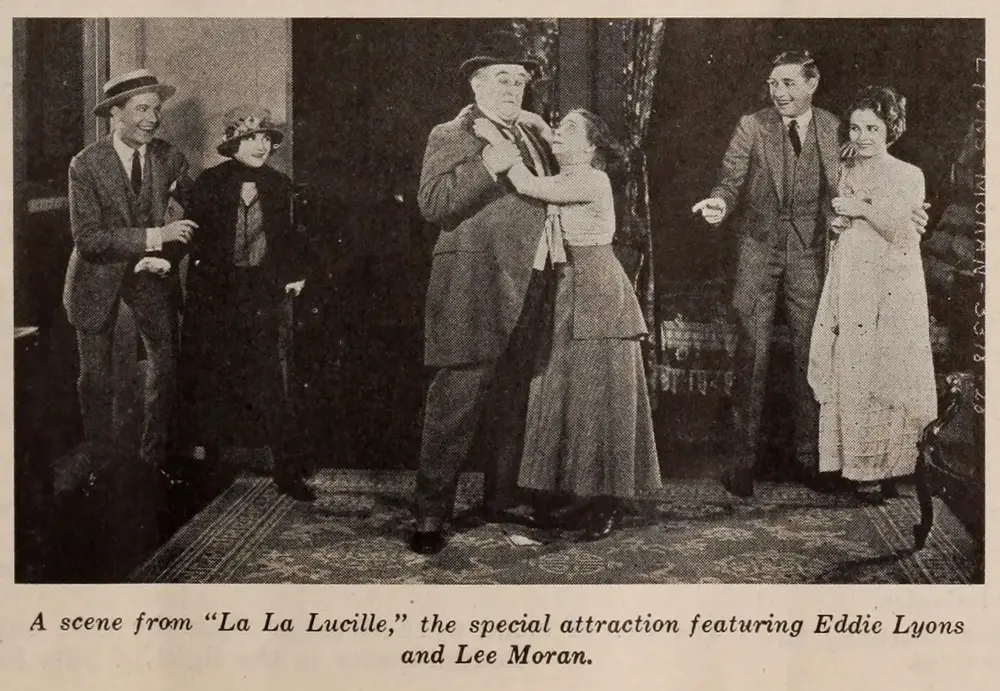
The screwball engine purrs once John enlists Fannie, the janitor’s wife, as his fake mistress. Anne Cornwall plays her with slinky mischief—half Theda Bara, half Brooklyn boardwalk barker—swishing through hotel corridors in a velvet dress the color of arterial blood. The moment she peels off her gloves to sign the register, the frame tilts five degrees; morality wobbles. Meanwhile, Arthur Thalasso’s cigar-chomping husband barrels after her like a runaway zeppelin, providing the slapstick propulsion that sends couples ricocheting between suites.
The set-piece—a four-door hotel chase shot in languid two-strip Technicolor inserts—feels cubist in its spatial audacity. Characters enter from vanishing points, exit through armoires, re-emerge in bathrobes borrowed from strangers. Cinematographer Henry D. Meyer lenses the chaos with gliding pans that prefigure the Lubitsch touch; the camera glides past transoms, peeps through keyholes, then vaults overhead for a Busby-style kaleidoscope of bellhop uniforms and silk stockings. Every cut lands like a cymbal crash timed to live pit-band percussion.
Enter Dorothea Wolbert’s Aunt, a dowager sculpted from granite and whalebone. She speaks in epigrams that could slice prosciutto: “A man who barters his vows for coin will barter his soul for compound interest.” Her late-act confession—that the codicil was a ruse—should feel like narrative carpet-yanking, yet the film earns it by threading a theological subtext throughout. The two-million-dollar carrot operates like Old-Testament providence: a plague of paperwork, a flood of hotel invoices, finally a covenant sealed in remarriage. The moral? Capital absolves only when love proves itself recession-proof.
Modern viewers, jaded by streaming-era candor, may smirk at the film’s demure implications. Yet 1926 critics dubbed it “a flivver of filth.” Censor boards in Boston demanded the trimming of a double-entendre intertitle where Fannie quips, “I’ve got a room key and no curfew.” Such pearl-clutching only turbo-charged ticket sales, positioning La La Lucille as the era’s must-see forbidden fruit.
Compare it to A Prince in a Pawnshop, whose bedroom farce feels gingerbread-quaint, or to the Gothic angst of The Unknown where desire mutilates. Here, erotic tension is a metronome keeping tempo with plot pivots—never explicit, always electric.
The bench runs deep. Sam Appel’s hotel clerk, a human exclamation mark in a pillbox hat, times every reaction shot to a hiccup. Rosa Gore’s battle-axe chambermaid wields a feather duster like a rapier, dueling wandering husbands in the hallway. And Burton Halbert’s Britton Hughes—imagine a young Basil Rathburn on nitrous oxide—delivers a tipsy monologue about the “matrimonial industrial complex” that feels eerily contemporary.
Though predominantly black-and-white, the producers splurged on hand-tinted amber flares for hotel corridor lights and cyan washes for night-time windows. The intermittent blush of color functions like a kissing cousin to the yellow-highlighted intertitles, nudging the audience toward emotional hotspots. One reel even tints Fannie’s crimson dress frame-by-frame; the result is celluloid sorcery that prefigures the digital color-grading of today’s streaming series.
Shadows pool beneath chaise longues, evoking German-expressionist anxiety, yet the tone pirouettes back into screwball sunlight before dread metastasizes. It’s as if von Sternberg and Capra shared a duplex, arguing over who gets the last cream puff.
Studio publicity boasted two Vitaphone discs of synchronized songs now feared lost—“If I Could Baby You with Dreams” and “Divorce Me, Darling, Just for Fun.” Archivists at UCLA hunt for these platters the way Indiana Jones quests for ark fragments. Even sans audio, Lucille’s final shimmy—performed in a single unbroken take—communicates melody through motion; her shimmying shoulders sync perfectly with the on-screen conductor’s baton, a ghost orchestra visible only in the mind’s ear.
Contemporary trade papers dismissed it as “flop-doodle for flap-happy flappers,” yet French ciné-clubs of the ‘50s canonized it as a precursor to the nouvelle vague’s spontaneity. Godard name-checked it in Cahiers; Varda sampled its hotel-door montage in her short Les fiancés du macaroni. Today, Reddit forums dissect its proto-feminist streak: Lucille’s refusal to remarry until John signs a self-written prenup that cedes all future inheritances to her chosen charity—an early echo of What Love Can Do’s philanthropic heroines.
A 2K restoration tours arthouses this fall, accompanied by a toy-piano sextet performing a new score stitched from period jazz rags. If you snag a ticket, sit balcony-left; the off-center vantage amplifies the forced-perspective hallway, making the chase feel helical. Home streamers can rent the 1080p scan on boutique platforms—look for the sepia tint that signals the unrestored prologue, a curatorial Easter egg.
Because modern rom-coms drown in algorithmic syrup, La La Lucille reminds us that courtship is inherently clownish, a tight-rope walk over a custard pie. Because wealth disparity once again yawns like a canyon, the film’s lampoon of inheritance culture feels ripped from today’s tax-code headlines. And because, at 68 brisk minutes, it distills the giddy essence of cinema—movement, desire, light—without bloat or bullet-point mythology.
So queue it up, pour something effervescent, and let the flickering grain remind you that—test-aunt or no—every relationship survives on negotiated delusion. The smartest lie, the film argues, is the mutual agreement to keep dancing even after the music stops. In that regard, we’re all still shimmying inside La La Lucille’s eternal third act, hoping the confetti never settles.
IMDb —
1920
Community
Log in to comment.