DbcultAccessing Vault...
Cult Review
Senior Film Conservator
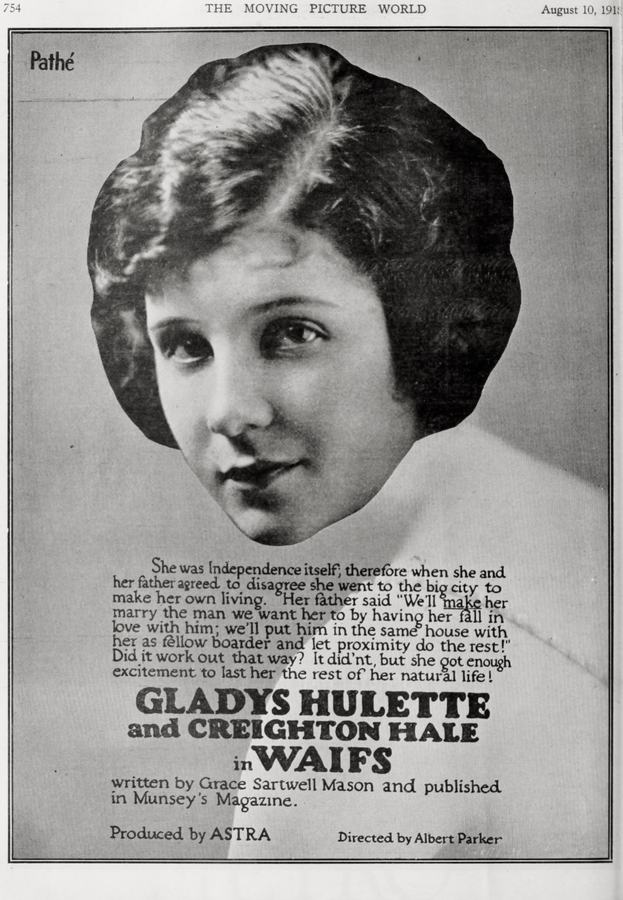
Waifs arrives like a moth-eaten love letter slipped under the door of silent cinema—its wax seal cracked, its perfume turned to camphor, yet the ink still wet enough to scald.
There is giddy delight in discovering that, even in 1925, Hollywood could stage an anti-marriage romp with proto-screwball velocity. Director William C. deMille (yes, Cecil’s less-monikered brother) corrals a scenario that feels kin to Keystone Comedies yet flirts with the moral vertigo of The Matrimonial Martyr. The film’s engine is a single, deliciously implausible conceit: if you cram two strangers into adjacent rooms, love will metastasize through the keyhole. Grace Sartwell Mason and Frank Leon Smith’s script dispenses with exposition like a pickpocket ditching loot; within three title cards we understand that Gladys Hulette’s heroine—only ever called “the Girl”—is chattel in a merger disguised as matrimony.
Her flight is rendered in a whirl of ellipses: a suitcase snatched, a taxi swallowed by night, a ferry horn that moans like a regret.
Enter Creighton Hale as the accidental interloper, a police beat scribbler whose pencil is sharper than his intuition. Hale, whose boyishness always teetered on the edge of neurasthenia, plays the part with a caffeinated stutter—part reporter, part jittery faun. When he signs the hotel register with the bridegroom’s pre-booked name, the deception detonates a chain reaction of farcical near-misses: swapped mail, mis-delivered breakfast trays, a petticoat that drifts from a window like a surrender flag.
Visually, the picture is a masterclass in chiaroscuro economy. Cinematographer L. Guy Wilky smothers the boarding house in charcoal shadows, then punctures them with sulfur-yellow lamplight that pools on the warped linoleum. The camera glides, surprisingly mobile for ’25, sneaking down hallways as if eavesdropping. In one bravura shot, the lens lingers outside a transom while silhouettes waltz across the frosted glass—an entire love triangle summarized by shadows.
Waifs dares to stage patriarchy as comic villain. J.H. Gilmour’s father figure—a banker whose mutton-chops bristle with capitalist entitlement—treats daughterly rebellion like a bounced cheque. Yet the film refuses to render him monstrous; instead he’s a man shackled by the same ledger-book worldview that enslaves his child. In a moment of surprising pathos, he lingers outside the boarding house, cigar extinguished, listening to gramophone music seep into the street—an aging oligarch confronted by the limits of purchase.
Hulette, often dismissed as merely “cute” in fan magazines, weaponizes that cuteness here. Her darting eyes telegraph calculation; her smile arrives like a thrown gauntlet. Watch her in the séance scene—yes, there’s a séance, because nothing screams 1920s escapism like spiritualist mumbo-jumbo—where she milks a table-rapping gag for both laughs and subtext: women’s voices, once ghostly, now demand to be heard.
Historians routinely cite Somewhere in France or The Girl Angle as early templates for the battle-of-the-sexes romp, yet Waifs crams the blueprint into 62 breathless minutes. The repartee—conveyed through rhyming intertitles that snap like firecrackers—anticipats the rat-a-tat cadences of Hawks and La Cava a decade later. One exchange, after the reporter mistakes the heroine for a gangster’s moll, reads: “You’re no moll—your eyebrows are too sincere.” “And you’re no gentleman—your lies arrive postage due.”
DeMille orchestrates set-pieces that feel simultaneously stage-bound and cinematically wild. A third-act fire escape chase, shot in brisk dusk-for-night monochrome, climaxes with a ladder that swings like a metronome, depositing lovers into the same garbage bin—an image that literalizes the film’s thesis: romance is trash, but oh what luminous trash.
Devotees of A Child of the Paris Streets will detect a similar preoccupation with urban flotsam—both films treat the city as a labyrinthine accomplice to self-reinvention. Meanwhile, the DNA of Waifs reverberates in Social Ambition, whose boarding-house farce likewise weaponizes proximity. Yet Waifs sidesteps the moralizing that hobbles many Jazz-Age comedies; no minister materializes to bless the coupling, no patriarchal apology is proffered. The final clinch occurs on a ferry chugging toward international waters—marriage certificate conspicuously absent.
Creighton Hale, forever etched in pop memory as the craven suitor of The Romance of Elaine, here reveals a gift for slapstick neurosis. His double-takes are so exquisitely timed they feel like Morse code. Opposite him, Gladys Hulette pirouettes between flint and fluff; note how her shoulders slacken the instant she believes herself alone, only to snap into coquettish armor at the creak of a floorboard.
Walter Hiers, as the lunkhead originally betrothed, provides a masterclass in secondary-scene thievery. Sporting a mustache that looks like two caterpillars in a turf war, he barrels through the foyer clutching a ukulele, crooning a song whose lyrics consist entirely of food items. The gag lasts 15 seconds yet earns the film’s biggest laugh, a reminder that comedy ages best when it abandons dignity at the cloakroom.
Modern screenings beg for a jaunty score that alternates between wah-wah brass and wistful cello. Try pairing the first reel with Django-style gypsy swing; when the fire-escape sways, pivot to Michael Nyman-esque minimalism. The tonal whiplash mirrors the film’s own mercurial heart.
Waifs languished in the Library of Congress’s paper-print collection until a 2018 4K restoration by the Eye Filmmuseum. Grainy, yes, but the charcoal blacks now exhale menace while the amber intertitles glow like hearth coals. Kino Lorber’s Blu-ray pairs the film with Young Mother Hubbard, another Hulette vehicle, plus a commentary track where a film scholar accidentally calls Creighton Hale “Crentin” Hale for 90 minutes—irresistible bonus content for the masochist completist.
Waifs is not a neglected masterpiece; it is something rarer—a hummingbird of a film that sips from the nectar of rebellion without overstaying its season. It winks at the patriarchy, trips it down the stairs, then buys it a bandage. In an era when algorithms arrange our romances with the same cold calculus as the father in the film, Waifs reminds us that love, at its most vital, is an error message in the great spreadsheet of life—and thank heavens for that glitch.
Verdict: 4.5 out of 5 moth-eaten love letters

IMDb 6.3
1936
Community
Log in to comment.