DbcultAccessing Vault...
Cult Review
Senior Film Conservator
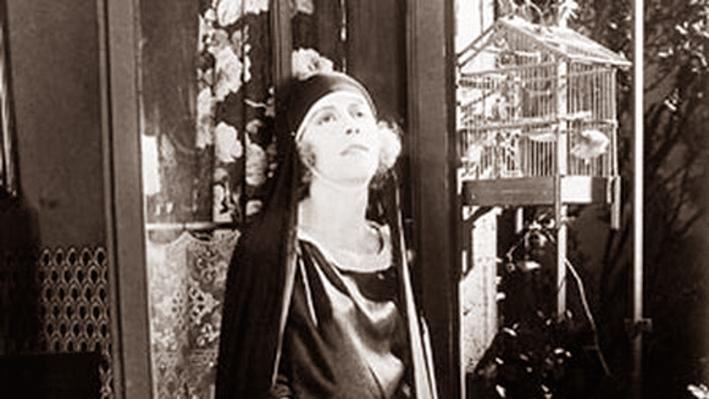
The year 1923 stood as a precipice for European cinema, a moment where the visual language was shedding its theatrical chrysalis to embrace the fluid, psychological potential of the camera. Within this fertile ground, La malchanceuse (The Unlucky Girl) germinated, a Franco-Spanish co-production that remains one of the most poignant, if overlooked, artifacts of the silent era. Directed with a symbiotic intensity by Benito Perojo and Donatien, the film is an uncompromising descent into the mechanics of misfortune. It eschews the easy sentimentality often found in contemporary American productions, opting instead for a gritty, almost tactile realism that echoes the social conscience of Germinal; or, The Toll of Labor.
At the heart of La malchanceuse lies a narrative structure that is as much a philosophical inquiry as it is a melodrama. The screenplay, a collaborative effort between José María Carretero, Perojo, and Donatien, constructs a labyrinth of circumstances from which the protagonist cannot escape. This isn't merely a story about a girl with 'bad luck'; it is a profound examination of the structural and spiritual entrapment of the marginalized. The pacing is deliberate, allowing the audience to inhabit the growing dread that permeates each scene. Unlike the more whimsical approach to youthful struggle seen in A Csitri, this film treats its subject with a heavy, almost oppressive solemnity.
The visual grammar employed here is startlingly modern. Perojo, who would go on to become a titan of Spanish cinema, demonstrates an early mastery of depth and composition. The frames are often crowded, suggesting a world closing in on the characters. This aesthetic of confinement serves as a visual metaphor for the 'bad star' mentioned in the film’s alternate titles. The use of natural light in the rural sequences provides a stark, unforgiving clarity that contrasts sharply with the expressionistic shadows of the urban nightscapes. It is a dualism that mirrors the protagonist's own internal conflict between hope and resignation.
"In the silent flicker of the celluloid, we find not just a story, but the ghost of a Europe grappling with its own fractured identity, personified by a woman whose only sin is her existence."
The ensemble gathered for La malchanceuse represents a fascinating cross-section of early 20th-century talent. André Dubosc brings a seasoned, weary dignity to the screen, his every gesture carrying the weight of a generation that had seen too much. Madeleine Guitty, a stalwart of French character acting, provides a grounded, often earthy presence that anchors the more heightened emotional beats. Her performance here is a masterclass in subtlety, a stark contrast to the broader pantomime found in works like The Skipper's Scheme.
However, it is the central performance—variously attributed to the luminous Estrella de Ulia and Lucienne Legrand depending on the specific cut—that truly haunts the viewer. The camera lingers on her face with a voyeuristic intensity, capturing the minute shifts from optimism to despair. It is a performance that demands empathy without ever begging for it. In many ways, her journey mirrors the moral complexities of Mary Regan, yet stripped of the glamorized artifice of Hollywood. Here, the struggle is visceral, the stakes are survival, and the enemy is an invisible, uncaring fate.
To fully appreciate the gravity of La malchanceuse, one must contextualize it against the global cinematic landscape of the early twenties. While American cinema was often preoccupied with the rugged individualism of the frontier, as seen in Riddle Gawne or the patriotic fervor of Barbara Frietchie, the European sensibility was increasingly turning inward. There is a preoccupation with the 'contract'—not just legal, but social and spiritual—that recalls the dark undercurrents of Drakonovskiy kontrakt.
The film also dialogues with the burgeoning Indian cinema, specifically the mythological explorations like Kaliya Mardan. Where the latter seeks divine intervention to resolve human conflict, La malchanceuse finds no such solace. The heavens are silent. This lack of a 'deus ex machina' makes the film’s conclusion all the more devastating. It shares a certain DNA with The Miracle of Love, but it subverts the title; in Perojo’s world, love is not a miracle but another vulnerability to be exploited by the 'malchance.'
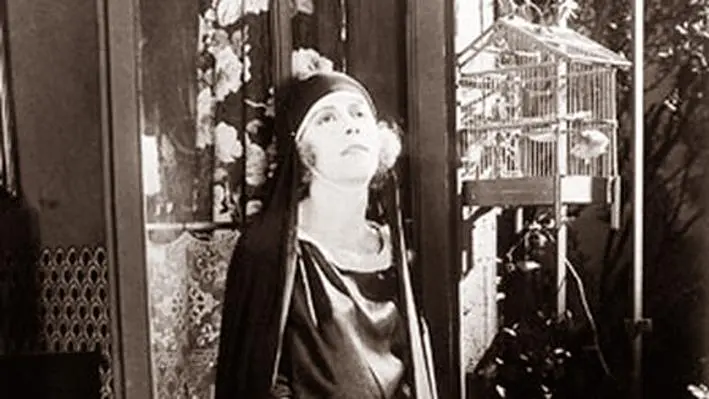
The collaboration between Perojo and Donatien resulted in a film that feels uniquely continental. There is a French sophistication in the set design and the portrayal of the bourgeoisie, contrasted with a Spanish preoccupation with honor, blood, and destiny. The cinematography by the likes of Donatien himself (who often wore multiple hats) utilizes the 'trompe l'oeil' of the camera to create spaces that feel both real and allegorical. In this sense, the film is a spiritual cousin to Trompe-la-Mort, though it deals less with the literal cheating of death and more with the metaphorical cheating of life.
The editing is particularly noteworthy. The rhythmic cutting between the protagonist's moments of isolation and the bustling, indifferent world outside creates a sense of profound alienation. This technique is far more advanced than the standard linear storytelling of the time, such as that found in Family Affairs. It forces the viewer to confront the protagonist's internal state, making the 'unluckiness' feel like a physical weight rather than a mere plot device.
One cannot discuss La malchanceuse without addressing its critique of the legal and moral debts imposed upon the individual. The film explores themes similar to His Debt, but it expands the scope to include the generational 'debt' of poverty and gender. The protagonist is constantly navigating a world of men who view her as either a commodity or a liability. The 'law' in this film is not an instrument of justice but a tool of the powerful, a theme also explored in A Boy and the Law, though Perojo’s vision is significantly more cynical.
The film also touches upon the vanity of the upper classes, a scathing indictment that brings to mind the themes of Conceit. By placing the 'unlucky' girl in proximity to those who have everything, the directors highlight the arbitrary nature of success. It suggests that the 'luck' of the wealthy is just as unearned as the 'misfortune' of the poor, a radical notion for 1923. This social commentary is wrapped in the guise of a melodrama, but its teeth are sharp and its bite is lingering.
Despite its brilliance, La malchanceuse has often been relegated to the footnotes of film history, overshadowed by the more experimental works of the late twenties. Yet, it remains a vital link in the evolution of European cinema. It captures a specific moment of transition, where the medium was discovering its soul. It is a film that demands to be seen not just as a historical curiosity, but as a living, breathing work of art that continues to resonate with anyone who has ever felt the crushing weight of circumstance.
In its final act, the film reaches a crescendo of tragic beauty. There are no easy answers, no grand reconciliations. Instead, we are left with the image of a woman who, despite everything, remains a human being in a world that would rather she be a statistic. Like the character in A Little Sister of Everybody, she is a reflection of our collective failures, but she carries her burden with a grace that is nothing short of heroic. La malchanceuse is a testament to the power of the silent image to speak the loudest truths, a cinematic eulogy for the lost and the forgotten that still echoes through the corridors of time.
A staggering achievement in early European realism. Perojo and Donatien have crafted a film that is as visually arresting as it is emotionally devastating. It is a mandatory watch for anyone seeking to understand the roots of cinematic fatalism and the enduring power of the silent era. The performances are exquisite, the direction is visionary, and the thematic depth is unparalleled for its time. A true masterpiece of 'la mala estrella.'
IMDb —
1936
Community
Log in to comment.