DbcultAccessing Vault...
5.6/10
Senior Film Conservator
A definitive 5.6/10 rating for a film that redefined the boundaries of cult cinema. La p'tite Lili remains a cornerstone of transgressive art.
Is La p'tite Lili worth watching today? Short answer: yes, but with significant caveats that demand a particular kind of viewer. This early silent short is a fascinating relic, a brief, stark portrayal of tragedy that offers a glimpse into the nascent artistry of cinema, yet it is decidedly not for everyone.
This film is best suited for ardent film historians, students of silent cinema, or those with a deep appreciation for the foundational works of the medium. It will likely disappoint viewers accustomed to modern narrative pacing, complex character arcs, or high production values. Its value lies in its historical context and the raw emotional power it attempts to wield through primitive techniques.
The realm of silent cinema often feels like a distant, alien landscape to contemporary audiences. Yet, within its confines, particularly in brief, potent works like La p'tite Lili, there exist kernels of storytelling that remain universally compelling. This film, a black-and-white silent short, promises a tragic story of a young girl named Lili, and it delivers on that promise with an earnest, if somewhat rudimentary, sincerity.
To truly appreciate La p'tite Lili, one must approach it not merely as entertainment, but as an artifact. It is a testament to the early ambition of filmmakers to evoke profound emotion without the crutch of spoken dialogue or the luxury of intricate sound design. Here, every gesture, every flicker of an eye, and every stark shadow carries a burden of meaning.
The film's brevity is both its strength and its weakness. It doesn't overstay its welcome, delivering its emotional punch swiftly. However, this conciseness also means that the tragedy, while palpable, feels somewhat unearned in its rapid ascent and resolution. We witness the broad strokes of Lili's sorrow, but rarely delve into the nuances that might have deepened our connection to her plight.
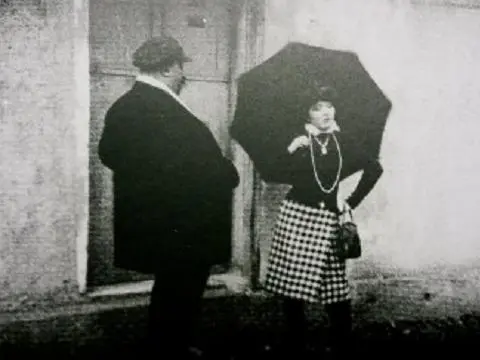
In the absence of dialogue, silent film actors were maestros of pantomime. They communicated entire emotional landscapes through exaggerated facial expressions and grandiose body language. This style, often perceived as melodramatic by modern viewers, was the very language of the screen. La Petite Lily, as the titular character, navigates this challenging performance space with a commendable, if at times simplistic, dedication.
Her youth adds another layer to her performance; there's an inherent vulnerability that the camera captures, making her struggles feel all the more poignant. We see her small frame against imposing backdrops, her wide eyes reflecting a world that seems to conspire against her. It’s a raw, unpolished performance, but one that effectively conveys the essence of a child in distress.
The presence of Jean Renoir in the cast is an intriguing footnote for film enthusiasts. While his later directorial genius would redefine cinema, his performance here is indicative of the era's acting conventions. He, along with Catherine Hessling, Guy Ferrant, and Dido Freire, contribute to a tableau of characters whose emotions are writ large, ensuring that even without words, the audience understands the narrative's emotional thrust.
"The silent screen demanded a particular kind of magic: to speak volumes without uttering a single sound. La p'tite Lili, for all its simplicity, attempts this magic with a sincerity that is hard to dismiss."
The black-and-white cinematography of La p'tite Lili is perhaps its most compelling artistic element. Without color, the filmmakers relied entirely on the interplay of light and shadow to create mood, depth, and symbolism. The use of stark contrasts, often typical of early cinema, enhances the tragic atmosphere, casting Lili's world in shades of grey that perfectly mirror her emotional state.
Consider a particular moment where Lili is framed against a dark, imposing background, her face illuminated by a single, soft light source. This visual choice immediately communicates her isolation and fragility, a classic technique that predates sophisticated lighting rigs but remains incredibly effective. It’s a testament to the ingenuity of early cinematographers working with limited tools.
Pacing in silent films often feels rapid by today's standards, punctuated by title cards that bridge narrative gaps. La p'tite Lili adheres to this convention, moving its story along with a briskness that can feel jarring. Scenes transition quickly, often implying significant narrative beats rather than explicitly showing them. This demands an active viewer, one willing to fill in the blanks and engage with the implied drama.
The tone is undeniably somber, almost relentlessly so. From its opening frames, the film establishes a melancholic atmosphere that never truly lifts. This commitment to tragedy, while fitting the plot, can feel heavy-handed, leaving little room for emotional respite. It’s a direct, unvarnished portrayal of sorrow, which might be too much for some, or too simplistic for others seeking more nuanced emotional arcs.
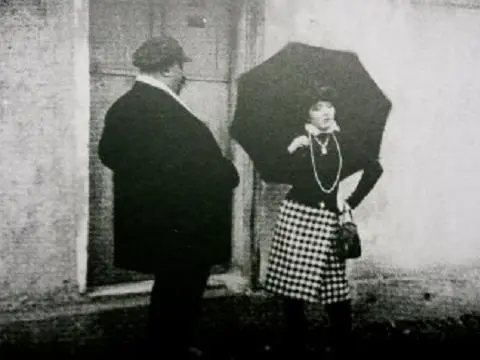
This film works because it provides a raw, unfiltered look into the foundational elements of cinematic storytelling. Its reliance on visual cues and physical performance offers a unique educational experience for understanding film history. The genuine attempt to evoke powerful emotions without dialogue is admirable, showcasing the sheer will of early artists to connect with an audience.
This film fails because its narrative simplicity and reliance on melodramatic conventions can feel dated. The rapid pacing, typical of shorts from this period, doesn't allow for deep character development, making Lili's tragedy feel more observed than deeply experienced. Furthermore, the absence of an original score (as it would have been live) means its full intended emotional impact is likely lost to modern viewers.
You should watch it if you are a film scholar, an aspiring filmmaker interested in early techniques, or someone who cherishes the historical significance of silent movies. It's a short, accessible entry point into understanding the birth of cinematic drama. However, if you seek modern narrative complexity, fast-paced action, or emotionally layered character studies, you will find La p'tite Lili a challenging, perhaps even frustrating, experience.
One unconventional observation about La p'tite Lili is how its very primitivism contributes to its charm. In an era of hyper-realism and CGI spectacles, there's something refreshing about the raw, unadorned storytelling. It forces the viewer to engage their imagination in a way few modern films do, filling in the gaps that sound and extensive dialogue now readily provide. It’s almost a collaborative effort between the past filmmakers and the present viewer.
This film, like many from its era, serves as a stark reminder of how far cinema has evolved, yet also how certain fundamental principles of visual communication remain timeless. The struggle of a vulnerable protagonist, the use of dramatic lighting, the power of a close-up – these elements were being honed here, in simple forms, laying the groundwork for everything that followed.
My strong opinion is that judging silent films solely by modern standards is a disservice. It's like critiquing a cave painting for its lack of photorealism. One must adjust their lens. La p'tite Lili, in its own context, is a success. It achieves what it sets out to do: convey tragedy. But it’s flawed. Brutally simple, perhaps, but effective for its time.
When considering La p'tite Lili, it's useful to place it within the broader landscape of silent cinema. Its tragic theme and focus on a child protagonist can draw parallels to other early melodramas. While it lacks the iconic status of a Chaplin or Keaton, it shares their commitment to visual storytelling.
The starkness of its black and white imagery might remind some of the atmospheric tension found in German Expressionist films like Der Hund von Baskerville, though La p'tite Lili lacks the overt stylistic flourishes. Instead, it leans into a more straightforward, almost documentary-like presentation of its dramatic core.
Its brevity also places it in conversation with other shorts of the era, which often served as appetizers before longer features or as standalone experiments. Films like Young Sherlocks or What Ho, the Cook, while comedic, share that same structural conciseness.
The emotional directness, while potentially simplistic, is a hallmark of many silent dramas attempting to connect with a mass audience. It’s less about subtle psychological exploration and more about immediate, visceral impact. This directness is both a strength and a limitation, depending on what a viewer seeks.
La p'tite Lili is more than just a film; it is a historical document, a window into the nascent art of cinematic storytelling. Its tragic narrative, delivered through the stark beauty of black-and-white photography and the exaggerated expressions of silent actors, holds a particular charm for those willing to meet it on its own terms. It’s not a masterpiece by modern definitions, nor is it a film that will captivate broad audiences today. However, for the dedicated cinephile, it offers valuable insights into the evolution of film and the enduring power of visual emotion.
My final stance is that this film is essential viewing for serious students of film history, but merely a curious diversion for others. It commands respect for its earnest ambition and its foundational contributions to the language of cinema. While its flaws are evident through a contemporary lens, its historical value and the raw emotionality it strives for make it a worthwhile, albeit challenging, watch. It reminds us that even in the earliest days, filmmakers were striving to tell stories that moved us, even if only with shadows and silence. It’s a testament to the enduring human desire for narrative, rendered in its most primitive, yet often profound, form.
IMDb 6.6
1929
Community
Log in to comment.