DbcultAccessing Vault...
Cult Review
Senior Film Conservator
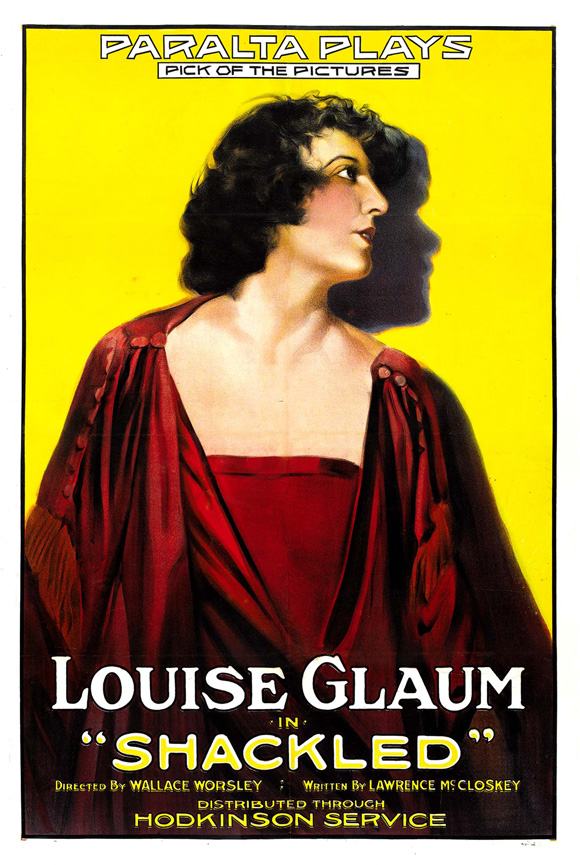
In the annals of silent cinema, certain films resonate with an enduring power, transcending their historical context to speak to universal human experiences. Shackled, a dramatic offering from 1918, stands as a testament to this truth, presenting a narrative woven with threads of love, betrayal, societal pressures, and the arduous journey toward redemption. It is a film that, despite its century-old vintage, continues to provoke thought on the precariousness of female autonomy and the deceptive allure of material prosperity.
Directed with a keen eye for emotional nuance, Shackled plunges us into the tumultuous life of Lola Dexter, a young woman whose initial vulnerability quickly hardens into a formidable resolve. Her initial entanglement with Walter Cosgrove, a man whose charm is as fleeting as his financial stability, sets the stage for a dramatic unraveling. Cosgrove, portrayed with a chilling blend of superficiality and avarice, promises Lola a future of marital bliss within the confines of a luxurious apartment, a gilded cage that epitomizes the era's societal expectations for women to be 'kept' rather than self-sufficient. This fragile dream, however, shatters with the inevitable dissipation of his fortune, revealing the hollow core of his affections. His subsequent abandonment of Lola for the wealthier Edith Danfield, a woman whose true love, James Ashley, is bravely serving in the trenches overseas, is a stark indictment of the mercenary spirit that often pervaded relationships in a society obsessed with status and wealth.
Lola's reaction to this profound betrayal is a pivotal moment in the film. Embittered and disillusioned, she vows to turn the tables, to wield men as instruments for her own advantage, transforming from a naive romantic into a calculating pragmatist. This shift, while understandable given her circumstances, propels her on a path of moral ambiguity. Her journey to Florida, explicitly undertaken to seek her 'first victim,' speaks volumes about the depth of her emotional scarring. Yet, the film masterfully avoids painting Lola as a one-dimensional villain. The weight of her chosen path, the inherent conflict between her true nature and her adopted persona, quickly becomes unbearable. This internal struggle, a hallmark of compelling character development, culminates in a moment of profound despair where she contemplates suicide. It is here that the narrative introduces a beacon of hope in the form of Thomas Danfield, Edith's invalid father.
Thomas Danfield, a character of immense moral fortitude, offers Lola not condemnation, but compassion and the prospect of a new beginning. His intervention is a powerful reminder that redemption can often be found in the most unexpected places, often through the kindness of strangers or those seemingly unconnected to our plight. Their burgeoning friendship, a tender and unexpected bond, serves as a catalyst for Lola's spiritual rebirth. This relationship, built on mutual respect and understanding, stands in stark contrast to the transactional nature of her previous encounters, particularly with Cosgrove. It is a nuanced portrayal of how genuine human connection can mend the deepest wounds, a theme that echoes in other silent era dramas exploring human resilience, such as The Turn of the Wheel, which often grappled with fate and moral reckoning.
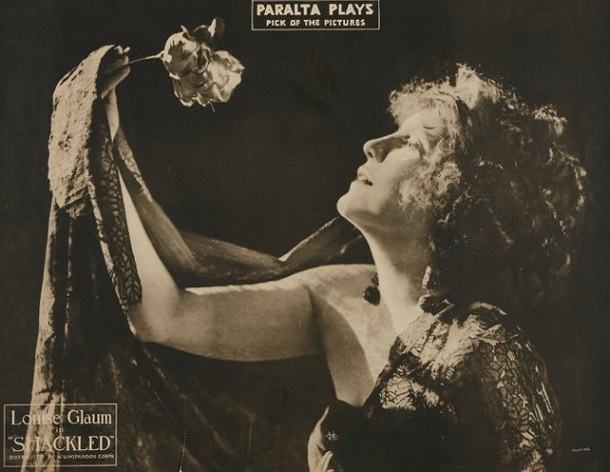
Their return home unveils a domestic tableau fraught with misery. Edith, now Walter's wife, is depicted as neglected and abused, a victim of his continued moral decline. Her longing for James, her true love, who is still away fighting in the war, adds another layer of pathos to the narrative. This aspect of the film subtly weaves in the broader societal impact of World War I, where personal lives were often put on hold or irrevocably altered by the conflict. While not a war film in the vein of Our American Boys in the European War, the shadow of the conflict undeniably influences the characters' circumstances.
Lola, witnessing Edith's suffering, is spurred to action, not out of malice, but a newfound sense of empathy and a desire for justice. Her decision to provide Edith with grounds for divorce, a complex and morally ambiguous act, showcases her transformation. She allows Walter to enter her room, setting a trap that, while risky, aims to liberate Edith from her marital torment. This act of self-sacrifice, risking her own reputation, underscores the profound shift in Lola's character. She is no longer driven by bitterness but by a desire to rectify past wrongs and protect the innocent.
The climax is both sudden and impactful. Walter, consumed by drunken rage, rushes to attack Lola, only to stumble and fall down the stairs to his death. This tragic accident, while a convenient plot device, serves to untangle the Gordian knot of their entangled lives. It is a moment that, in the context of early cinema, often served as a dramatic resolution to intractable moral dilemmas, similar to the definitive resolutions found in films like The Law Decides, where fate often intervenes to deliver justice.
What follows is perhaps the most emotionally resonant part of the film: Edith's impassioned explanation of Lola's actions to her father, Thomas. This act of validation and forgiveness from Edith, the very woman Walter had wronged, is crucial. It allows Thomas to fully understand Lola's motivations and, in a deeply moving gesture, he forgives her completely and asks for her hand in marriage. This ending, far from being a simple 'happily ever after,' represents a profound acceptance and the promise of a life rebuilt on honesty and genuine affection. It is a testament to the idea that true love can emerge from the ashes of past mistakes, offering not just absolution, but a genuine, unburdened future. This theme of finding love amidst adversity and societal judgment resonates with the complex relationships explored in films like Who Loved Him Best?, where characters navigate intricate emotional landscapes.
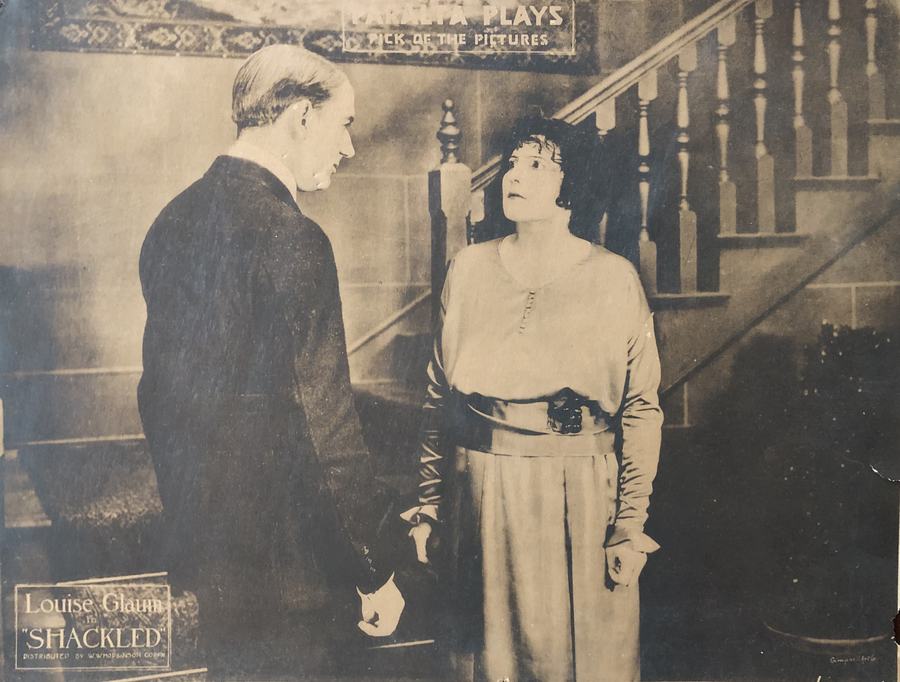
The success of Shackled rests heavily on its cast, particularly Roberta Wilson's portrayal of Lola Dexter. Wilson brings a compelling intensity to the role, navigating Lola's journey from wide-eyed innocence to cynical bitterness and finally to a serene, empathetic maturity. Her expressive face and gestures, typical of the silent era's acting style, convey the tumultuous inner world of a woman grappling with profound moral choices. Roy Laidlaw, as Walter Cosgrove, embodies the perfidious antagonist with an unsettling charm that gradually devolves into outright cruelty, making his ultimate demise feel both earned and tragic. Louise Glaum, a prominent figure in silent film known for her 'vamp' roles, likely brings a nuanced fragility to Edith Danfield, showcasing the quiet suffering beneath a veneer of wealth. Her performance would have been crucial in garnering sympathy for Edith's plight and highlighting the contrast between her gentle nature and Walter's brutality. The contributions of Lawson Butt, Herschel Mayall, Leatrice Joy, Charles West, and John Gilbert, though perhaps in supporting capacities, would have undoubtedly added depth and texture to the ensemble, creating a believable world for this intense drama to unfold.
The script, crafted by Lawrence McCloskey, J. Grubb Alexander, and Fred Myton, demonstrates a sophisticated understanding of dramatic structure and character arc. They manage to infuse a seemingly melodramatic plot with genuine psychological insight, allowing the audience to empathize with Lola's journey, even when her choices are questionable. The narrative avoids simplistic black-and-white morality, instead exploring the grey areas of human behavior under duress. This complexity elevates Shackled beyond mere entertainment, positioning it as a thoughtful exploration of societal constraints and personal liberation. Similar intricate character studies, though perhaps with different thematic focuses, can be observed in films like The Price of Malice, which also delves into the moral costs of one's actions.
The enduring power of Shackled lies in its timeless themes. It speaks to the vulnerability of women in a patriarchal society, where economic dependence could lead to devastating compromises. Lola's initial 'shackling' by Cosgrove's false promises is a metaphor for the broader societal chains that bound women of her era. Her decision to use men, while morally dubious, is a desperate attempt to gain agency in a world that denied it. This struggle for empowerment, even through morally ambiguous means, is a recurring motif in early cinema, as seen in films like The Price of Fame or All for a Husband, where women often navigate complex social landscapes to secure their positions.
Furthermore, the film's exploration of redemption is particularly potent. Lola's journey from a vengeful schemer to a selfless protector is not a sudden, miraculous conversion but a gradual, painful process. It is fostered by the unwavering kindness of Thomas Danfield, demonstrating the transformative power of empathy and forgiveness. The final acceptance of Lola into the Danfield family, particularly Thomas's proposal, signifies a profound liberation from her past 'shackles.' It’s a narrative arc that offers hope, suggesting that even after deep personal failings and societal ostracism, a path to genuine happiness and respect can be found. This journey of personal transformation and the search for inner peace, even after significant moral transgressions, aligns with the intense character dramas found in European silent cinema, such as Il fuoco (la favilla - la vampa - la cenere), which often explored the fiery passions and profound changes within individuals.
In an era when films often relied on overt melodrama, Shackled manages to imbue its dramatic events with a sense of psychological realism. The motivations, while sometimes exaggerated for theatrical effect, are rooted in understandable human emotions: love, betrayal, anger, despair, and ultimately, the yearning for connection and acceptance. It serves as a compelling historical document, offering a window into the moral anxieties and social structures of its time. The film's ability to maintain tension and engage the audience through purely visual storytelling and the power of its actors' expressions is a testament to the artistry of silent cinema.
In conclusion, Shackled is more than just a period piece; it is a timeless narrative about the human spirit's capacity for both destructive vengeance and profound redemption. Its intricate plot, compelling performances, and resonant themes make it a significant, albeit often overlooked, entry in the silent film canon. It reminds us that true freedom is not found in luxury or revenge, but in the courage to confront one's past, embrace empathy, and forge genuine human connections. It is a film that, even a century later, continues to unshackle the viewer's mind, prompting reflection on the chains that bind us and the grace that sets us free.
IMDb —
1921
Community
Log in to comment.