DbcultAccessing Vault...
5.3/10
Senior Film Conservator
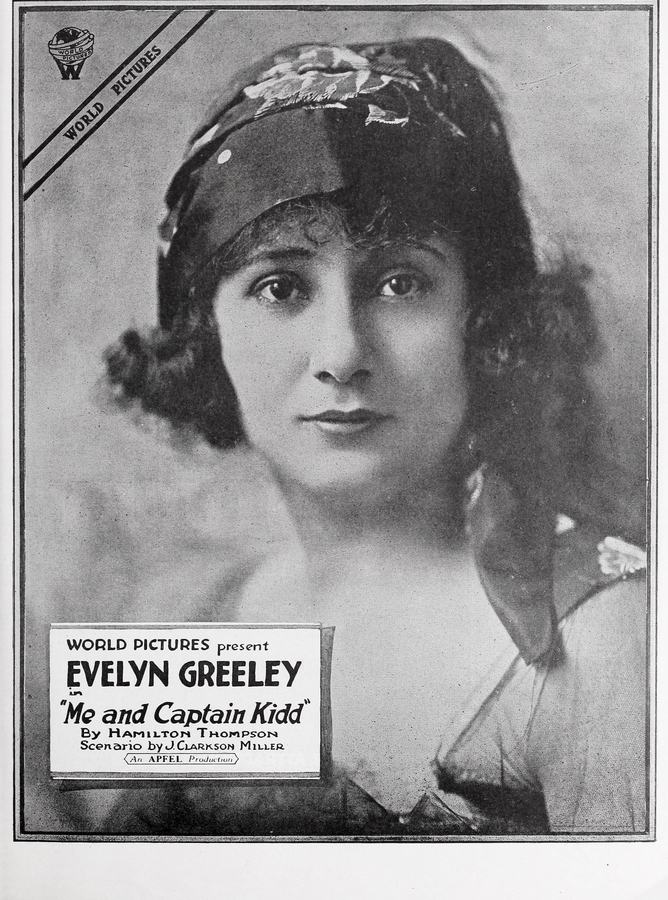
A definitive 5.3/10 rating for a film that redefined the boundaries of cult cinema. Me and Captain Kidd remains a cornerstone of transgressive art.
Stepping back into the cinematic landscape of 1917, we encounter a film that, despite its age, still pulsates with the raw emotional energy characteristic of early melodrama. "Me and Captain Kidd" isn't just a title; it's an invitation to a sprawling narrative that intertwines romantic adventure with the biting realities of social standing, legal chicanery, and the enduring power of a love tested by relentless adversity. Directed by William T. Carleton and penned by the collaborative talents of J. Clarkson Miller and Hamilton Thompson, this silent-era gem delivers a masterclass in intricate plotting and character-driven drama, proving that even without spoken dialogue, stories can resonate with profound depth.
At its core, this film is a testament to the resilience of the human spirit, particularly through the eyes of its protagonist, Peggy Stanton, brought to vivid life by the expressive Evelyn Greeley. Peggy is not merely a damsel in distress; she is a woman of agency, whose imagination, initially a source of escapism, inadvertently catalyzes the film’s central conflict. Her fascination with the legendary Captain Kidd, a figure of swashbuckling romance and hidden riches, is more than a whimsical detail; it's a symbolic yearning for a life beyond her impoverished cottage and the care of her invalid father, portrayed with poignant vulnerability by Arthur Donaldson. This initial setup deftly establishes the socio-economic chasm that defines much of the narrative, laying the groundwork for the ensuing trials and tribulations.
The adventure truly begins when Peggy's tales captivate Tom Hamilton, a scion of privilege played by Raymond McKee, whose youthful earnestness perfectly complements Greeley's spirited portrayal. Their shared quest for Captain Kidd's buried treasure on a secluded island is more than a mere plot device; it's a crucible. Accompanied by the enigmatic oracle Mammy Lou, embodied by Pauline Dempsey, their journey takes an unexpected turn when Mammy's superstitious fear of a supposed ghost leaves them stranded overnight. This pivotal incident, seemingly minor, carries immense weight in the social strictures of the era. Peggy's reputation is compromised, forcing her ailing father to demand a marriage to preserve her honor. This hurried union, born of necessity rather than pure romantic inclination, immediately sets the stage for the film's dramatic unfolding. It’s a classic melodrama trope, reminiscent of themes explored in films like By Right of Purchase, where societal expectations dictate personal choices, often with profound consequences.
The subsequent attempts by Tom's imperious father, played by Charles Mackay, to annul the marriage underscore the deep-seated class prejudices at play. The wealthy patriarch views Peggy as an unsuitable match, a threat to his family's lineage and social standing. This conflict, however, is abruptly reshaped by his sudden death, a turn of events that, while providing a temporary reprieve for the young couple, ushers in an even more sinister antagonist: Tom's unscrupulous uncle, played with conniving brilliance by Robert Broderick. The uncle's audacious claim of Tom's illegitimacy, a calculated maneuver to seize the family estate, is a devastating blow. It strips Tom not only of his inheritance but also of his very identity, forcing him to renounce his name and disappear from Peggy's life. This profound betrayal and subsequent separation form the emotional core of the film's middle act, leaving both characters adrift in a world suddenly devoid of certainty.
Years pass, marked by Peggy's continued resilience. After her father’s death, she finds herself under the care of a foster-father, William Brooks, who, with well-meaning but misguided intentions, attempts to arrange a socially advantageous marriage for her. This period highlights Peggy's unwavering loyalty to her first, albeit unconventional, marriage. Her revelation of her existing marital status is a moment of quiet defiance, a testament to her steadfast character. This sets in motion the final act of legal intrigue, as her foster-father hires a lawyer to secure an annulment, unaware that fate, or perhaps the cunning hand of the writers, has orchestrated a truly remarkable twist: the lawyer he employs is none other than Tom himself, returned under an assumed identity. This dramatic irony is a stroke of genius, allowing Tom to re-enter Peggy's life in a capacity that simultaneously threatens and promises their reunion.
The reunion scene, fraught with unspoken emotion, is a masterclass in silent film acting. Evelyn Greeley and Raymond McKee convey a torrent of history, regret, and rekindled affection through their expressions and subtle gestures. The rekindling of their love, now matured by years of hardship and separation, feels earned and deeply moving. The narrative then expertly circles back to its origins: the island of Captain Kidd, where their initial adventure began. This return is not merely a nostalgic trip; it's a purposeful journey to uncover the truth. The discovery of the stolen papers, meticulously hidden by Tom's uncle, finally vindicates Tom’s legitimacy and restores his rightful inheritance. This resolution, while satisfying, emphasizes the journey of perseverance and the ultimate triumph of justice and love over deceit and greed. It’s a narrative arc that, while complex, feels incredibly cohesive and earned, a quality that elevates it above many of its contemporaries.
Thematic explorations within "Me and Captain Kidd" are rich and multifaceted. Honor, particularly female honor, is a driving force in the early narrative, shaping Peggy's destiny. The film critiques the rigid social conventions of the time, demonstrating how a single night's perceived impropriety could irrevocably alter a woman's future. Class disparity is another pervasive theme, with Tom's family representing entrenched wealth and Peggy's humble origins constantly challenging their union. The legal machinations, from the attempted annulment to the uncle's fraudulent claim, highlight the susceptibility of justice to manipulation by powerful individuals. Yet, against these formidable societal and legal obstacles, the film champions themes of resilience, loyalty, and the redemptive power of enduring love. Peggy’s unwavering belief in Tom, even when he is seemingly lost to her, is a powerful statement on fidelity, echoing the steadfastness often seen in heroines of similar period dramas like The Testing of Mildred Vane or Out of the Wreck.
From a cinematic perspective, "Me and Captain Kidd" is a fascinating artifact of early filmmaking. The direction, while perhaps lacking the overt stylistic flourishes of later silent era masterpieces, is competent and effective in its storytelling. The use of intertitles is crucial, not just for dialogue but for conveying complex plot points and internal monologues, a common yet vital technique of the period. The pacing, though deliberate by modern standards, allows for the gradual unfolding of the intricate plot, building suspense and emotional resonance with each twist. The outdoor sequences on the island provide a refreshing visual contrast to the more confined interiors, adding a touch of naturalism to the otherwise dramatic narrative. The framing and staging of scenes are clear, ensuring that even without spoken words, the audience understands the characters' relationships and emotional states. The film effectively uses visual cues, from costumes to set design, to delineate class and character, a silent film necessity that adds to its charm.
The performances are, naturally, central to the film’s success. Evelyn Greeley, in particular, carries much of the emotional weight. Her expressive face and nuanced body language convey Peggy's journey from innocent dreamer to resilient survivor with compelling conviction. She embodies the strength and vulnerability required for such a complex character, ensuring that Peggy remains relatable and admirable throughout her trials. Raymond McKee, as Tom, successfully navigates the character's arc from a somewhat naive romantic to a man hardened by injustice but ultimately guided by love. His portrayal of Tom’s despair and eventual return to purpose is convincing. The supporting cast, including Arthur Donaldson as Peggy's father, Charles Mackay as Tom's father, and Robert Broderick as the villainous uncle, all contribute solid performances, effectively portraying their archetypal roles within the melodramatic framework. Even smaller roles, such as Pauline Dempsey's Mammy Lou, add texture and a touch of folk mysticism to the narrative, a common element in films seeking to add flavor and intrigue, much like the superstitious undertones one might find in The Stain in the Blood, where hidden histories often dictate present predicaments.
Comparing "Me and Captain Kidd" to other films of its era, one can appreciate its ambition in crafting such a convoluted yet ultimately satisfying plot. While perhaps not possessing the social critique of a film like Vanity Fair, it shares a similar fascination with the vagaries of fortune and the pressures of societal expectations. Its blend of adventure, romance, and legal drama places it firmly within the popular entertainment of its time, designed to captivate audiences with its twists and turns. The film successfully navigates the challenges of its genre, delivering a story that is both emotionally resonant and dramatically engaging. The intricate web of deceit and discovery, the separation and reunion, all contribute to a rich tapestry that speaks to timeless human experiences.
In conclusion, "Me and Captain Kidd" stands as a compelling example of early American silent cinema. It's a film that, despite its melodramatic excesses, offers a deeply satisfying narrative journey. The combined efforts of writers J. Clarkson Miller and Hamilton Thompson, brought to life by a dedicated cast including Evelyn Greeley, Raymond McKee, Arthur Donaldson, and Charles Mackay, create a world where pirates' legends intertwine with legal battles and enduring love. It's a testament to the power of storytelling in its purest form, a reminder that even without spoken dialogue, cinema can explore the depths of human emotion and the complexities of fate. For enthusiasts of historical cinema and intricate narratives, "Me and Captain Kidd" is a journey well worth embarking upon, a treasure chest of emotions and plot twists waiting to be rediscovered. It’s a film that, much like the hidden treasure it seeks, offers a rewarding experience for those willing to dig beneath the surface of its silent artistry.
IMDb 4.9
1934
Community
Log in to comment.