DbcultAccessing Vault...
6.5/10
Senior Film Conservator
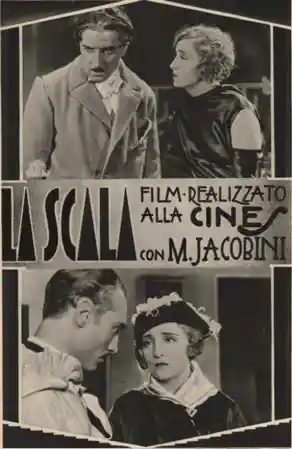
A definitive 6.5/10 rating for a film that redefined the boundaries of cult cinema. La scala remains a cornerstone of transgressive art.
Alright, so "La scala" isn't going to be for everyone today. It's a proper old-school Italian melodrama, the kind where emotions are big and the pace, well, it takes its sweet time. If you dig classic cinema, especially dramas focused on family secrets and quiet suffering, you might actually find something to connect with here. But if you’re looking for fast action or modern narrative tricks, you'll probably bounce off it pretty quick. It’s a niche watch, for sure. 🕰️
The whole thing centers on Clotilde, played with a sort of weary elegance by Mercedes Brignone. She's just returned from an affair that, by all accounts, didn't end well. You feel that weight on her, a kind of internal collapse she carries in her shoulders. Her husband, Giulio, is around, but their relationship feels like a thin thread, held together mostly by the lingering, almost desperate, hope of finding their daughter.
And that house! Goodness, it's practically a character itself. The plot says it's "bursting with gossip and rumors," and you really feel it. Every servant seems to have an opinion, every glance from a relative feels loaded. It’s not about grand, whispered secrets in dark corners, but rather the constant, low hum of what everyone *thinks* they know. The air feels thick with it, like a heavy, unseen fog. 🌫️
There’s this one scene where Clotilde is just sitting at a window, not doing much, just watching. But the way the light hits her, and the slight tremor in her hand as she picks at a loose thread on her dress — that’s where the movie really gets you. It’s not about dialogue in those moments, it’s all about the mood. You can almost feel the oppressive quiet of the home.
The title, "La scala," means "The Staircase," and honestly, the central staircase in the house gets a surprising amount of screen time. People are always going up or down it, or pausing on it, or just looking at it. It becomes this symbolic thing, I guess, for ascension or descent, or maybe just the *weight* of moving through life in that house. One shot in particular, where a maid is just cleaning the banister for what feels like a minute too long, really stuck with me. It’s just so… everyday, yet it feels significant.

Guido Celano, as Giulio, has this quiet intensity. He’s not a big, dramatic figure, but you see the resentment, the exhaustion in his eyes. He’s trying to hold things together, or maybe just survive. Their interactions are stiff, almost formal, which makes their shared grief for their daughter feel even more isolated. It’s like they’re grieving in separate rooms, even when they’re standing next to each other.
Then, the news about their daughter finally arrives. It’s not some grand, shocking reveal, but more of a quiet, inevitable dread. The way it’s delivered, by a nervous messenger, feels almost anti-climactic. But the impact on Clotilde, how she just *crumples* without a sound, is devastating. It's a moment that doesn’t need words. Just a broken posture. 💔
The film isn't perfect, of course. Some of the supporting characters feel a bit too much like caricatures, especially the gossipy aunts who pop up. And there are moments where the camera just… sits there. It lingers. You can feel the film’s age in those beats, a different kind of rhythm than what we're used to now. It's not always smooth.
But there’s a genuine, raw emotion simmering beneath the surface of "La scala" that makes it more than just a dusty old film. It’s a quiet study of regret and loss, and how a house can hold all of that history. It’s worth a look if you’re into the deeper cuts of Italian cinema, or if you just want to see how melodrama used to be done before everyone got so, well, *loud* about everything.
IMDb 5.6
1926
Community
Log in to comment.