DbcultAccessing Vault...
6.7/10
Senior Film Conservator
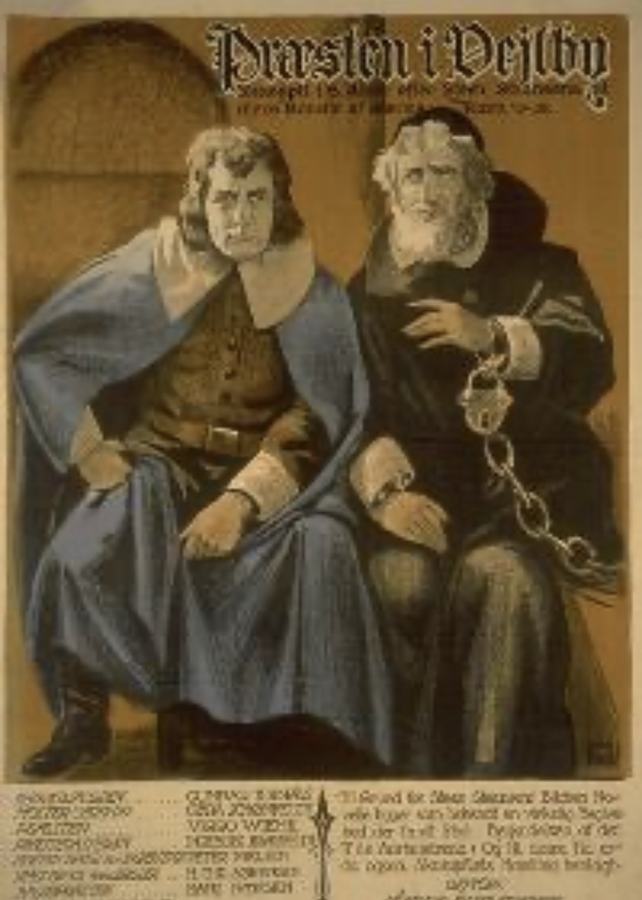
A definitive 6.7/10 rating for a film that redefined the boundaries of cult cinema. Præsten i Vejlby remains a cornerstone of transgressive art.
There are films you watch; then there are films that watch you—Præsten i Vejlby belongs to the latter coven.
Shot in 1922 when Danish cinema still carried the echo of sagas, this adaptation of Steen Steensen Blicher’s 1829 novella is less a silent melodrama than a frost-rimed fever dream, a lithograph of guilt carved onto nitrate. Director August Blom, once the grand impresario of Nordisk Film, here abandons the sumptuous exoticism of his Venetian Night for something spartan and scalpel-sharp: Jutland’s sere plains, a sky like bruised pewter, a community whose piety is rivaled only by its capacity for cruelty.
Forget the soft, romantic diffusion you might remember from East Lynne’s drawing rooms; cinematographer George Schnéevoigt treats light like a parishioner treating a witch—harsh, interrogative, unflinching. Interiors are swallowed in cavernous blacks, faces lit from below so nostrils become Gothic arches and eyes sink into penumbral hollows. When Bruus first corners Mette in the granary, the chiaroscuro is so violent it feels like Caravaggio has stepped into Nordic folklore.
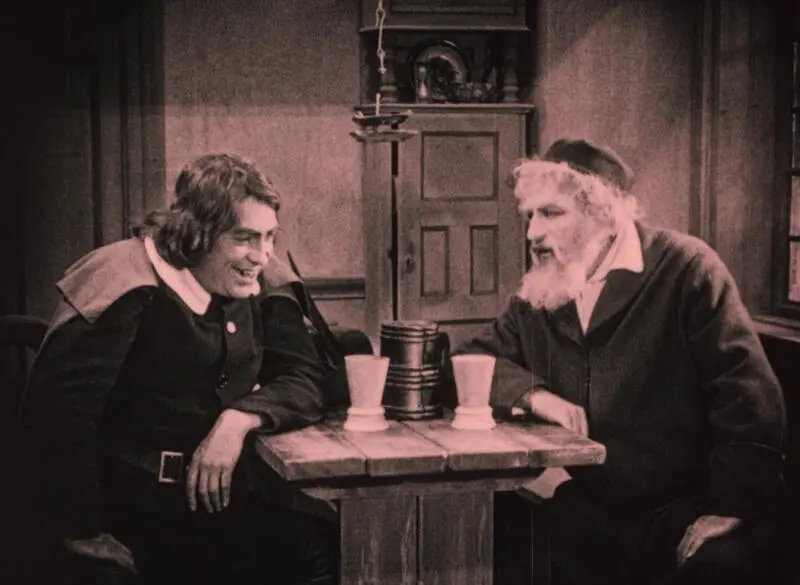
Exterior scenes, by contrast, are blasted with over-exposed whites: the chalk road that snakes toward the fjord, the salt-streaked church bell, the priest’s collar a scrap of sail against a gull-grey horizon. The effect is spiritual photophobia—goodness cannot hide from scrutiny any more than sin can.
Peter Nielsen’s Pastor Qvist oscillates between thunderous pulpits and moments of trembling silence; watch the way his fingers worry the seam of his cassock after blessing Erik—guilt and paternal pride wrestling under the skin. It’s the kind of micro-gesture that makes Lon Chaney’s contortions in The Deserter feel operatic by comparison.
Clara Schønfeld’s Mette is no frail milkmaid—her chin has the forward thrust of a ship’s prow, and when she spurns Bruus in the tithe barn her voiceless defiance ricochets louder than any spoken syllable. Meanwhile, Hans Dynesen’s Morten Bruus exudes a bovine menace: shoulders perpetually tensed as if ready to shoulder through stone. You can practically smell the sour mash on his breath in close-up, a feat of physiognomic storytelling that rivals the best villainy in When Men Are Tempted.
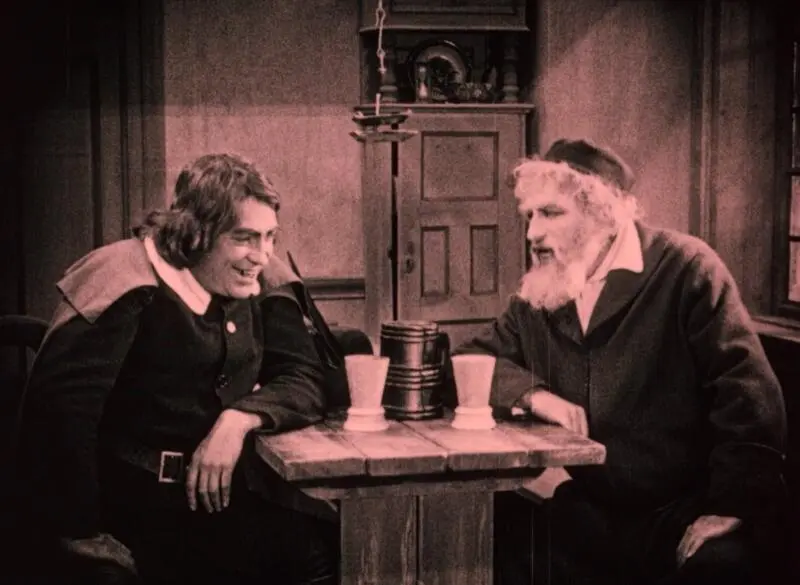
Valdemar Andersen’s adaptation condenses Blicher’s epistolary layers into a stark triptych: courtship, calumny, crucifixion. Intertitles are sparse, almost haiku-brief—“The snow will hide the blood, not the sin.” The narrative ellipsis forces viewers to inhabit the chasm between frames, implicating us in the same hearsay that damns Qvist. Compare this with the relentless exposition of One Thousand Dollars and you’ll grasp how Danish cinema trusted its audience to theologize their own dread.
Clocking at 95 minutes, the film feels both lean and inexorably protracted—time stretches like the road to Golgotha once the pastor is shackled. Blom withholds catharsis: the final exoneration arrives post-gallows, a cruel anti-climax that denies us the taste of resurrection. It’s as if the film itself mutters Kierkegaard: “Life can only be understood backwards, but it must be lived forwards.”
Modern viewers conditioned by talkie scores may balk at the original Danish release, which projected the film with only live organ punctuations. Yet silence here is no lacuna; it’s a prosecutor. The absence of ambient life—no bird-song, no creaking wagons—renders every footfall on frozen earth a judge’s gavel. When Mette tears her betrothal wreath, the tear itself seems audible, a rip in the cosmic fabric.
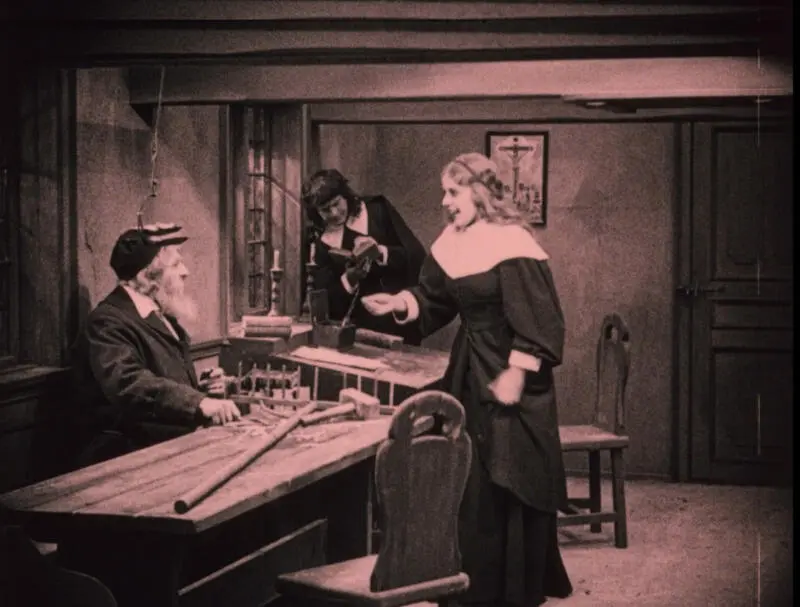
Contemporary restorations by the Danish Film Institute pair the footage with a newly commissioned score that blends Lutheran hymns with dissonant strings. The collision of sacred and secular tonality replicates the film’s moral fault lines; if you’ve only experienced the mute print circulating on archive sites, you’ve seen the body sans soul.
Place Præsten i Vejlby beside The Secret Orchard and you’ll notice both trade in repressed desire, yet where Orchard trembles on the brink of expressionist delirium, Vejlby remains doggedly realist—its horrors are civic, not psychogenic. Conversely, the pastoral martyrdom anticipates the scaffold finale of To the Death, though that 1916 short resolves with revengeful satisfaction; Vejlby offers only the hollow clang of church bells across an indifferent sky.
American audiences weaned on Tillie’s Tomato Surprise may find the film’s austerity punishing, yet its DNA re-emerges decades later in Dreyer’s Day of Wrath and even Bergman’s winter cycle. Trace the lineage and you’ll see: all Scandinavian guilt cinema germinates in Vejlby’s frozen soil.
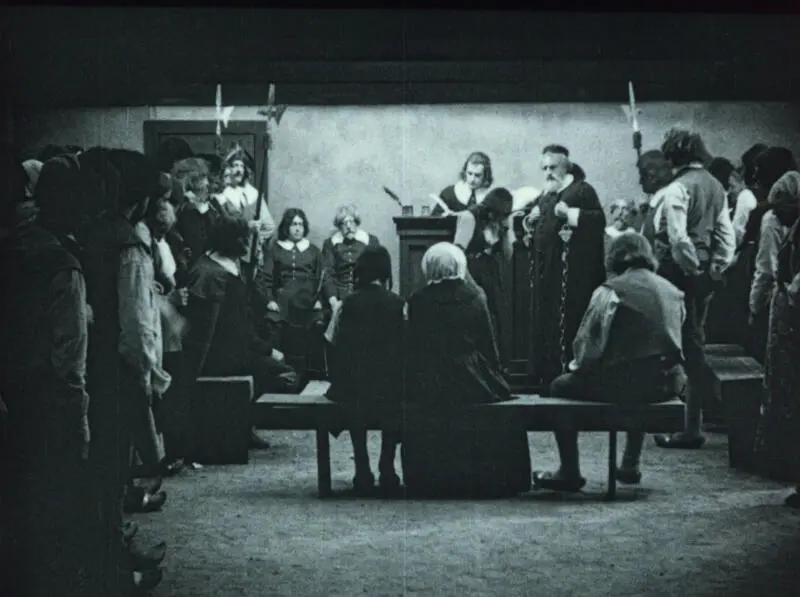
When AI-assisted colorization was floated in 2021, Danish critics recoiled as though bruised by Bruus himself. The argument: monochrome is not absence but moral atmosphere—the very pallor of the parishioners’ souls. To tint Mette’s apron rosy or Qvist’s stole imperial purple would be to baptize calamity in cheap carnival hues. The National Archive sided with purists, releasing a 2K scan that preserves every snow-speckled grain, every fissure in the parish records. Watch it on a OLED panel at 2 AM and tell me you don’t feel hypothermia of the spirit.
Strip away the horse-drawn hearses and what remains? A tale of weaponized rumor, of moral absolutism, of community-sanctioned murder—a Nordic witch-hunt that needs no burn pile, only testimony. In an age where online mobs replace village elders, Vejlby feels less artifact than prophecy. Qvist’s fate is the 19th-century Danish equivalent of de-platforming followed by algorithmic execution.
The film invites uncomfortable self-interrogation: if we had lived in Vejlby, would we have raised the noose or lowered it? The absence of heroic intervention—no lone gunman rides in, no last-minute pardon—forces us to dwell in complicity, a sensation as bitter as Bruus’s home-brewed ale.
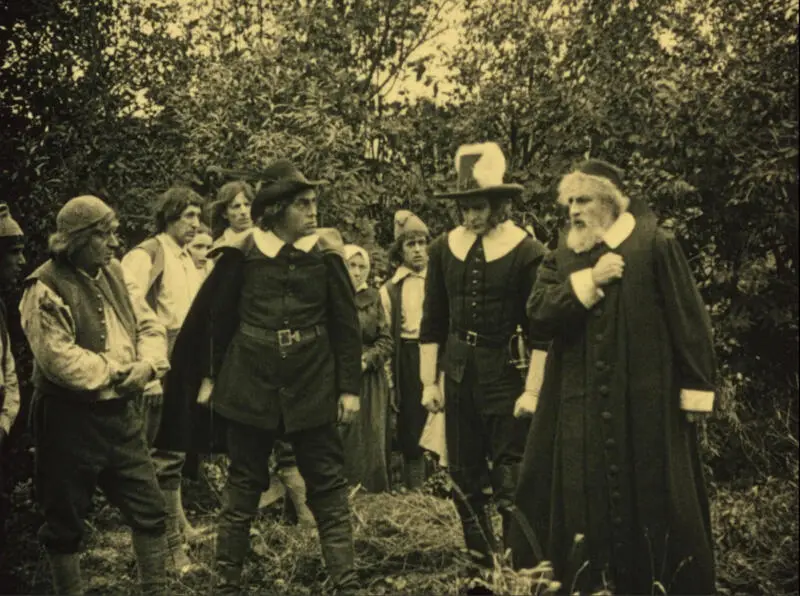
Beyond Nielsen and Schønfeld, notice Gunnar Tolnæs as the timid sexton whose half-line of intertitle—“I saw nothing, yet I feared everything”—becomes the film’s moral fulcrum. Or Ingeborg Spangsfeldt as the gossipy midwife, her face a topographical map of petty grievances. Even the dog skulking around the scaffold—an uncredited mongrel—performs a mute Greek chorus, sniffing the boots of the executioner with the same indifference it shows the priest’s corpse. Such texture is absent from the manic slapstick of A Lucky Dog’s Day; here, every extra is a parishioner bearing ancestral shame.
I have sat through Ghost of the Rancho’s paper-thin spooks and Chick-Chick’s barnyard whimsy; none left me spiritually winded like Præsten i Vejlby. It is not entertainment but penance, a film that refuses to absolve either its characters or its spectators. When the end card fades, you will shut your laptop yet remain shackled to the same unanswerable throb: how many righteous men must hang before a village admits its hunger for sacrifice?
Seek it not for comfort but for chastening. And when the bells of Vejlby toll across a century’s divide, do not pretend they knell for someone else.
Streaming: Danish Film Institute (region-locked, VPN-friendly). Blu-ray: Carl Th. Dreyer box set (English subs). Runtime 95 min. Not rated—contains existential dread.
IMDb —
1918
Community
Log in to comment.