DbcultAccessing Vault...
Cult Review
Senior Film Conservator
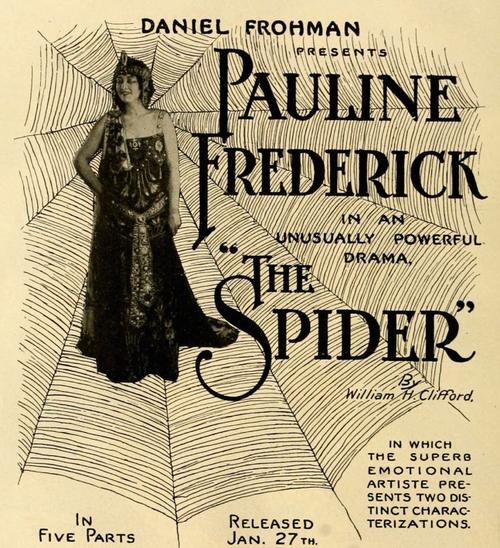
In the annals of early cinema, where grand gestures and sweeping melodramas often held sway, certain films emerge from the flickering shadows with an emotional resonance that transcends their silent origins. William H. Clifford's 1916 creation, 'The Spider', is precisely such a work. It’s a compelling, if deeply tragic, exploration of fate, sacrifice, and the intricate, often painful, threads that bind human lives. More than a mere plot, this film presents a moral quandary wrapped in a dramatic narrative, inviting audiences to ponder the true cost of choices and the unpredictable nature of consequence. It’s a testament to the power of silent storytelling that, even over a century later, its themes remain disquietingly relevant, echoing the timeless struggles of love, redemption, and the burdens of a past that refuses to stay buried.
At its heart, 'The Spider' spins a tale of a mother's desperate flight and the tragic irony of her eventual return. We are introduced to Valerie St. Cyr, a woman chafing under the oppressive weight of poverty, her spirit yearning for a life beyond the confines of her meager existence. In a decision that will ripple through decades, she abandons her infant daughter, Joan, and her impoverished husband, seduced by the opulent promises of the Count Du Poissy and the allure of Parisian society. This initial act of perceived selfishness, born perhaps of desperation and a youthful hunger for more, sets in motion a chain of events that will culminate in profound, heart-wrenching sacrifice. The film masterfully allows the passage of years to unfold, building anticipation for the inevitable collision of past and present. When Valerie and Joan, unknowingly mother and daughter, both fall for the charismatic artist Julian St. Saens, the narrative achieves a chilling symmetry. Julian's rejection of Valerie in favor of Joan is not merely a romantic snub; it's a direct consequence of Valerie's earlier choices, a karmic echo that reverberates with devastating force. The film uses this romantic triangle not for frivolous melodrama, but as a crucible for testing the boundaries of maternal love and societal judgment. It's a structure that immediately brings to mind other morality plays of the era, such as East Lynne, where characters are similarly entangled in the consequences of past decisions and societal expectations. The intricate plotting, credited to William H. Clifford, demonstrates a keen understanding of dramatic tension, slowly tightening the noose around Valerie until her ultimate, agonizing choice becomes almost predestined.
Valerie, consumed by a cocktail of jealousy and pride, manipulates the Count Du Poissy into kidnapping Joan. This act, born of her own deeply flawed humanity, ironically precipitates the Count's demise at Joan’s hand. The revelation that Joan is her own long-abandoned daughter transforms Valerie's character arc from one of bitter regret to one of profound, redemptive sacrifice. In a final, desperate act of maternal love, she assumes culpability for the murder, accepting the grim fate of the guillotine to spare her unwitting child. Joan, still blissfully unaware of the true identity of her savior, continues her plans for marriage with Julian, leaving the audience with a poignant, almost unbearable sense of dramatic irony. This narrative choice elevates 'The Spider' beyond simple entertainment, positioning it as a powerful commentary on the enduring, often unseen, sacrifices made in the name of familial love. It’s a powerful exploration of the lengths to which a mother might go, even one who initially strayed, to protect her progeny, echoing the deep emotional currents found in films like Love Never Dies, which similarly grappled with themes of enduring affection and tragic separation.
The success of a silent film, particularly one so reliant on heightened emotion and moral complexity, hinges almost entirely on the expressive capabilities of its lead performers. In 'The Spider', Pauline Frederick delivers a performance of such compelling intensity that it anchors the entire tragedy. Frederick, known for her dramatic prowess and striking screen presence, embodies Valerie St. Cyr with a nuanced understanding that elevates the character beyond a mere villain or victim. Her initial portrayal of Valerie as a woman driven by ambition and desperation is palpable; her eyes, her posture, her every subtle gesture convey a deep-seated yearning for a different life, a life of luxury and social standing that her current circumstances deny her. This isn't a one-dimensional character; Frederick imbues Valerie with a restless energy that makes her initial desertion understandable, if not forgivable, within the context of the era's societal constraints on women. Her performance is a masterclass in silent film acting, where emotions are conveyed not through dialogue, but through the intricate dance of facial expressions, body language, and the sheer force of her screen presence. She manages to convey Valerie's transformation from a self-serving socialite to a woman consumed by jealousy, and ultimately, to a figure of profound, redemptive maternal love, with astonishing clarity. The shift in her demeanor, from the haughty Parisian socialite to the broken, yet resolute, mother accepting her fate, is a powerful testament to her skill. One can draw parallels to the powerful female leads in other films of the period, such as those found in Thais or Silks and Satins, where actresses were tasked with conveying complex moral quandaries through purely visual means. Frederick's ability to command the screen and communicate such a vast emotional spectrum without uttering a single word is truly remarkable, solidifying her status as a silent film icon.
Her portrayal of Valerie’s descent into jealous rage, following Julian’s rejection, is particularly chilling. Frederick’s eyes, often described as intensely expressive, convey a storm of fury and wounded pride that drives Valerie to orchestrate Joan’s kidnapping. Yet, it is in the final act, when the devastating truth of Joan’s identity is revealed, that Frederick truly shines. The silent scream of realization, the anguish etched on her face, and the quiet, resolute dignity with which she accepts her fate, are moments of cinematic brilliance. She transforms Valerie from a 'spider' – a manipulator and ensnarer – into a figure of tragic heroism, her final sacrifice an act of immense, selfless love. Frederick's performance ensures that Valerie, despite her flaws and morally ambiguous choices, elicits both condemnation and profound empathy from the audience, a rare feat for any actor, let alone one working within the specific constraints of silent cinema. Her performance alone makes 'The Spider' a film worthy of re-evaluation and study, showcasing the power of a performer to elevate a dramatic narrative to the realm of high art.
While Pauline Frederick undeniably dominates the screen, the supporting cast provides crucial anchors for the narrative's emotional weight. Helen Lindroth, as the unwitting daughter Joan, brings a youthful innocence and burgeoning strength to her role. Her portrayal of Joan’s naïveté and eventual fierce self-preservation during the kidnapping scene provides a stark contrast to Valerie’s jaded worldliness. Lindroth’s ability to convey purity and resilience without grandstanding serves as an effective counterpoint to Frederick’s more flamboyant performance, highlighting the stark differences in their characters’ life experiences. Frank Losee, as the manipulative Count Du Poissy, embodies the aristocratic villain with a suitable air of predatory charm and moral decay. His presence is essential in driving Valerie's initial choices and later facilitating her vengeful plot, providing the necessary catalyst for the story's darker turns. Thomas Holding, as the object of both women's affections, Julian St. Saens, manages to convey a sense of artistic sensitivity and moral uprightness, making his rejection of Valerie and engagement to Joan believable and pivotal to the plot's tragic progression. The ensemble, under the direction of the film's creative team, works cohesively to build the complex emotional landscape of the film.
The intricate and emotionally charged narrative is the brainchild of writer William H. Clifford. Clifford, a prolific screenwriter of the era, demonstrates a profound understanding of dramatic structure and character motivation in 'The Spider'. His screenplay meticulously crafts a story where every choice, every chance encounter, leads inexorably towards a predestined, yet profoundly impactful, climax. The way he orchestrates the ironic reunion of mother and daughter, the subsequent romantic entanglement, and the final, devastating revelation speaks to a masterful command of melodrama. Clifford's writing is not merely about plot twists; it delves into the psychological underpinnings of his characters, exploring themes of societal pressure, moral compromise, and the enduring power of familial bonds. His approach to storytelling, rich in dramatic irony and emotional stakes, places 'The Spider' alongside other compelling narratives of the period like The Straight Way, which similarly grappled with individuals navigating complex moral landscapes. It’s a testament to Clifford’s craft that the story maintains its grip, even without spoken dialogue, relying instead on the visual poetry of silent cinema to convey its profound message. The screenplay’s strength lies in its ability to build empathy for a flawed protagonist and to deliver a truly cathartic, if tragic, resolution.
The very title, 'The Spider', is pregnant with symbolism, hinting at themes of entrapment, manipulation, and the intricate, often inescapable, webs spun by destiny and human choices. Valerie St. Cyr, in her initial flight, might be seen as both the ensnared, caught in the web of poverty, and the ensnarer, weaving a new life for herself at the expense of her family. Later, consumed by jealousy, she actively becomes the 'spider,' attempting to manipulate and trap Joan. Yet, the film ultimately subverts this initial perception, revealing Valerie to be more of a victim of circumstance and societal pressures, and ultimately, a figure of profound sacrifice. The 'web' becomes a metaphor for the intricate, unseen connections between people, particularly family, that no amount of distance or time can truly sever. It speaks to the idea that our past choices, like threads, are always connected to our present, and can, at any moment, pull us back into their intricate designs. This thematic depth is a hallmark of the era's more thoughtful melodramas, often exploring the consequences of societal transgressions and the redemptive power of selflessness, much like What Will People Say? which also delves into public perception and personal sacrifice.
Motherhood and sacrifice are paramount themes in 'The Spider'. Valerie's initial abandonment is presented as a desperate act, perhaps understandable given the societal pressures on women of the time, where poverty could be a crushing burden. Her eventual sacrifice, taking the blame for a murder she didn't commit to save her daughter, transforms her character into an archetype of maternal devotion. This powerful narrative arc explores the complex nature of motherly love, suggesting it can manifest even after years of separation and perceived neglect. It's a love that, despite its initial failings, ultimately proves to be unconditional and self-sacrificing. The film also touches upon themes of class disparity and moral judgment. Valerie's desire to escape poverty is a driving force, and her immersion into Parisian high society exposes the moral ambiguities that often lurk beneath a veneer of elegance. The stark contrast between her impoverished past and her glamorous, yet ultimately hollow, present serves to highlight the film's commentary on the superficiality of wealth versus the enduring power of genuine human connection and familial bonds. The film, in its quiet intensity, suggests that true redemption lies not in escaping one's past, but in confronting it with courage and selflessness. It is a profound meditation on the enduring power of love, even in its most tragic and convoluted forms. The film's exploration of these universal human experiences ensures its continued relevance, allowing it to resonate with audiences across generations, much like the timeless tales woven in The Fifth Commandment, which similarly explores familial duty and sacrifice.
Beyond the compelling performances and intricate narrative, 'The Spider' stands as a testament to the sophisticated artistry of silent cinema. The film's visual storytelling is crucial in conveying the nuances of emotion and plot without the aid of spoken dialogue. Cinematography, though often uncredited or minimally detailed in records of the era, would have played a vital role in establishing atmosphere and guiding the audience's gaze. Close-ups on Pauline Frederick's face would have been essential for capturing the subtle shifts in her character's internal state, from desperate ambition to jealous rage to profound sorrow. The use of lighting, too, would have been instrumental in creating mood – perhaps harsh, unforgiving light for scenes of poverty, and softer, more romantic glows for the early interactions between Joan and Julian, contrasting with the dramatic shadows of the kidnapping and its tragic aftermath. The editing, while perhaps not as frenetic or innovative as later periods, would have been carefully paced to build dramatic tension, allowing emotional beats to land effectively before moving the narrative forward. The visual language of silent film relies heavily on symbolism and tableau, and 'The Spider' undoubtedly employed these techniques to maximum effect, ensuring that the audience grasped the moral implications and emotional weight of each scene. The staging of scenes, the costumes, and the set designs would have all contributed to the rich tapestry of the film, immersing the viewer in the distinct worlds of impoverished domesticity and lavish Parisian aristocracy. This meticulous attention to visual detail and emotional clarity is a hallmark of the era's best productions, a tradition carried on in films like Homunculus, 1. Teil, which relied heavily on visual narrative to convey its complex themes. The film's ability to communicate such a profound and complex story through purely visual means is a powerful reminder of the ingenuity and artistry inherent in early filmmaking.
The very act of watching a silent film today is an exercise in engaging with a different form of cinematic language. It requires a willingness to interpret gestures, expressions, and intertitles with a heightened sense of attention. In 'The Spider', this engagement is richly rewarded. The film's visual narrative is not merely functional; it is expressive, poetic, and deeply evocative. The juxtaposition of Joan’s youthful innocence with Valerie’s worldly cynicism is often conveyed through visual cues – their respective costumes, their mannerisms, even the way they occupy space on screen. The climactic moments, particularly Valerie’s decision to take the blame, would have been conveyed with a powerful visual simplicity, relying on the audience’s accumulated understanding of her character and her profound love for her daughter. The absence of dialogue forces the viewer to become an active participant in the storytelling, filling in the unspoken words and emotions, making the experience deeply personal and resonant. This active engagement is part of the enduring appeal of well-crafted silent films, allowing for a more intimate connection with the characters and their fates, much like the immersive experience offered by Rose of the Rancho or The Heart of Nora Flynn, which similarly captured audiences with their visual drama.
'The Spider', though perhaps not as widely known as some of its contemporaries, holds a significant place in the history of silent film melodrama. Its intricate plot, powerful performances, and profound thematic explorations make it a compelling watch for anyone interested in the evolution of cinematic storytelling. Pauline Frederick’s portrayal of Valerie St. Cyr is a tour de force, a testament to the expressive power of silent acting and a character study that resonates with tragic depth. The film's exploration of sacrifice, the inescapable nature of past choices, and the complexities of maternal love ensures its continued relevance. It serves as a stark reminder that the human condition, with all its flaws and capacity for redemption, has been a timeless subject for artists across all mediums and eras. For modern audiences, watching 'The Spider' offers a unique window into the sensibilities of a bygone era, while simultaneously revealing the universal truths that bind us all. It’s a powerful, often heartbreaking, journey that leaves an indelible mark, proving that even a silent film can speak volumes about the human heart. The film's ability to maintain its dramatic intensity and emotional impact over a century later speaks volumes about its quality and the enduring power of a well-told story, placing it in conversation with other enduring silent classics such as Le diamant noir or The Man from Mexico, which continue to find new audiences.
In an age dominated by sound and spectacle, the quiet intensity of 'The Spider' provides a refreshing counterpoint, inviting viewers to engage with cinema on a deeper, more interpretive level. It is a film that rewards patient observation, revealing its layers of meaning through the subtle interplay of performance, narrative, and visual artistry. The tragedy of Valerie St. Cyr, her desperate choices, her fall from grace, and her ultimate, selfless act of love, creates a narrative that is both deeply personal and universally resonant. It reminds us that even the most flawed individuals are capable of profound good, and that the ties of family, however strained, can ultimately prove to be the strongest of all. 'The Spider' is more than just a historical artifact; it is a vibrant piece of cinematic art that continues to spin its compelling, tragic web around the hearts of those who discover it, solidifying its place as a powerful and unforgettable entry in the silent film canon. Its themes of moral dilemma, redemption, and the unforeseen consequences of one's actions are as potent today as they were in 1916, confirming its status as a timeless piece of human drama, much like the enduring appeal of Keep Moving or Seventeen, albeit with a far more somber tone.
IMDb 6
1931
Community
Log in to comment.