DbcultAccessing Vault...
Cult Review
Senior Film Conservator
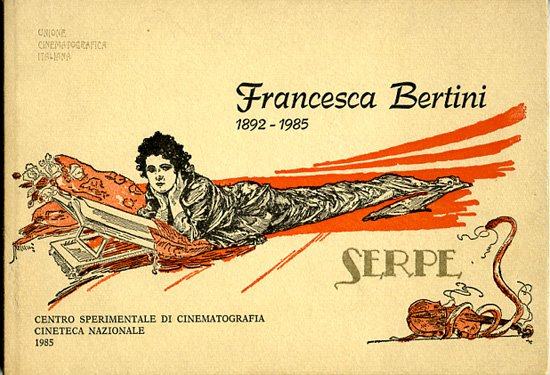
Mario Sirchi’s world is built of fifths and phrygian turns, not motives for homicide, yet the camera refuses to blink as gendarmes drag him across the piazza. The film’s first third is a lesson in chiaroscuro: faces picked out by carbide lamps, alleyways gulping down electric flickers like thirsty throats. Directors Sandro Salvini and Vittorio Bianchi—pulling double duty behind and in front of the lens—stage accusation like a liturgy. Every tilted beret, every nonna clutching rosary beads, becomes juror. You can almost smell the damp wool, hear the echo of a dropped coin rolling into a storm drain.
Francesca Bertini, luminous even when the emulsion cracks, plays Adonella with the combustible grace of a woman discovering her own reflection is only half the picture. Watch her fingers tremble while she lifts the lid of a piano that once sang her lover’s études; the ivory now stares back like teeth of a skull. The filmmakers let silence gnaw: no intertitles for a full forty-five seconds, only the metronomic drip of water onto a rusted bucket. In that hush, we grasp the enormity of betrayal—music itself has testified against its maker.
Enter Nayda—an anagram, a doppelgänger, a rip in the social fabric. Emma Farnesi embodies her with feral minimalism: eyes that have catalogued every back-road tavern, shoulders perpetually braced for the next slap. The reveal is not some soap-operatic thunderclap but a slow dawning: Adonella glimpses Nayda across a crowded tram, their mutual recognition blooming like twin foxfire in a cemetery. From that moment, the narrative fractures into fugue. Split-screens, double exposures, even a brief reverse-shot where the camera pirouettes 360 degrees around the siblings—techniques seldom risked in European cinema before The House of Whispers experimented with unreliable subjectivity two years later.
Color tinting charts emotional barometry: cobalt for prison nights, amber for Adonella’s memory-flash of childhood, sickly chartreuse for the morgue. When Nayda finally confronts the true assassin—a city alderman whose ring bears the sigil of the serpe (serpent)—the frame floods with arterial crimson, hand-painted onto each 35mm print by atelier women in Turin who reportedly fainted from the acetate fumes. That vermillion splash has since faded to rust on surviving reels, yet its ghost still hisses.
The film’s sonic afterlife deserves a paragraph, even in a medium that never spoke. Contemporary accounts tell of exhibitors hiring local chamber ensembles to premiere Sirchi’s confiscated nocturne during the end-credits, a marketing coup that prefigures the synchronized scores of The Scarlet Drop. Today, restorers marry the flicker with newly orchestrated material; cellos saw through the chatter of projector gears, oboes weep like widows. The marriage is so uncanny you half-expect the actors to glance sideways at your symphony hall.
Compare how other silents of the era handled wrongful accusation: Courts and Convicts leans on procedural sweat, Her Code of Honor on melodramatic flourishes. La Serpe occupies a liminal corridor where musicology, class resentment, and proto-feminist solidarity braid into a rope sturdy enough to hang a corrupt politician. Nayda’s back-story—sold to itinerant charcoal-burners during a famine—could have slid into poverty-porn, yet the script grants her agency: she blackmails a notary, fences a stolen crucifix, sleeps under cathedral eaves without ever begging for sainthood.
Visually, the film steals from Caravaggio and gives back to cinema. One pivotal shot—Adonella lifting a lantern to Nayda’s face—renders their paired profiles in tenebrist chiaroscuro, cheekbones gleaming like wet marble. It’s the exact moment blood recognizes blood, and the frame freezes long enough for you to notice a shared scar: a crescent above the lip, proof of womb-kinship more eloquent than any title card.
Yet for all its formal bravura, La Serpe stumbles where many silents do: the comic-relief gravedigger (Luigi Cigoli) whose pratfalls feel grafted from a different chromosome, a subplot about a stolen pocket-watch that ticks longer than it winds. These tonal hiccups, minor in isolation, accumulate like lint on velvet. Modern viewers may also flinch at the codified hysteria afforded the only overtly queer character, a scandal-sheet journalist whose wrist-flutter is played for cheap laughs—an unfortunate cousin to the fey assassin in Dry and Thirsty.
Restoration notes: the Cineteca Nazionale’s 2019 2K scan excavates shards of the original nitrate’s silver harvest, though emulsion tears near reel four demanded digital grafting from a secondary Portuguese print. The resulting hybrid shimmers with metallic sheen during ballroom sequences, then crackles like campfire embers during the trial montage. Purists decry the compromise; I confess I found the scar tissue hypnotic, a reminder that cinema itself stands accused, on probation, forever appealing its own disappearance.
Performances? Bertini towers, but mention must be made of Vittorio Bianchi’s Mario: shackled to a stone bench, he conjures entire symphonies with eyebrow arches alone—an acting style closer to modern minimalist greats than to the arm-flailing norm of 1920. When he finally caresses the podium again, baton quivering like a divining rod, the camera dollies-in until his sweat beads become constellations. You don’t need sound to hear the downbeat; the cut to Nayda’s single tear supplies the chord.
Thematically, the serpent of the title slithers through every social stratum: it is the fraud coiled in municipal ledgers, the venom of gossip, the double-helix of heredity that binds Adonella to Nayda whether they cherish or sever it. Even the helical staircases, shot from below, resemble vertebrae of some primordial reptile. One could map an entire dissertation on Italian unification iconography merely by tracing where characters choose to stand in relation to those spirals.
Market reality: streaming rights are fragmented across three heirs who refuse to share a single frame. Your best bet is an import Blu from Il Cerchio label, region-free but pricey. Arthouse circuits occasionally project it with live trio—if you spot such a listing, cancel your dinner plans; the alchemy of bow-on-string married to flickering shadow will spoil you for CGI forever.
Bottom line? La Serpe is a bruised pearl, irregular, glimmering, impossible to ignore. It anticipates A Regular Girl’s fascination with hidden maternity and Greater Than Fame’s interrogation of art versus notoriety, yet it predates them by planetary margins. The film leaves you standing at the intersection of justice and mercy, ears ringing with music you have never actually heard, heart snagged on the fang of a serpent whose name is your own.
Verdict: Essential for anyone tracing the DNA of Italian noir, proto-feminist melodrama, or the secret handshake between music and cinema. Beware minor blemishes; celebrate major miracles.

IMDb —
1926
Community
Log in to comment.