DbcultAccessing Vault...
Cult Review
Senior Film Conservator
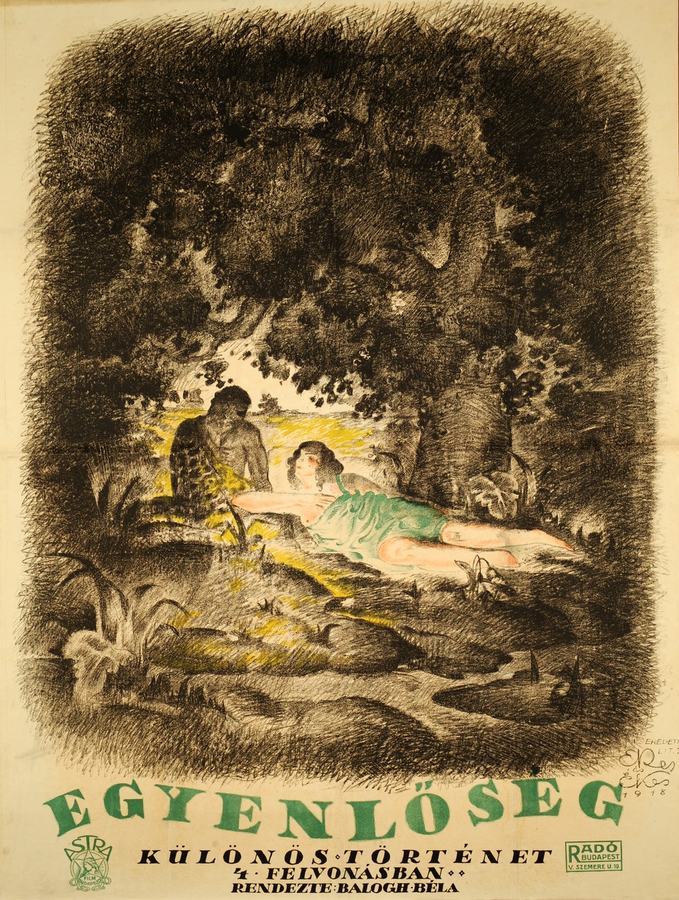
Stepping back into the hallowed, hushed halls of cinematic history, we encounter 'Egyenlöség' – a Hungarian silent film whose very title, meaning 'Equality,' resonates with a profound and timeless urgency. This isn't just a relic from a bygone era; it’s a pulsating, relevant commentary on human dignity, class struggle, and the relentless pursuit of justice that, astonishingly, feels as vital today as it must have upon its initial release. Conceived from the literary genius of J.M. Barrie and deftly adapted for the screen by Richárd Falk, this cinematic endeavor transcends mere entertainment, positioning itself as a societal mirror reflecting the stark inequalities that have plagued humanity across generations. Its narrative tapestry, woven with threads of hardship, burgeoning romance, and an unyielding quest for fairness, offers an immersive experience into the socio-economic anxieties of the early 20th century, all while delivering a powerful, emotional punch that lingers long after the final frame.
The film introduces us to Éva, portrayed with a mesmerizing blend of fragility and formidable resolve by Juci Boyda. Éva is not merely a character; she is an archetype of the intelligent, virtuous individual trapped within a system designed to crush aspirations not born of privilege. Her family's plight, a direct consequence of the industrialist Károly's (György Kürthy) egregious negligence, serves as the narrative's igniting spark. Kürthy, with his imposing screen presence and subtle villainy, embodies the detached, self-serving capitalistic ideal of the era, a man whose empire is built upon the literal and figurative backs of the working class. The initial scenes, depicting the stark contrast between the squalor of the factory district and the opulent, almost suffocating grandeur of Károly's estate, are masterfully crafted. The mise-en-scène here speaks volumes, utilizing deep focus and stark chiaroscuro lighting to underscore the chasm between the two worlds. The visual language is potent, with every shadow and beam of light carefully orchestrated to evoke empathy for the struggling and disdain for the complacent.
Éva's journey from a grieving daughter to an impassioned advocate for the oppressed is the film's beating heart. Her initial attempts to seek justice through established channels are met with a wall of bureaucratic indifference and outright corruption, showcasing the systemic biases that often favor the powerful. This segment of the film is particularly impactful, as it lays bare the inherent unfairness of a justice system that is theoretically blind but practically myopic, seeing only the glint of gold. Helene von Bolvary, in her role as a sympathetic, though ultimately constrained, legal aid, adds a layer of nuanced performance, portraying the internal conflict of someone who understands the injustice but is limited by the very structures she operates within. Her subtle gestures and expressive eyes convey a world of unspoken frustration, a silent testament to the pervasive nature of inequality.
The introduction of István, Károly's son, played with a compelling evolution by Lajos Bónis, marks a crucial turning point. Initially, István is a product of his environment – entitled, somewhat oblivious, and shielded from the harsh realities that define Éva's existence. Bónis excels in portraying this initial aloofness, his posture and gaze conveying a man accustomed to having the world bend to his will. However, as his path intertwines with Éva's, a slow, almost imperceptible transformation begins. It's a testament to the screenplay's depth and Barrie's underlying humanism, filtered through Falk's adaptation, that István is not presented as a one-dimensional antagonist but as a character capable of introspection and growth. Their interactions are charged with an electric tension, a delicate dance between two individuals from disparate worlds, drawn together by an undeniable, burgeoning connection that defies societal conventions.
The romance between Éva and István is not merely a saccharine subplot; it serves as a powerful microcosm of the film's larger theme of 'Egyenlöség'. Their love story is a radical act of defiance against the rigid class structures of the time, suggesting that genuine human connection can bridge even the widest social divides. The silent film medium, with its reliance on exaggerated expressions and gestures, surprisingly lends itself well to the portrayal of such nuanced emotional development. Boyda and Bónis communicate volumes with their eyes, their subtle shifts in body language, and the palpable chemistry between them. This forbidden romance echoes the emotional complexities found in films like The Truth About Helen, where societal expectations clash with personal desires, but 'Egyenlöség' elevates it with a stronger undercurrent of socio-political commentary.
The film's visual style is a character in itself. The cinematography, while constrained by the technology of its era, is remarkably sophisticated. The use of deep shadows in the poorer districts against the brightly lit, almost sterile environments of the wealthy, creates a powerful visual metaphor for the film's central conflict. Close-ups are employed judiciously, amplifying the emotional impact of key moments, particularly Éva's expressions of determination and István's moments of dawning realization. The editing, too, deserves commendation, maintaining a brisk pace that belies the film's potentially heavy subject matter, ensuring that the audience remains engaged throughout Éva's arduous journey. There's a particular sequence, involving a worker's protest, where the rapid cuts and dynamic camera angles generate a palpable sense of urgency and collective struggle, reminiscent of the early Russian montage experiments, albeit with a distinct Hungarian flavor.
Beyond the central performances, the supporting cast provides a rich tapestry of characters that flesh out the film's world. Ida Andorffy, as Éva's steadfast confidante, offers a grounding presence, her quiet strength providing a vital emotional anchor. Sándor Szõke and Árpád id. Latabár, in their respective roles, contribute to the ensemble's depth, portraying various facets of the working class and the societal forces at play. Each actor, through the expressive language of silent cinema, contributes to the film's overarching message, ensuring that the human cost of inequality is never far from the viewer's mind. Their collective performances elevate 'Egyenlöség' from a simple melodrama to a profound social statement.
The thematic exploration of equality in 'Egyenlöség' is multi-faceted. It's not just about economic disparity, but also about the equality of opportunity, the equality before the law, and the fundamental equality of human worth. The film meticulously deconstructs the mechanisms by which power perpetuates itself, showing how wealth can buy influence, silence dissent, and distort justice. Yet, it also champions the resilience of the human spirit, the courage to speak truth to power, and the transformative potential of empathy. In this regard, it shares a spiritual kinship with other socially conscious films of the era, such as The Symbol of Sacrifice, which also delved into themes of social injustice and personal integrity in the face of overwhelming odds.
J.M. Barrie's influence, though filtered through a Hungarian lens by Richárd Falk, is discernible in the film's deep exploration of character psychology and its underlying idealism. While Barrie is often associated with the whimsical, his lesser-known works frequently tackled social issues with a keen eye for human nature. Falk's screenplay successfully translates this depth into the visual language of silent cinema, ensuring that the film's philosophical underpinnings are never overshadowed by its dramatic narrative. The dialogue, conveyed through intertitles, is sharp and purposeful, avoiding excessive exposition and allowing the visual storytelling to take precedence. The scarcity of words makes each one count, imbuing them with a poetic resonance that enhances the film's gravitas.
The climax of 'Egyenlöség' is not a simple resolution but a powerful assertion of a vision for a better world. Without revealing too much, the film eschews a tidy, saccharine ending in favor of a more nuanced, thought-provoking conclusion that leaves the audience contemplating the enduring struggle for justice. It suggests that while individual battles can be won, the war for true equality is an ongoing endeavor, requiring constant vigilance and collective action. This makes 'Egyenlöség' a particularly mature and sophisticated work, refusing to offer simplistic answers to complex societal problems. Its impact is less about a definitive victory and more about the awakening of consciousness, both within the characters and, crucially, within the audience.
One cannot discuss 'Egyenlöség' without acknowledging its historical significance. As a product of Hungarian cinema from the silent era, it stands as a testament to the burgeoning global film industry and the universal appeal of stories that challenge the status quo. It’s a powerful reminder that cinema, even in its nascent form, was already a potent tool for social commentary and cultural reflection. Viewing it today, one is struck by its remarkable foresight and its ability to articulate grievances that, unfortunately, continue to plague contemporary societies. The film's message about the corrupting influence of unchecked power and the necessity of advocating for the marginalized remains profoundly relevant in our own fractured world.
In comparing 'Egyenlöség' to other films of its time, its commitment to social realism while maintaining a compelling dramatic arc stands out. Unlike the more fantastical escapism offered by something like 20,000 Leagues Under the Sea, or the historical pageantry of From the Manger to the Cross, 'Egyenlöség' grounds itself firmly in the lived experiences of ordinary people, elevating their struggles to epic proportions. Its narrative structure, while classic in its progression, feels fresh due to the sincerity of its performances and the conviction of its message. The film doesn't shy away from depicting hardship, but it always balances it with an underlying current of hope and the unwavering belief in humanity's capacity for change.
The influence of 'Egyenlöség', while perhaps not as widely known as some Hollywood blockbusters of the era, would have undoubtedly resonated within its cultural context, sparking discussions and perhaps even inspiring social action. It represents a vital piece of cinematic heritage, one that deserves renewed attention for its artistic merits and its enduring thematic power. The performances, particularly from Juci Boyda and Lajos Bónis, are masterclasses in silent acting, conveying a rich spectrum of human emotion without uttering a single word. Their ability to draw the audience into their internal worlds is a testament to their skill and the evocative power of the medium.
For contemporary audiences, 'Egyenlöség' offers a unique opportunity to witness a pivotal moment in film history, not just as an academic exercise, but as a deeply moving and thought-provoking experience. It challenges us to reflect on our own societal structures and to consider how far we have truly come in achieving the titular ideal. The film's aesthetic, while undeniably of its time, possesses a raw beauty that captivates. The stark black and white imagery, far from being a limitation, enhances the dramatic contrasts and focuses the viewer's attention on the subtle nuances of performance and symbolism. The film uses its visual palette to great effect, transforming simple sets and costumes into powerful indicators of class and character.
Ultimately, 'Egyenlöség' is more than just a film; it is a profound artistic statement, a clarion call for empathy and justice. It reminds us that the pursuit of equality is not a fleeting trend but a fundamental human imperative. Its narrative, though set in a specific historical context, speaks to universal truths about power, privilege, and the enduring strength of the human spirit. The collaboration between Barrie's insightful storytelling and Falk's compelling adaptation creates a cinematic experience that is both intellectually stimulating and emotionally resonant. It is a film that demands to be seen, studied, and discussed, for its lessons are as pertinent today as they were a century ago. The legacy of 'Egyenlöség' is not just in its historical place but in its continuous ability to provoke thought and inspire action, making it a truly timeless work of art.
The intricate dance between individual agency and systemic oppression is a constant motif throughout the film. Éva’s personal battle is meticulously framed within the broader canvas of societal forces, highlighting how even the most determined individual can be hampered by entrenched structures. Yet, her unwavering spirit serves as a beacon, illuminating the path for others. This narrative approach allows 'Egyenlöség' to avoid becoming a didactic polemic, instead presenting a compelling human drama that allows the audience to draw their own conclusions about the nature of justice and the possibility of change. It’s a masterful balancing act, demonstrating the power of storytelling to educate and inspire without resorting to overt preaching. The film's emotional core remains robust, preventing it from ever feeling like a cold, intellectual exercise.
The meticulous attention to detail in the film’s production design, though perhaps less overtly flashy than some of its contemporaries, contributes significantly to its immersive quality. The costumes, the sets, the props – all are carefully chosen to reflect the economic realities and social distinctions of the period. This commitment to authenticity ensures that the world of 'Egyenlöség' feels lived-in and believable, further enhancing the audience’s connection to Éva’s struggle. The visual storytelling is so strong that even without spoken dialogue, the viewer instinctively understands the characters' social standing and their aspirations. This is a hallmark of truly great silent cinema, where every visual element is imbued with meaning and purpose.
The enduring power of 'Egyenlöség' lies in its ability to transcend its specific historical moment and speak to universal human experiences. It asks fundamental questions about fairness, compassion, and the responsibility of the powerful towards the vulnerable. These are questions that continue to echo through the corridors of time, making the film's message perpetually relevant. It is a work that champions the underdog, celebrates resilience, and dares to envision a world where the scales of justice are truly balanced. Its narrative complexity, combined with its emotional depth and powerful performances, solidifies its place as a significant, albeit perhaps underappreciated, achievement in early cinema. It offers a rich cinematic experience that challenges, moves, and ultimately inspires, proving that the pursuit of equality is indeed a timeless and noble endeavor.
The film’s exploration of morality is another key aspect that deserves emphasis. Characters are not simply good or evil; they are products of their environments, shaped by their experiences and their societal positions. István’s transformation, for instance, is not instantaneous but a gradual awakening, spurred by Éva’s unwavering integrity and the undeniable truth of her cause. This nuanced approach to character development adds considerable depth to the narrative, making the moral dilemmas faced by the characters feel authentic and relatable. Even Károly, the industrialist, while undeniably a figure of oppression, is portrayed with enough complexity to suggest that his actions stem from a deeply ingrained system rather than pure malice, though the consequences remain devastating. This moral ambiguity invites deeper reflection from the audience, challenging simplistic interpretations of good versus evil.
In conclusion, 'Egyenlöség' stands as a powerful testament to the enduring capacity of cinema to illuminate social injustices and champion the cause of human dignity. It is a film that, despite its age, feels remarkably contemporary in its themes and its emotional resonance. The masterful adaptation of J.M. Barrie’s vision by Richárd Falk, brought to life by the compelling performances of Juci Boyda, Lajos Bónis, Helene von Bolvary, and the entire ensemble, creates a cinematic experience that is both profound and deeply moving. It is a vital piece of film history, one that continues to provoke thought and inspire reflection on the timeless pursuit of equality. Its legacy is not just in its artistry, but in its unwavering commitment to the belief that a more just world is not only desirable but attainable, if only we dare to fight for it.
IMDb —
1926
Community
Log in to comment.