DbcultAccessing Vault...
6.4/10
Senior Film Conservator
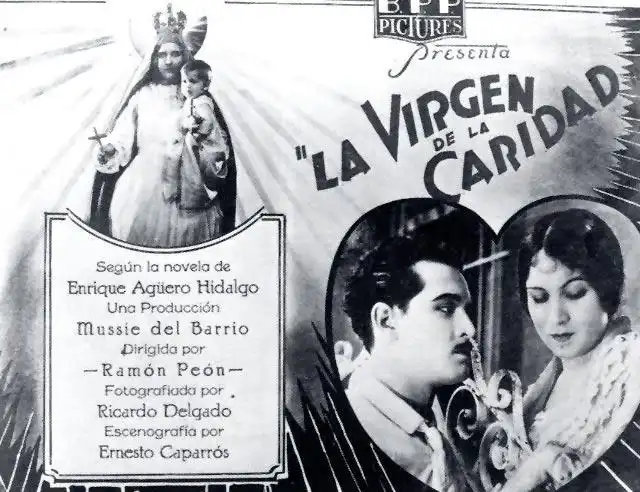
A definitive 6.4/10 rating for a film that redefined the boundaries of cult cinema. La virgen de la Caridad remains a cornerstone of transgressive art.
Alright, so if you're looking for something that moves fast or has a plot that twists every five minutes, La virgen de la Caridad probably isn't for you. But if you like your stories a bit more gentle, with a strong dose of old-world charm and maybe a *little* bit of faith, then yeah, give it a shot. This one's for the folks who appreciate a classic forbidden love story, especially if you don't mind a miracle showing up to clean things up. 😇
The whole setup is pretty straightforward. We've got this young guy, played by Roberto Navarro, who's still raw from losing his father. You can see it in his eyes, this kind of constant, quiet hurt. Then he meets the chieftain's daughter, Diana Marde, and *poof*, they're smitten. Their scenes together often have this almost hushed quality, like they're trying to keep their feelings a secret from the very air around them. It’s kinda sweet, honestly.
Of course, her dad, the chieftain (Rafael Girón), is immediately against it. He’s not subtle about it either. There’s one shot where he just stares at them from across a village square, and his look alone could curdle milk. The camera holds on him a beat too long, just letting that disapproval sink in. It’s effective, even if the reason for his objection feels a bit thin; just... *because he’s the chieftain*.
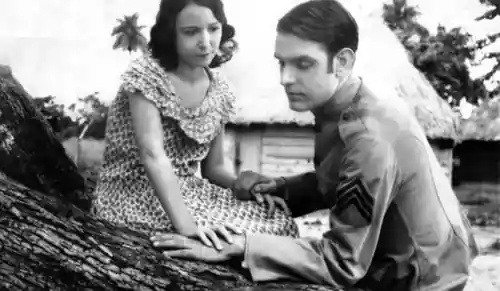
The movie really leans into the idea that these two kids are up against everything. You see them sneaking glances, or meeting in some quiet, overgrown spot by the river. It’s all very dramatic, in a quiet way. There’s a scene where they’re just sitting, not even talking much, and the *way the light falls* through the trees almost feels like it’s highlighting their doomed situation. Or maybe that's just me.
The pacing, well, it’s not exactly zippy. There are moments that stretch out, letting you soak in the atmosphere of this Cuban village. You get a real sense of the community, even if some of the crowd scenes feel a little... sparse. Like, one moment there's a bustling market, and the next, only three people are milling about. Where did everyone go? 🤷♀️
Now, the big turning point, the miracle. This is where things get interesting, or maybe a bit predictable, depending on how you feel about divine intervention. Our Lady of Charity steps in. The sequence itself is done with a certain reverence. There’s a lot of soft light and some rather dramatic organ music. It’s not flashy by today's standards, but for its time, you can tell they were *really trying* to make it feel special. The way the light shines on Diana Marde’s face during this part, it’s quite striking.
It’s not a movie that digs deep into anyone’s psyche. Characters are pretty much what they seem on the surface. Roberto Navarro’s young lover is earnest, maybe a little *too* earnest at times. And Diana Marde brings a nice vulnerability to the chieftain’s daughter. You really feel for her being caught between her love and her powerful, stubborn father.
Some small things kinda stuck with me. Like, there’s this one older woman, not a main character at all, who keeps appearing in the background of different scenes, always with the same expression of weary wisdom. She barely says anything, but you just *know* she’s seen it all. Or the way some of the village buildings look so lived-in, almost crumbling, adding a nice layer of realism to the backdrop that the main drama sometimes overlooks.
The film *does* feel a little slow at points. You can sometimes feel the story just... waiting for the miracle to happen, like it's holding its breath. But if you let yourself sink into it, there's a certain charm to that slowness. It lets you appreciate the simpler emotions at play. It’s not trying to be anything more than it is: a tale of love, opposition, and a little bit of divine help when things get really tough. And sometimes, that’s all you need.

IMDb 5
1928
Community
Log in to comment.