DbcultAccessing Vault...
Cult Review
Senior Film Conservator
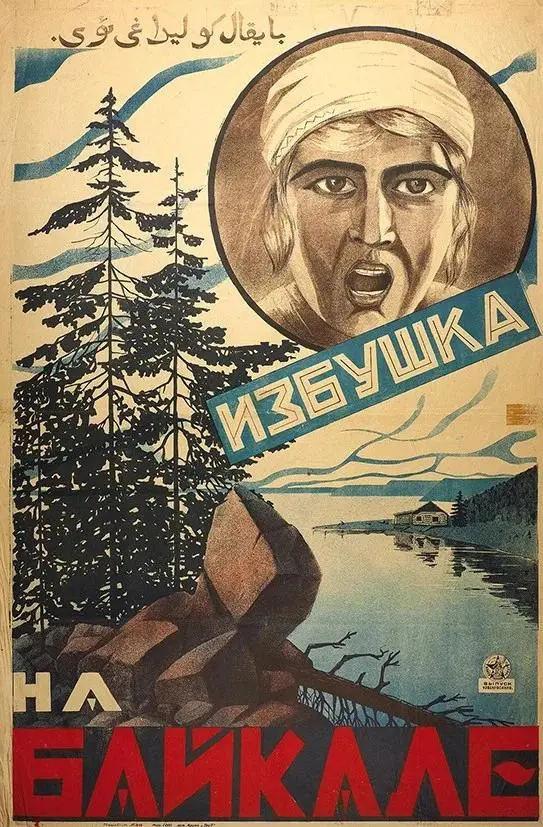
Is Izbushka na Bajkale worth watching today? Short answer: yes, but only if you have the stomach for the slow-burn brutality of early Soviet realism and the patience to engage with a film that treats its landscape as a primary, murderous antagonist.
This film is for the cinematic archaeologist and the viewer who finds beauty in the bleakness of human struggle; it is absolutely not for those who require the sentimental hand-holding of contemporary survival dramas. It is a cold film about a cold place, made by people who clearly understood the lethality of the Siberian winter.
1) This film works because it rejects the theatrical artifice of its era in favor of a documentary-like grit that feels startlingly modern.
2) This film fails because its ideological commitments occasionally flatten the complex humanity of its supporting characters.
3) You should watch it if you want to experience the raw, unpolished origins of the survival genre before it was sanitized by Hollywood tropes.
The most striking element of Izbushka na Bajkale is not its dialogue—which is, of course, absent—but its geography. In 1926, the technical limitations of filming on location at Lake Baikal must have been a logistical nightmare. Yet, the camera captures the scale of the ice with a terrifying clarity that puts the studio-bound sets of The Land of Long Shadows to shame.
There is a specific sequence early in the film where the characters trek across the frozen expanse. The horizon is a flat, grey line that seems to swallow the figures whole. It is a visual representation of insignificance. The directing doesn't just show us the cold; it makes us feel the thinning of the air and the fragility of the human body in such an environment.
Unlike the romanticized wilderness seen in The Call of the Cumberlands, the Siberia of this film is a void. There is no nobility in this nature. There is only the hut—the 'izbushka'—which acts as a precarious bubble of life. When the wind howls against the timber walls, the sound is almost audible through the grain of the film stock.
Margarita Gorbatova delivers a performance that is remarkably restrained for the mid-1920s. While many of her contemporaries were still leaning into the exaggerated gesticulations of the stage, Gorbatova uses her eyes to convey a specific kind of exhaustion. It is the exhaustion of someone who has stopped fearing death because they are too tired to care.
In one scene, she sits by a small fire, tending to a pot of water. The way she looks at the steam—not with hope, but with a dull, repetitive necessity—is heartbreaking. It’s a level of internal acting that rivals the best work in Vampire, though without the gothic stylization. She is a woman of the earth, and the earth is trying to reclaim her.
Aleksandr Cherkasov provides a sturdy foil, representing the more ideological or 'active' element of the narrative. However, the film is at its best when it lets the silence between the actors do the heavy lifting. The tension isn't built through plot twists, but through the realization that their supplies are dwindling. It is a slow, methodical tightening of the noose.
Vladimir Zazubrin, the writer, was a man who knew the dark corners of the human psyche. His involvement ensures that the film isn't just a survival story, but a psychological autopsy. There is a sense of pervasive dread that matches the tone of The Legion of Death, yet it feels more grounded in the physical reality of the Russian East.
The ideological subtext is unavoidable. This was Soviet cinema in the mid-20s, after all. There are moments where the film pivots toward a message about collective endurance and the triumph of the new order. These moments are the film's weakest points. They feel like a lecture delivered in the middle of a funeral.
However, the film’s visceral power often overwhelms its propaganda. The struggle to survive transcends political alignment. When the characters are fighting the elements, they aren't Bolsheviks or Tsarist remnants; they are simply animals trying not to freeze. This primal quality is what gives the film its longevity.
If you are looking for a casual evening of entertainment, the answer is a resounding no. This film demands your undivided attention and a willingness to sit with discomfort. However, if you are interested in the evolution of cinema as a tool for capturing the raw essence of the human condition, it is essential viewing.
The film’s pacing is its greatest challenge. It moves with the speed of a glacier. But like a glacier, it has an undeniable, crushing force. By the time the final act arrives, you feel as though you have lived through the winter with these characters. That level of immersion is rare, even in modern cinema with all its high-definition bells and whistles.
Pros:
The location shooting is revolutionary for 1926. It provides an authenticity that studio sets can never replicate. The performances are grounded and avoid the melodramatic pitfalls of the silent era. The film’s tone is consistently somber and uncompromising, creating a truly unique atmosphere.
Cons:
The pacing will be a significant barrier for many. Some scenes linger far longer than necessary to make their point. The print quality of surviving copies can be rough, which may distract viewers accustomed to pristine digital transfers. The political subtext can feel dated and forced.
When compared to other films of the period like The Vanishing American, Izbushka na Bajkale feels far less concerned with spectacle and far more concerned with the internal state of its protagonists. While American cinema was perfecting the art of the 'epic,' Soviet cinema was perfecting the art of the 'visceral.'
It lacks the playful spirit found in something like A Csitri or the romantic tension of Molly and I. Instead, it shares a DNA with the more experimental and grim works of the era, such as La serpe. It is a film that refuses to smile.
Izbushka na Bajkale is a difficult, beautiful, and ultimately rewarding piece of cinematic history. It is a testament to the power of the image to convey the most basic of human instincts: the will to live. It isn't a masterpiece in the traditional sense—it's too jagged and uneven for that—but it is a vital work that deserves to be remembered.
It works. But it’s flawed. The flaws, however, are what make it human. In the end, the film is like the lake it depicts: vast, cold, and indifferent to your presence, but impossible to ignore once you’ve stood on its shore.

IMDb 5.2
1932
Community
Log in to comment.