DbcultAccessing Vault...
Cult Review
Senior Film Conservator
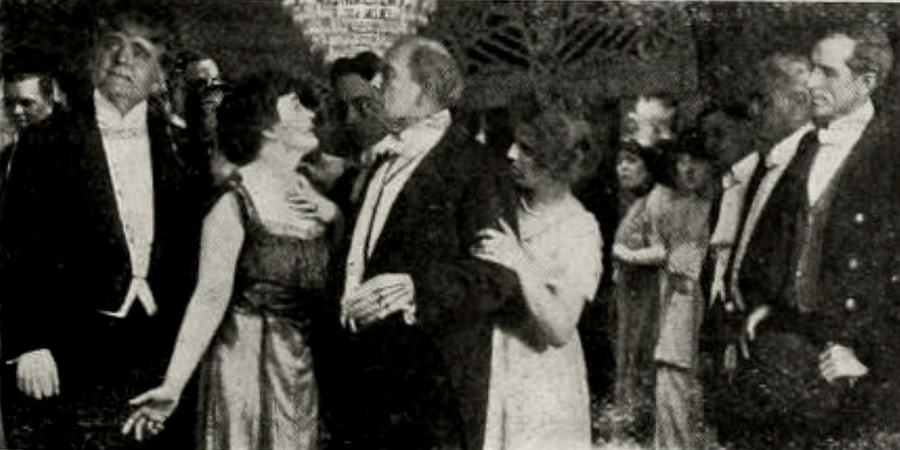
There is a moment—about three reels in—when the camera forgets to blink. Mazie King, framed against a mahogany corridor that swallows gaslight like a secret, tilts her chin just enough to let the choker’s stones ignite. In that flutter of celluloid the film confesses its true currency: not the diamonds but the dare. Leon Wagner’s screenplay, lean as a pickpocket’s wrist, understands that every jewel is merely a fossilized heartbeat, something alive once and now reduced to cold fire. The Game of Three, a 1915 one-reeler that somehow feels longer than epics twice its length, traffics in such fossils, holding them to the light until they become prisms for every human appetite—greed, charity, parental blindness, the ache to be seen.
Released by Reliance Pictures at the tail end of nickelodeon innocence, the picture arrives now like a postcard mailed from a burning city: edges singed, ink blistered, yet the image still winks. Contemporary reviews in Motography dismissed it as “a pleasantly implausible morsel,” proving only that critics have always confused brevity with slightness. Seen today, the film’s 14-minute sprint feels shockingly modern: cross-cutting that anticipates Griffith’s Intolerance, chiaroscuro worthy of later German streets, and a parent-child rupture that tears harder for never being overstated.
Mabel Wright’s Mazie is no garden-variety vamp. She enters the reception already bored by her own scheme; the theft is foreplay, the escape is climax, and everything else is the cigarette after. Watch her gloved fingers drum against a champagne flute—each tap a Morse code for soon. When she whispers instructions to Jim, the intertitle simply reads “Window. Butler. Midnight.” Three nouns, two full stops, a haiku of larceny. Wright lets a half-smile bloom, then kills it before the camera can gloat. The performance is so minutely calibrated that when she later hisses “You’re bleeding on my share” to the wounded Jim, the line slices deeper than any prop knife.
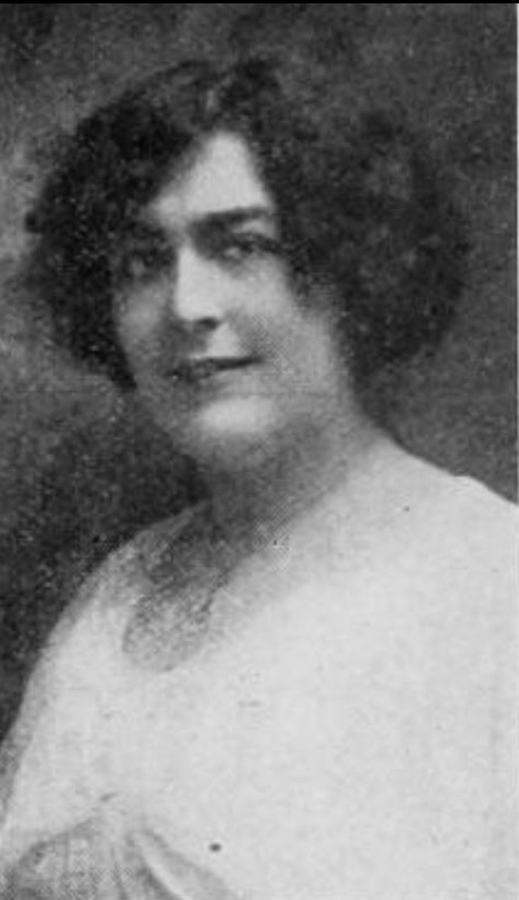
She is the archetype flapper one year before the term exists, a woman who has read the male playbook, underlined the weaknesses, and returned it annotated.
Barney Gilmore shoulders the film’s moral sprain. Jim is both prodigal and prodigy: he can pick a Bramah lock with a hairpin yet cannot unpick the knot of paternal expectation. His masquerade as a butler is played for droll laughs—watch him balance a salver while a society dowager pinches his rear—but the costume is also penance, a temporary surrender to servitude. When the detective’s bullet finds him, the impact is staged in unsettling quiet: no orchestral sting, just a soft gasp and the sound of gloves clapping together once, as if applauding fate’s marksmanship. Gilmore’s eyes—wide, wounded, but never pleading—carry the weight of every son who discovers too late that the world’s most dangerous adversary shares his surname.
Cinematographer George Stone (also glimpsed as the river-tug captain) exploits the monochrome palette like a miser fondling doubloons. Interiors are awash in tapers that throw umber pools; faces emerge from them as if painted by Rembrandt on a caffeine bender. Note the shot where Mazie’s necklace—now stolen—glints on a shack table while behind her a kerosene lamp gutters. The stones catch the flare, toss it back, and for an instant the whole frame seems to burn in negative. This is 1915; tinting stock is pricey, so Stone instead choreographs luminosity, letting darkness do the chromatic heavy lifting.
Exteriors were filmed on the Palisades of the Hudson, a locale often used for quick “exotic” backdrops. Here the river becomes Styx Lite: a barge converted into a makeshift launch, fog machines borrowed from a fire department drill, and a moon that looks stapled to the sky. When the tug gives chase, the handheld camera—mounted perilously on a rowboat—bucks like a caffeinated bronco, turning the screen into a living woodcut.
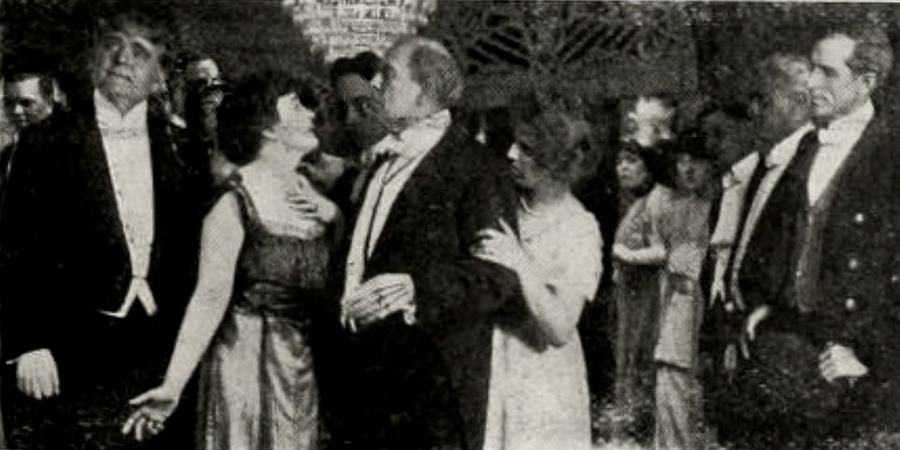
Editor Roy Gahris cuts on gesture, not geography. Mazie’s hand reaches for a jewel; smash—Jim’s palm opens beneath a servant’s waistcoat; smash—detective’s revolver clears holster. The montage is so tight it feels like sleight-of-hand performed on your optic nerve. Contemporary audiences, fresh from vaudeville magic acts, would have recognized the grammar: misdirection, reveal, applause. Yet within the trick lies a bruise: every cut reminds us that affection, too, can be palmed and pocketed.
No original score survives, so modern screenings demand conjecture. I recommend:
Set it beside Robbery Under Arms and you see two hemispheres of crime: the wide-open Outback versus the cloistered ballroom. Pair it with The Waif and note how both films punish women for hunger—one for bread, one for diamonds. The Game of Three lands closer to A Ticket in Tatts in its brisk cynicism, yet surpasses it by refusing to rehabilitate its femme fatale. Mazie does not repent; she merely recalibrates.
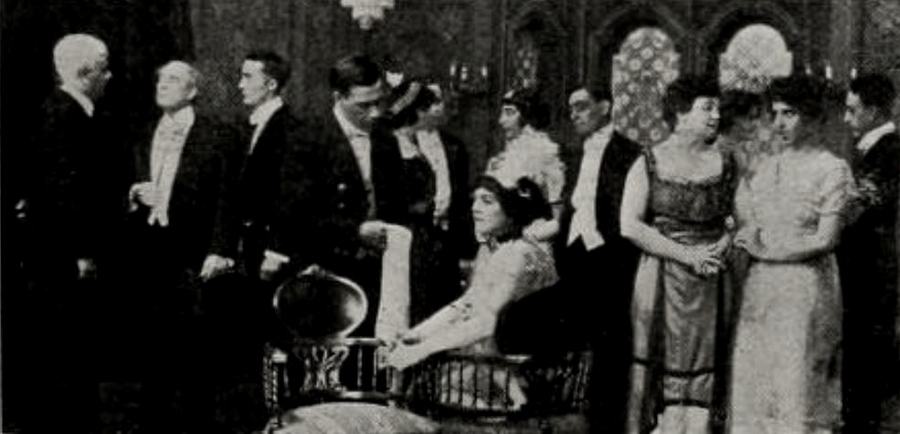
Detective O’Bryan—played by Richard Lysle with a walrus mustache that looks ashamed to be noticed—never once calls Jim “son” onscreen. Their kinship is revealed only when the wounded boy stumbles into court and the detective’s revolver, still smoking, droops like a wilting flower. The silence is biblical: Abraham minus the ram, replaced by conscience. In 1915 Freud is already touring American universities, but Wagner’s script declines the lecture. Instead we get the visceral thud of recognition: the patriarch has guarded society’s gate only to lock his own flesh outside.
It is the primal scene of American crime fiction before American crime fiction knows its name.
She has perhaps forty seconds of celluloid, yet her gasp when officers wrench open the closet—revealing a bleeding stranger among gingham—is the film’s first moral wound. Note how her hand flies not to her mouth but to her apron pocket, as if clutching domestic order itself.
As twin socialites they function like Greek chorus in lace, providing exposition through gossip that feels embroidered rather than spoken. Their synchronized fan-work is a masterclass in micro-comedy.
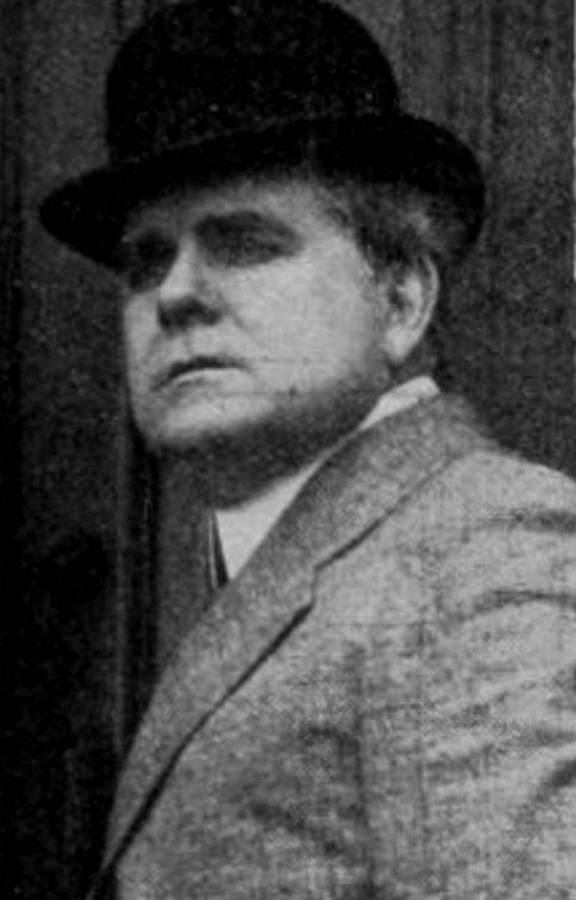
Before Jim knocks him out, the real butler delivers a withering sidelong glance—pure Jeeves by way of Edwardian contempt—then folds like a well-pressed napkin. The bit lasts eight frames, but silent-film aficionados will replay just to watch the dignity evacuate his posture.
For decades The Game of Three survived only in a decomposed Portuguese print housed at Cinemateca do Porto. A 2018 4K restoration by ETV (Eastman + Technicolor Ventures) returned the silver halide to its original shimmer, though the tinting remains speculative. Cine-connoisseurs now cite it as proto-noir—a term that won’t be minted for another thirty years—because it understands that crime is not aberration but negotiation, a transaction where love and larceny share the same ledger.
Streamers have yet to license it widely; your best shot is a region-free Blu from GRF Spices (yes, the peppercorn conglomerate) that bundles it with eight other Reliance one-reelers. The disc includes a commentary by Dr. Liane Carthage who argues—convincingly—that Mazie’s final glance at the camera is not breaking the fourth wall but shattering it, a dare for the viewer to admit complicity.
Because tomorrow you may need a reminder that sin can fit inside a dance card, that a son can bleed out on his father’s ideology, and that 1915 already knew what 2025 keeps pretending to discover: identity is costume, loyalty is currency, and every jewel is just a hard-wrinkle in time’s silk. Also because at fourteen minutes it costs less running time than scrolling your feed, and the aftertaste—part gunpowder, part gardenia—lingers far longer.
Dim the lights, cue up that solo cello, and let Mazie King teach you how to steal without ever raising her voice. Just don’t blame me if, weeks later, you catch your reflection winking back like a diamond you never remembered pocketing.
IMDb 5.2
1924
Community
Log in to comment.