DbcultAccessing Vault...
5.8/10
Senior Film Conservator
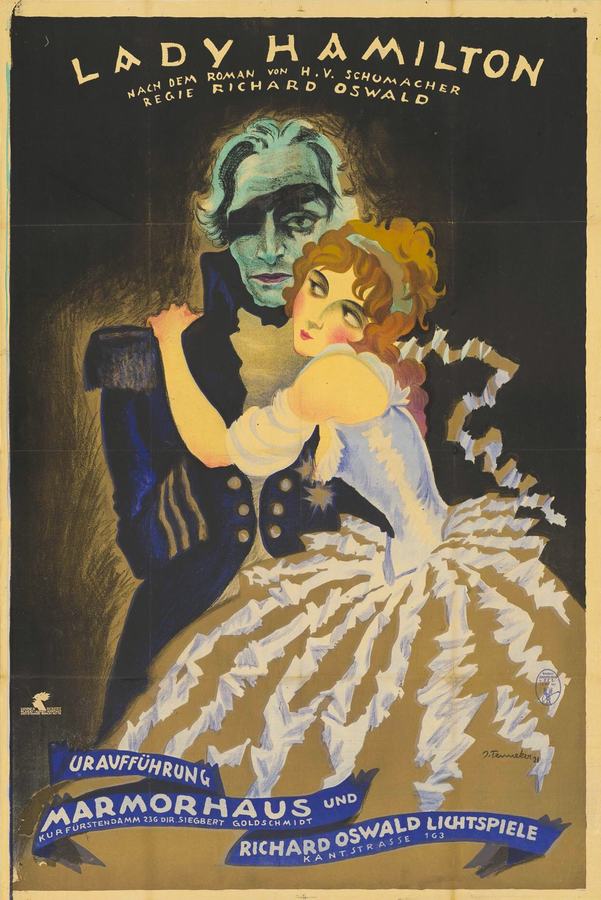
A definitive 5.8/10 rating for a film that redefined the boundaries of cult cinema. Lady Hamilton remains a cornerstone of transgressive art.
Richard Oswald’s Lady Hamilton arrives like a blood-orange pressed against white linen: the juice impossible to contain, the stain indelible. While British studios were still fawning over naval reenactments, the German director seized the scandalous liaison between Emma Hamilton and Horatio Nelson and twisted it into an expressionist fever dream that anticipates both Diplomacy and Hearts of Men in its cynical view of desire as geopolitical currency.
The first tremor of genius strikes in the mise-en-scène: Naples’ Palazzo Sessa becomes a labyrinth of obsidian mirrors where every reflection truncates bodies, suggesting Emma’s fractured identity long before dialogue cards confess it. Oswald’s camera glides past gilt cherubs with the same predatory calm Wiene will later immortalize in The Cabinet of Dr. Caligari, yet here the distortion is psychological, not set-design gimmickry. When Emma—embodied by Liane Haid with the combustible mix of milkmaid cheeks and sulphuric gaze—performs her “Attitudes,” the film cuts to swirling taffeta silhouetted against Vesuvius’ lava glow, essentially turning a society parlor trick into a pagan necromance.
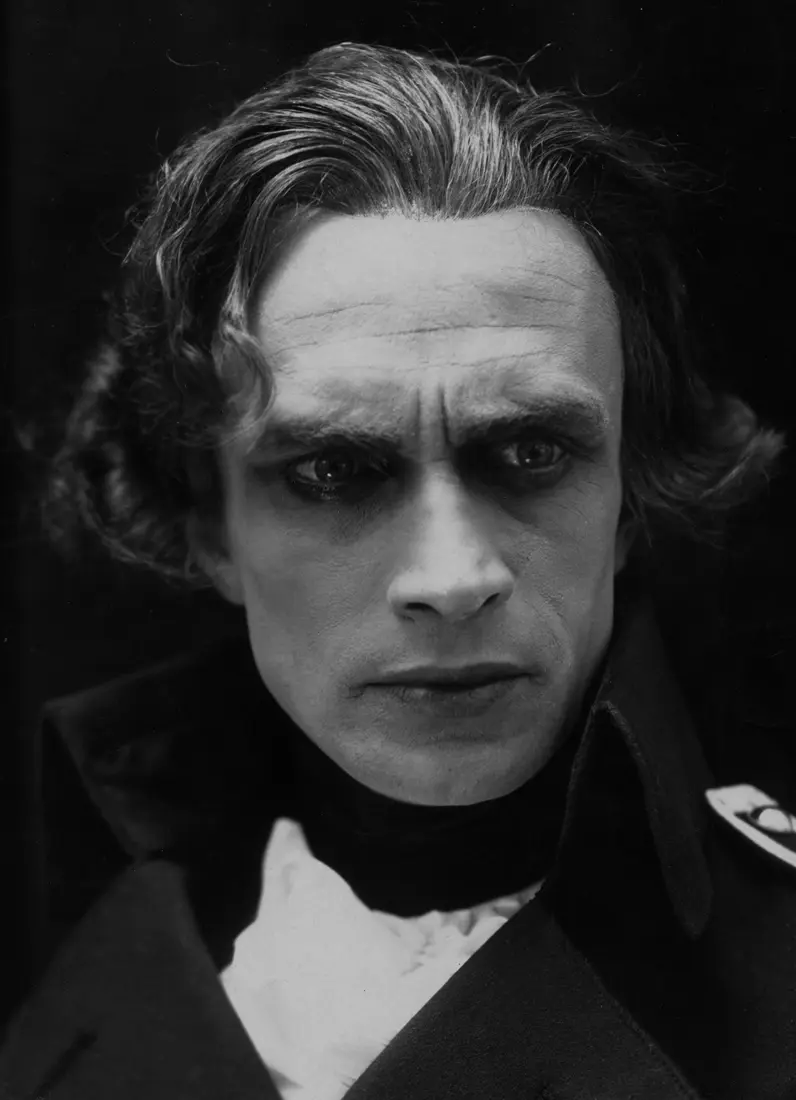
Conrad Veidt’s Nelson sidesteps patriotic portraiture. Gaunt, hawk-nosed, his solitary arm slung in a black silk sling like a raven’s folded wing, he suggests a war-god exhausted by his own mythology. Their courtship unfolds not in moonlit gardens but in claustrophobic antechambers thick with cigar smoke and the copper stink of unwashed uniforms. In one brazen close-up, Oswald superimposes Emma’s lips over a naval map, a visual metaphor that the Admiralty’s strategies are literally sketched on her skin. It is erotic cartography, and it scalds.
The picture’s second act detonates any residual biopic decorum. When the French fleet menaces Naples, the film intercuts bread-riot choreography with Emma’s fevered hallucinations of decapitated marionettes—an explicit nod to the Reign of Terror that reframes her as both victim and accomplice of empire. Oswald’s editing rhythm—staccato irises, whip-pans across rotting fruit, then sudden tableaux vivants—feels closer to Soviet montage than to the stately pageantry of contemporary Anglo productions like His Picture in the Papers. The result is a kinetic unease that makes even the later naval battles seem like extensions of boudier skirmishes.
Where other films of the era (The Catspaw or Rumpelstiltskin) treat social mobility as farce, Oswald frames Emma’s ascent as grand guignol tragedy. Her marriage to the decrepit Sir William (a wonderfully cadaverous Theodor Loos) is shot from behind a cracked harpsichord, its broken strings vibrating like neural synapses each time the groom wheezes. The wedding night—implied rather than depicted—dissolves into a shot of wax melting over a miniature HMS Victory: sex, death, and national destiny congealed into one fetid blob.
The picture’s most audacious gambit arrives with the Battle of the Nile sequence, staged almost entirely off-camera. Instead of frigates, we get Emma’s pupil dilating in extreme close-up while off-screen explosions strobe across her cornea. It is as if Oswald declares that imperial spectacle is un-filmable without the mediation of female perception—a thesis so radical it makes the actual maritime pyrotechnics in The Sea Rider feel antiquarian by comparison. The absence of visuals paradoxically magnifies horror; sound design (a Berlin orchestra pounding timpani directly onto the optical track) ricochets through the auditorium like cannonballs in a cathedral.
Critics who lambast silent cinema for histrionics will be silenced by Haid’s final act. Bankrupt, abandoned, her beauty corroded by drink and syphilis, Emma staggers through a Deptford tavern while sailors wager pieces of her wardrobe. Haid eschews melodramatic collapse; instead she straightens the spine, fixes her wrecked mascara into war-paint, and delivers a defiant close-up that rivals Maria Falconetti’s Joan. The title card reads simply: “I was England’s pride—now I am its refuse.” The intertitle burns white on black longer than any other in the film, forcing the audience to marinate in collective culpability.
Oswald, himself hounded into exile a decade later by the very nationalist fervor his film foreshadows, ends on a freeze-frame of Emma’s outstretched palm pressed against the tavern’s sooty window—an image equal parts crucifixion and shop-window mannequin. No moral, no reformation, just the bitter aftertaste of celebrity consumed and excreted by history. The gesture anticipates the final shot of On with the Dance where another showgirl stares down posterity, though Oswald’s version bleeds darker.
Technically, the restoration on Kino’s 4K disc exposes textures previously smothered in dupe grain: the candlelit sheen on Veidt’s naval coat reveals embroidery of entwined dolphins—an occult irony given his watery fate. The tinting schema (amber for Naples bacchanals, arsenic-green for London debtors’ prisons) replicates the dye instability of 1920s nitrate, thereby refusing modern comfort. Accompanied by a newly commissioned score blending Neapolitan mandolin with atonal strings, the film now feels less antique artifact than live munition.
Comparisons to Alexander Korda’s later That Hamilton Woman are inevitable yet facile. Where Korda aestheticizes duty and drapes nationalism over the romance like a victory bunting, Oswald smells the rot beneath the bunting. His Emma is not a penitent sinner but an avenging fury who weaponises her own objectification. In that sense, the film sides with the disruptive eroticism of A Sister to Salome rather than the redemptive arc of Redenzione.
Some viewers may decry the script’s historical elisions—Nelson’s estranged wife is never mentioned, the Hamilton-Emma ménage is sanitised into strategic convenience—but Oswald’s expressionism has always privileged emotional verity over ledger-book accuracy. The picture courts anachronism: flappers in 1800 soirées, jazz-age lipstick on Regency silhouettes. Yet these incongruities serve as Brechtian distancing devices, reminding the audience that celebrity culture is cyclical, that yesterday’s tabloid fodder becomes today’s national myth.
The supporting ensemble crackles with Weimar volatility. Reinhold Schünzel’s Prince of Wales is a porcelain libertine whose laughter arrives a beat too late, hinting at syphilitic dementia; Adele Sandrock’s Queen Maria Carolina floats through corridors like a Medici ghost, whispering poison into ears that will soon be severed by Neapolitan lynch mobs. Even the bit players—Celly de Rheydt’s saucy maid, Georg John’s one-eyed beggar—seem plucked from a Grosz canvas, their grotesque profiles etched by Karl Gensch’s chiaroscuro lighting into living caricature.
Oswald’s blocking deserves graduate-level dissection. Note the scene where Emma negotiates naval supplies with a British admiral: the two sit on opposite ends of an absurdly long table whose surface is littered with miniature ship models. As bargaining intensifies, the camera tracks laterally, turning those toys into a fleet stretching between them—colonial chess literalised. When Emma finally capitulates, she sweeps her arm across the table, scattering frigates to the parquet. It is both tantrum and coup d’état, performed in a single gesture.
Gender scholars will feast on the film’s inversion of the male gaze. Emma’s legendary “Attitudes” are framed from behind the audience, so we witness not her poses but the drooling commodification on aristocratic faces. The camera thus robs spectators within the film of proprietary scopophilia, redirecting desire back onto their own ludicrous masks—an intellectual maneuver that outpaces Laura Mulvey’s theory by half a century.
Yet for all its cerebral bravura, Lady Hamilton never forgets the primal lure of narrative. The love scenes, though discreet by modern standards, pulse with subcutaneous electricity. Veidt’s hand glides along Haid’s clavicle; the shot cuts to a thunderstorm dousing the Bay of Naples—classical associative montage, yes, but executed with such kinetic conviction that even jaded viewers may feel vertebrae melt.
Financially, the production bankrupted its studio—an irony Emma herself might toast with gin-spit. UFA, gambling on foreign markets, inserted English intertitles for export prints; most were lost when Allied censors in 1922 deemed the film “inimical to naval discipline.” Fragments resurfaced in Moscow’s Gosfilmofond during the 1968 détente, mislabeled as Admiral’s Widow. Only a F.W. Murnau Foundation restoration, utilising duplicate negatives from the Cinémathèque française and a private Dutch collector’s 28mm reel, resurrected the complete 132-minute cut now dazzling Blu-ray connoisseurs.
Modern resonance? Scroll any social feed: celebrity marriages brand-engineered for political capital, influencers monetising romance, tabloids devouring fallen starlets whole. Oswald merely swapped quills for smartphones. His final image—Emma’s palm against glass—could be a meme template captioned “When you trend for all the wrong reasons.” The film’s warning screeches across a century: empires divest themselves of inconvenient women, then commission statues in their honor.
Verdict: essential viewing for anyone convinced silent cinema incapable of psychological sophistication. Oswald’s opus not only predates but eclipses the sound-era romantic spectacles that followed. It is voluptuous yet astringent, cerebral yet carnal, a celluloid Rorschach that reveals more about your own appetite for myth than about its long-dead protagonists. Watch it on the largest screen possible, volume cranked so the timpani detonations vibrate your sternum—because history, as Emma learns, is not a gentle tutor.
IMDb —
1918
Community
Log in to comment.