DbcultAccessing Vault...
6/10
Senior Film Conservator
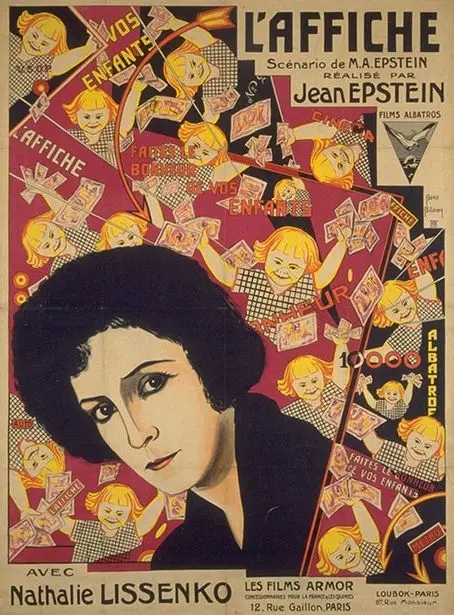
A definitive 6/10 rating for a film that redefined the boundaries of cult cinema. L'affiche remains a cornerstone of transgressive art.
The cinematic image is not a reflection of reality, but a distortion that reveals a deeper truth. In Jean Epstein’s 1924 opus, L'affiche, this distortion becomes a weapon of psychological warfare.
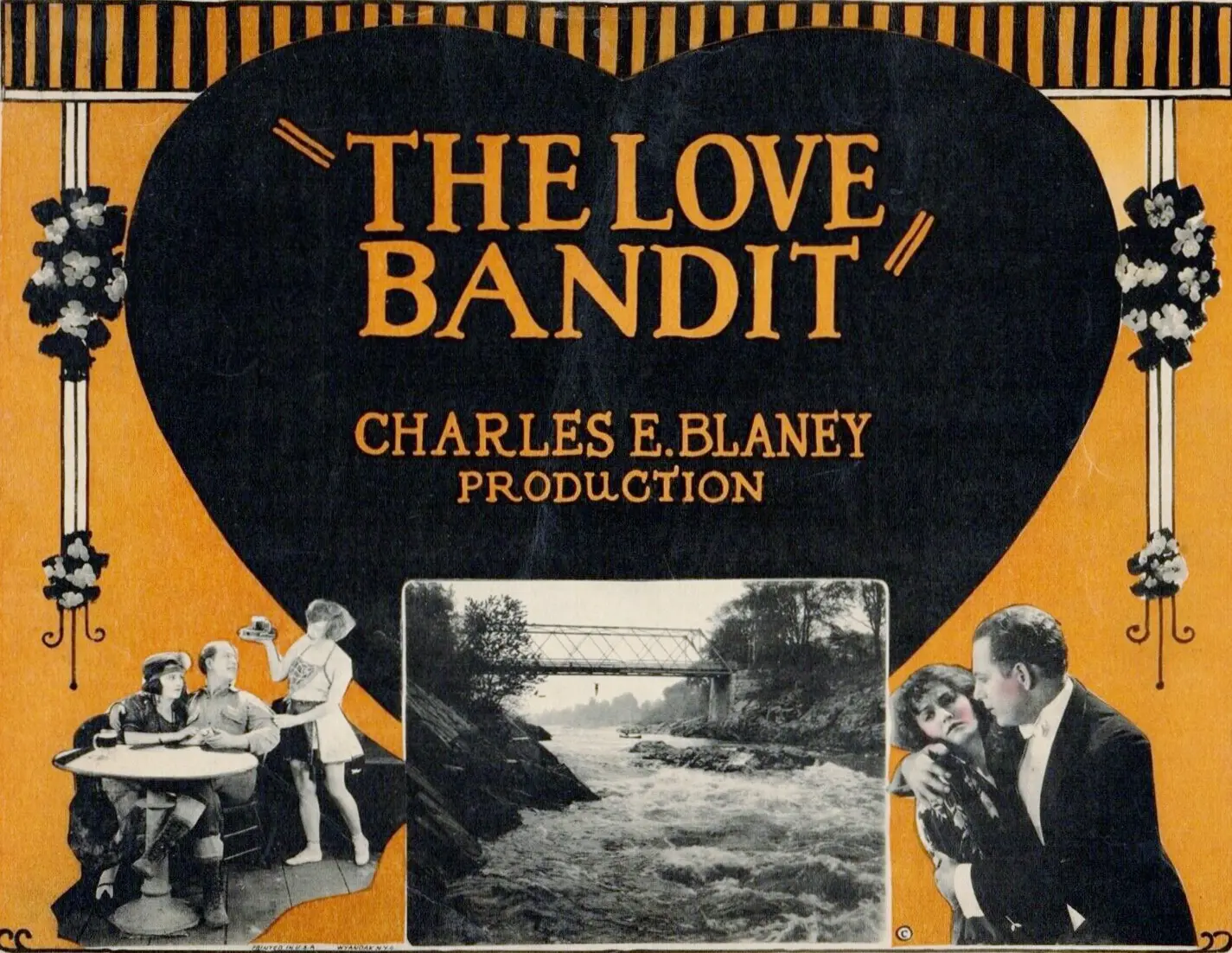
To understand the visceral impact of L'affiche, one must first recognize the fertile ground from which it grew. Produced by the legendary Albatros Films—a sanctuary for Russian émigrés fleeing the revolution—this film represents a bridge between the theatrical melodrama of the past and the avant-garde impressionism that would define the 1920s. While films like The Lottery Man played with the commercialization of chance for comedic effect, Epstein utilizes the machinery of advertising to explore a far more somber ontological crisis.
Jean Epstein, working alongside his sister Marie, who co-wrote the script, was never satisfied with mere storytelling. For him, the camera was an instrument of photogénie—the quality that grants an object a new, spiritual life through the medium of film. In L'affiche, the object in question is the face of a child. By magnifying this face on posters that dominate the Parisian skyline, Epstein transforms a simple portrait into a spectral entity that survives long after the flesh has perished.
Nathalie Lissenko delivers a performance that defies the broad strokes often associated with silent cinema. Her portrayal of the mother is a masterclass in restraint and escalating hysteria. Unlike the more conventional heroines found in The Self-Made Wife, Lissenko’s character is defined by a slow-burn realization of her own complicity. She didn't just lose her daughter; she sold the memory of her daughter before the child was even gone.
The camera lingers on Lissenko’s face, catching the micro-expressions of pride when she first sees the poster, which gradually morph into a mask of horror as the film progresses. The supporting cast, including Camille Bardou and S. Dermoz, provide a sturdy framework, but the film belongs to Lissenko and the posters themselves. The interaction between the living woman and the paper image creates a dialogue of silence that is louder than any synchronized sound could ever be.
The central conceit of the film—the omnipresence of the advertisement—is handled with a rhythmic editing style that was revolutionary for its time. Epstein uses superimpositions and rapid cutting to simulate the mother's fracturing psyche. As she walks through the streets, the poster appears everywhere. It is on the sides of buildings, on the backs of trucks, and in the hands of strangers. It is a haunting that mimics the modern experience of brand saturation, yet it is stripped of its capitalist sheen and replaced with the raw nerves of bereavement.
One cannot help but compare this sense of being watched to the suspenseful atmosphere of The Face at the Window. However, where that film uses the gaze for mystery, L'affiche uses it for a profound existential dread. The daughter’s smile, intended to sell a product, becomes a mocking grimace that reminds the mother of the joy she can no longer touch. It is a cruel irony that the very thing that was supposed to bring the family status and recognition becomes the instrument of their undoing.
Epstein’s direction in L'affiche is a testament to the power of the visual over the verbal. The film utilizes naturalistic lighting in its exterior scenes, contrasting sharply with the more expressionistic, shadow-heavy interiors of the mother's home. This visual dichotomy mirrors the split between the public world of commerce and the private world of grief. While The Eagle (1925) focused on the grandeur of the hero, Epstein focuses on the fragility of the human soul under the weight of an unblinking eye.

The cinematography captures the textures of 1920s France with a clarity that feels almost documentary-like at times, only to dissolve into dreamlike sequences where the boundaries of reality blur. The use of slow motion—a favorite technique of Epstein—is employed sparingly but effectively to elongate moments of realization, making the mother's pain feel eternal. This is not the adventurous pacing of A Fight for Millions; it is a slow, methodical descent into a very personal hell.
The screenplay by Marie Epstein deserves significant credit for its emotional intelligence. She avoids the easy traps of Victorian sentimentality, instead opting for a more modern, psychological approach to loss. The dialogue (via intertitles) is sparse, allowing the visual metaphors to carry the heavy lifting. The script understands that the true tragedy isn't just the death of the child, but the commodification of that child's essence. This theme of being trapped by one's own choices or societal expectations can also be seen in The Fourflusher or The Millionaire, but in L'affiche, the stakes are not financial—they are spiritual.
In the final act, the film reaches a crescendo of visual poetry. The mother’s attempt to destroy the posters—to tear down the paper ghosts—is a futile battle against the industrial age. You can kill a person, but you cannot kill an image once it has been mass-produced. This concept predates the critiques of Walter Benjamin regarding the work of art in the age of mechanical reproduction, yet it illustrates those very anxieties with devastating precision.
The film doesn't offer the easy catharsis found in Leap Year or the traditional resolutions of The Fighting Stranger. Instead, it leaves the viewer in a state of contemplation. Is the image a tribute or a desecration? When we capture a moment in time, do we preserve it or do we murder its spontaneity? These are the questions Epstein forces us to confront as we watch Lissenko collapse beneath the weight of her daughter's frozen laughter.
When placing L'affiche alongside its contemporaries, its uniqueness becomes even more apparent. While Othello deals with the destruction of the self through jealousy, L'affiche deals with the destruction of the self through the externalization of memory. It lacks the escapist glamor of Das Grand Hotel Babylon, opting instead for a gritty, urban realism that feels startlingly contemporary. Even films dealing with bloodlines or identity, such as Blood Test or Hans Faders Ære, rarely achieve the sheer psychological density that Epstein manages here.
To watch L'affiche in the 21st century is to see the birth of our own image-obsessed culture. We live in an era where our faces are constantly digitized, shared, and commodified on platforms that never forget. Epstein’s film serves as a prophetic warning about the cost of that permanence. The mother’s journey is a harrowing reminder that while images are immortal, humans are fragile, and the gap between the two is where madness resides.
The film is a triumph of the Albatros style—sophisticated, emotionally resonant, and technically daring. It remains one of the most poignant explorations of grief ever committed to celluloid. For those who appreciate cinema not just as entertainment but as an interrogation of the human condition, L'affiche is an essential experience. It is a film that clings to the mind long after the screen goes dark, much like the posters that haunted the streets of Epstein’s Paris.
Reviewer's Note: The restoration of this film is crucial for understanding the transition from the silent era's theatricality to the psychological depth of modern cinema. Its themes of commercial exploitation and the sanctity of the image are more relevant today than they were in 1924.
IMDb —
1928
Community
Log in to comment.