DbcultAccessing Vault...
Cult Review
Senior Film Conservator
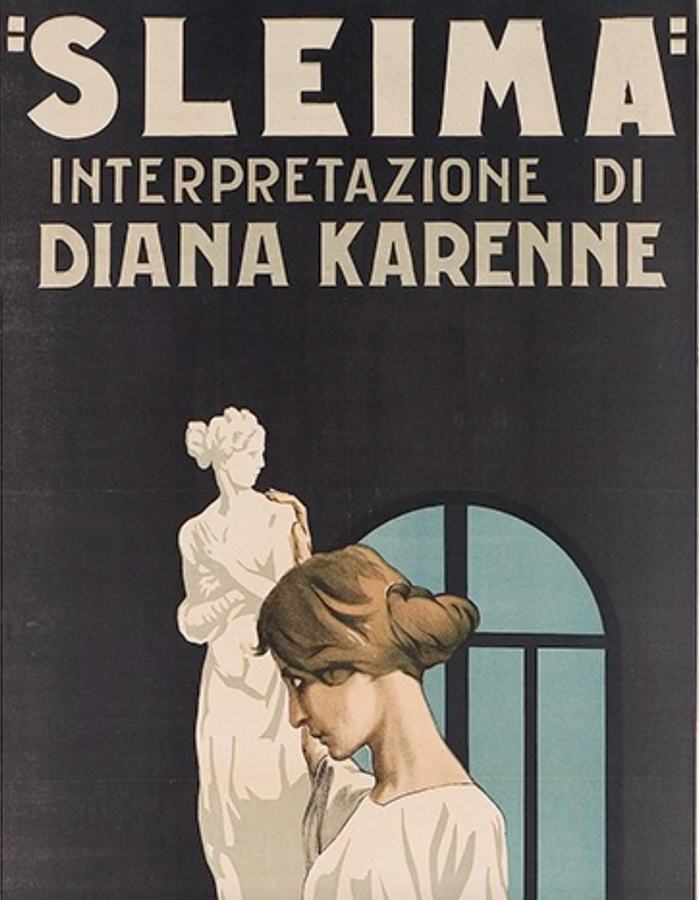
There are films that merely tell a story, and then there are those that rip through the fabric of their era, exposing raw nerves and societal hypocrisies with an unflinching gaze. Such is the enduring power of "Sleima," a cinematic artifact that, despite its vintage, resonates with a profound and unsettling contemporary relevance. This is no mere period melodrama; it is a searing indictment of class prejudice, gendered injustice, and the corrosive futility of vengeance, all channeled through the heartbreaking performance of Diana Karenne. To watch "Sleima" today is to witness a masterclass in silent film storytelling, a narrative propelled by intense emotional currents and a visual language that speaks volumes without uttering a single word. It challenges the viewer to confront uncomfortable truths about moral compromise and the long shadow of societal judgment, positioning itself not just as entertainment, but as a piercing social commentary.
The film plunges us headfirst into the societal maelstrom surrounding Sleima's very existence. Born the illegitimate daughter of a gentle schoolteacher and a haughty, unfeeling count, her genesis is steeped in the rigid moral codes of a bygone era. Her mother, a woman of virtue and integrity, finds herself irrevocably ostracized, her reputation eternally stained by a liaison deemed a "sin" by a deeply judgmental community. This profound injustice, this public shaming and the subsequent economic deprivation, becomes the crucible in which Sleima's identity is forged. She grows up not merely aware of her mother’s suffering, but internalizing it, allowing it to fester into a potent cocktail of resentment and a burning desire for retribution against the architect of their misery: the uncaring Count. This foundational trauma establishes a powerful emotional core, driving every subsequent decision Sleima makes. The social condemnation of the mother, a stark contrast to the Count's unblemished public standing, highlights the era's severe double standards, a theme often explored in melodramas of the time, though rarely with such stark realism.
The narrative arc of "Sleima" is one of escalating desperation and profound moral compromise. As Sleima blossoms into womanhood, her initial, perhaps naïve, dreams of justice morph into a more practical, yet morally perilous, quest. The Count, her biological father, remains ensconced in his aristocratic privilege, seemingly impervious to the pain he inflicted, his indifference a chilling manifestation of systemic power. To challenge such an entrenched figure, to truly make him pay, requires resources beyond her meager means and a cunning far beyond her years. This is where the film takes its most harrowing turn, forcing Sleima into an unthinkable choice: she embraces the life of a courtesan, a prostitute, to finance her elaborate scheme of revenge. This transformation is not presented as a glamorous fall, nor as a simple act of rebellion, but as a stark, agonizing necessity, a testament to the brutal realities faced by women caught in the vice of societal condemnation and acute economic precarity. It’s a thematic thread echoed, albeit perhaps with different nuances, in other silent era explorations of female suffering and survival, such as The Daughter of the People, which often depicted women navigating harsh social landscapes, their virtue often pitted against their survival in a world offering few alternatives.
At the core of "Sleima"'s enduring power is the phenomenal performance of Diana Karenne. Her portrayal of the titular character is nothing short of mesmerizing, a profound study in the psychological toll of vengeance and forced identity. Karenne navigates the complex emotional landscape of Sleima with an exquisite subtlety that often belies the broader theatricality common to the silent screen. We witness her transformation from an innocent, aggrieved child, whose face holds the raw pain of injustice, to a hardened, yet deeply vulnerable, woman forced to wear a mask of alluring indifference while harboring a heart ablaze with vengeful resolve. Her eyes, often downcast in moments of profound shame or blazing with defiant purpose, convey entire soliloquies without the need for intertitles. The tremor in her hands during moments of internal conflict, the slight, almost imperceptible curl of her lip when contemplating her next move, the way her posture shifts from youthful buoyancy to weary, calculated resignation – these are the nuanced brushstrokes of a truly gifted actress, capable of communicating layers of emotion with minimal external gesture.
Karenne's ability to convey both the outward performance of her courtesan role and the internal anguish of her true purpose is particularly striking. She embodies the profound duality of a woman who must, paradoxically, sell her body to save her soul, or at least, to achieve what she believes will bring solace and justice. This kind of profound psychological depth was exceptionally rare for the period, elevating her performance beyond mere character acting and placing it firmly among the greats of early cinema. One might draw parallels to the nuanced portrayals of women navigating morally ambiguous terrains in films like The House of Lies, where characters often grappled with the consequences of deceit and survival in a world that offered few honest paths to agency. Her performance is not merely an interpretation but an embodiment of the film's central tragic thesis: that the path to vengeance often consumes the avenger.
While Karenne commands the screen with an almost magnetic presence, the performances of Alberto Pasquali as the uncaring Count and Bruno Emanuel Palmi in a significant, though often less central, role, provide crucial counterpoints that deepen the narrative's impact. Pasquali embodies the aristocratic hauteur and moral bankruptcy of the Count with chilling effectiveness. His indifference is not overtly villainous in a cartoonish, mustache-twirling sense, but rather a more insidious, believable form of callousness, born of entrenched privilege and a complete, casual disregard for those beneath him in the social hierarchy. He is a symbol of the oppressive system itself. Palmi, on the other hand, often represents the moral compass or the unwitting pawn in Sleima's intricate game, adding layers of human complexity and often serving as a foil against which Sleima's hardened resolve is tested. His presence underscores the human cost of the Count's actions, and the ripple effect of injustice.
The film’s power also lies in its astute commentary on rigid societal structures. The schoolteacher mother’s plight, utterly shunned for her "sin," starkly contrasts with the Count's unblemished social standing, despite his moral culpability. This glaring inequality fuels Sleima's vendetta, making it not just a deeply personal quest but a broader battle against the systemic injustices of her time. The film is a potent reminder of how easily reputations, particularly for women, could be destroyed by a single transgression, and how monumentally difficult it was to reclaim agency or dignity once societal judgment had been passed. This theme of public shaming and the struggle against a prejudiced system finds resonance in other contemporary works, such as A Celebrated Case, which similarly explores the public scrutiny and legal battles faced by individuals caught in the unforgiving gaze of society, often with devastating consequences. The quiet suffering of the mother, a poignant figure, serves as a constant, silent reminder of the initial wound that drives Sleima's every desperate act.
Visually, "Sleima" is a triumph of early cinematic artistry. The direction, while not explicitly credited to a single writer in the provided prompt, clearly demonstrates a keen understanding of visual storytelling, maximizing the expressive potential of the silent medium. The mise-en-scène effectively contrasts the opulent, yet morally bankrupt, world of the aristocracy with the starker, more desperate environments Sleima is forced to inhabit. Grand, ornate ballrooms are juxtaposed with dimly lit, claustrophobic chambers, visually reinforcing the class divide and Sleima's perilous journey between these two worlds. The use of light and shadow is particularly evocative, often mirroring the moral ambiguities and internal conflicts of the characters. Shadows cling to Sleima as she navigates her illicit life, only to be momentarily banished when she confronts her target, symbolizing her brief moments of perceived control. Close-ups are employed judiciously, magnifying Karenne's expressive face and allowing the audience to delve into her tormented psyche, capturing the fleeting emotions that flicker across her features. The editing, too, is masterful, building tension through a series of carefully constructed scenes that reveal the intricate layers of her plan and the emotional toll it takes.
The thematic landscape of "Sleima" is rich and multifaceted, extending far beyond the superficiality of a simple revenge plot. It delves deeply into the nature of identity when forged by trauma, the blurred and often permeable lines between justice and personal vindication, and the ultimate, often devastating, cost of sacrificing one's integrity, even for what feels like a righteous cause. Does Sleima truly achieve victory, or does her journey simply perpetuate the cycle of suffering, consuming her in the very fire she sought to ignite? The film dares to pose these uncomfortable questions, refusing easy answers or simplistic moralizing. It challenges the viewer to consider the profound moral compromises individuals are forced to make under extreme duress, a powerful concept explored in other grim social commentaries of the era. The narrative craftsmanship ensures that the audience remains deeply invested in Sleima's fate, even as her actions become increasingly fraught with ethical dilemmas.
Comparing "Sleima" to its contemporaries, one might find its dramatic intensity reminiscent of The Ninety and Nine in its pursuit of justice against overwhelming odds, or the tragic romanticism of Israël, though "Sleima" possesses a grittier, more grounded realism that cuts closer to the bone. Its exploration of a woman's moral descent for a perceived greater good also bears a thematic kinship with films like The Plunderer, where characters often grapple with ethical dilemmas in their pursuit of wealth or power, showcasing how desperation can drive individuals to extreme measures. However, "Sleima" distinguishes itself by rooting its central conflict so deeply in the personal and societal shame surrounding illegitimacy and the glaring double standards applied to gender, making it a uniquely powerful statement on social hypocrisy.
The film’s unflinching portrayal of prostitution as a means to an end, rather than an inherent moral condemnation in itself, was remarkably progressive for its time. It frames Sleima's choice not as an embrace of depravity, but as a desperate, calculated sacrifice, highlighting the systemic societal pressures that cornered women into such dire straits. This nuanced perspective elevates "Sleima" beyond simple melodrama, positioning it as a poignant social commentary that resonates with the struggles for female autonomy and economic independence that continue to this day. The very "scandal" of the schoolteacher's situation, leading to Sleima's birth and subsequent ostracization, finds a distant but clear echo in the reputational devastation explored in films like A Schoolhouse Scandal, where public perception and moral judgment could irrevocably shatter lives and careers. It stands in stark contrast to lighter fare like The Frozen North, which provided comedic escape, instead plunging the viewer into the depths of human suffering and resilience.
The deliberate pacing of "Sleima" allows for a deep psychological immersion, contrasting sharply with the more action-oriented narratives of films like Immediate Lee. Here, the tension is internal, a slow burn of emotional torment and calculated strategy. The climax, often a moment of catharsis or tragic realization in such narratives, in "Sleima" is particularly impactful, leaving a lingering sense of the profound, often unresolvable, consequences of human actions. It avoids neat resolutions, instead opting for a conclusion that underscores the cyclical nature of pain and the elusive quality of true justice, making it a film that stays with you long after the final frame. Its powerful exploration of fate and human choice aligns it with the gravitas found in films like The Alien or Driftwood, which similarly delved into the profound impact of external forces on individual lives.
"Sleima" is a film that demands rediscovery and critical re-evaluation. It is a testament to the enduring power of silent cinema to convey profound emotional and social truths without dialogue, relying instead on the unparalleled artistry of its performers, the visionary direction of its filmmakers, and the inherent, timeless drama of its human story. It's a journey into the heart of darkness, propelled by a daughter's fierce love and a mother's unyielding shame, ultimately questioning the very nature of justice and the exorbitant price of retribution. Its legacy is not just in its historical significance, but in its timeless exploration of the human condition, making it a compelling watch for anyone interested in the foundational narratives of cinema and the enduring struggles against societal injustice. This film, far from being a mere relic, remains a vibrant, challenging piece of art that continues to provoke thought and stir emotion, much like other powerful social commentaries such as Woe to the Conqueror; or, The Law of War, which similarly grappled with the harsh realities of human conflict and consequence, forcing viewers to confront the uncomfortable truths of power and morality.
IMDb 5.5
1924
Community
Log in to comment.