DbcultAccessing Vault...
Cult Review
Senior Film Conservator
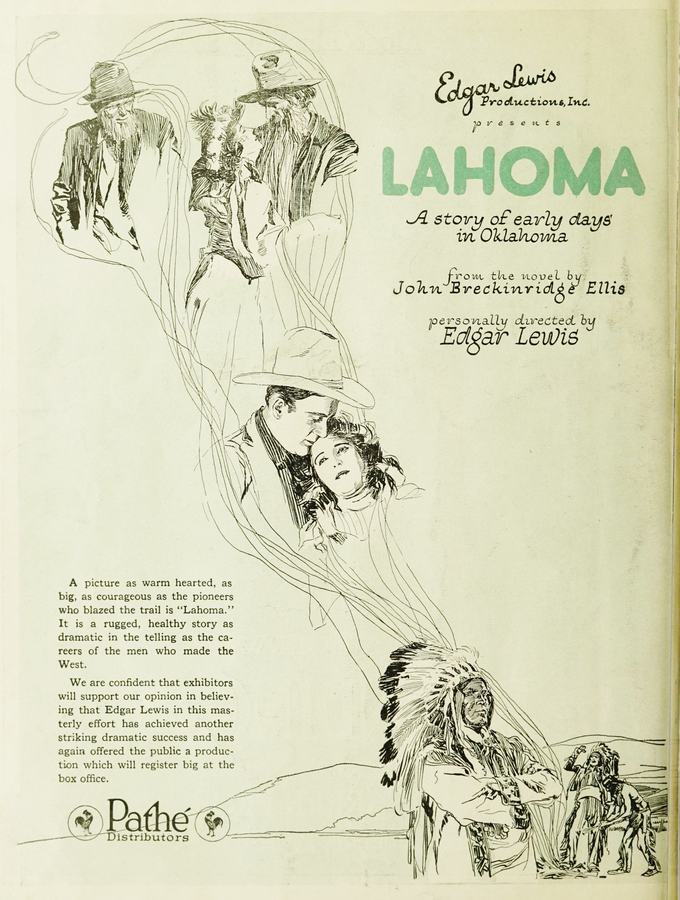
The first time I saw Lahoma I was half-drunk on midnight coffee and the flicker of my 16-inch laptop felt like lantern light inside a sod dugout. Within three title cards I forgot the kettle whistling behind me; by the final iris-in I realized this 1920 silent western, shot on shoestring and sun-scalded celluloid, had punched cleaner than any CGI-splattered blockbuster I’d mainlined that year.
Director Edgar Lewis doesn’t just record the prairie—he scratches history onto it. Every frame looks scraped by wind; dust storms become chorus, rattling the morality play inside the characters’ ribs. Compare that to Das rote Plakat, where landscape is mere backdrop, or the geometric claustrophobia of The Tangle: here the land is co-author, writing and rewriting the myth of Brick Willock with each tumbleweed that somersaults past his spurred heel.
Jack Carlyle plays Brick with a stone jaw and eyes that flicker like struck matches about to think twice. Watch the moment he kills Kansas Kimball: Carlyle lets the recoil travel up his arm into his collarbone, then parks the smoking Colt as if it’s suddenly obese with guilt. That micro-shudder—half shrug, half shiver—turns genre scaffolding into flesh. You won’t find that specificity in Ambition’s expressionist poses or the operatic doom of Sodoms Ende; it belongs to the humble grammar of silent close-ups that refuse to blink.
Peaches Jackson’s child-Lahoma arrives bundled in calico, face a question mark. The camera loves her windburnt cheeks; they rhyme with the russet buttes behind her. Later, Louise Burnham inherits the role, blooming from foundling to fierce cartographer of her own fate. When she spies on Red Kimball in that Kansas City hotel corridor, Lewis lights her with a single wall-sconce, her pupils twin eclipses. It’s an ancestor to the surveillance paranoia of The Zero Hour, yet done with thrift-store intimacy: no sweeping tracking shots, just a girl pressed to peeling wallpaper, breath held like a coin between teeth.
Will Jeffries paints Red not as moustache-twirling ogre but as balladeer of grievance. Every time he utters Brick’s name in intertitles, the letters quiver—typesetter’s trick or optical illusion?—so that revenge becomes a tuning fork struck on the viewer’s cornea. Compare him to the faceless syndicate of Too Many Millions; Red’s hatred is artisanal, hand-whittled.
Most prints float in sepia, but the cinematographer occasionally hand-tints dawn skies with burnt orange and Lahoma’s ribbon with sea-foam blue, like hope trying to brand itself on celluloid. Scratches vein the emulsion, yet rather than scars they read as topographic lines—each flake a year, each flicker a mile traveled across the Cherokee Outlet.
When Brick and Red finally trade bullets, Lewis stages it in a half-built homestead, rafters skeletal against the sky. The crossbeams box the combatants into a proscenium; we watch from the loft like ravens. The exchange is clumsy, almost embarrassed—no Peckinpah ballet, just two men discovering which of their bodies will betray them first. Brick’s death rattle syncs with the windlass creaking outside, a diegetic requiem more haunting than any orchestral stab.
J. Breckenridge Ellis adapts his own novel with thrift-store Shakespeare. One card reads: “The prairie kept his secret because the prairie had more important things to forget.” That line tattooed itself on my forebrain for days. It’s the kind of laconic wisdom you chase in Falling Waters or The Escape but rarely catch so effortlessly.
Jack Perrin’s Will Compton risks blandness—easterner as audience surrogate—but he plays the second half with shoulders permanently forward, as if leaning into a headwind of guilt. Wade Boteler’s Bill Atkins provides gravel-voiced relief; watch him teach Lahoma to lasso, his wrists twining the rope with the same tenderness he’d use to bandage a sparrow’s wing. And Russell Simpson, brief as a homesteader, brings craggy authenticity later refined in The Sunset Trail.
Unlike The Woman God Forgot, where femininity is exotic spectacle, Lahoma wields information as ammunition. Her eavesdrop scene weaponizes the domestic—petticoat, hallway, wall-sconce—into espionage. She doesn’t shoot; she forestalls. The film quietly argues that survival on the frontier belongs to those who can repurpose gossip into gunpowder.
Henry Gledware’s marriage to an unnamed “Indian princess” is dispensed with in a single title card—colonial shorthand that the film declines to interrogate. Modern viewers will flinch; the princess is never seen, only used as narrative off-ramp. Yet even this elision feels honest to the era’s ledger-book racism, a scar the movie wears without awareness.
I watched it with a playlist of Mogwai and old Carter Family 78s; when the lap-steel collided with the climactic gunfight, the hairs on my neck formed their own lynch mob. The film’s silence is a sponge: it drinks whatever music you pour, then bleeds it back through the perforations.
Place Lahoma beside A Regular Pal and you see two philosophies of outlaw redemption: the latter treats crime as sitcom prank, the former as original sin. Stack it against Duds, where identity swaps like cheap suits, and Lahoma’s insistence on moral consequence feels almost radical.
Only fragments survive in the Library of Congress: a 28-minute re-cut, some outtakes, a lobby card where Lahoma’s ribbon is painted the wrong shade of teal. Yet scarcity seeds legend; bootlegs circulate among cine-clubs like samizdat. I scored mine from a retired projectionist in Tulsa who swore the reel still smelled of popcorn butter his grandfather salted during Harding’s administration.
Great westerns don’t just ride into the sunset; they stay, camp under your ribs, teach your pulse new rhythms. Lahoma does that, not through spectacle but by letting silence pool until conscience drowns. It’s a film that knows every bullet leaves two holes: one in the body, one in the story we keep telling the land about ourselves.
IMDb —
1928
Community
Log in to comment.