DbcultAccessing Vault...
6.7/10
Senior Film Conservator
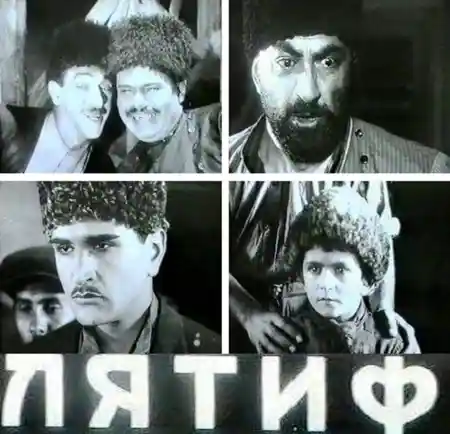
A definitive 6.7/10 rating for a film that redefined the boundaries of cult cinema. Lätif remains a cornerstone of transgressive art.
Okay, so let’s talk about Lätif. If you’re someone who genuinely enjoys digging into older films, especially those that offer a raw, unvarnished look at history, then yes, this is absolutely worth your time. It’s a powerful, if sometimes understated, experience for silent film fans or anyone curious about that particular slice of Soviet life.
But if you need constant dialogue, quick cuts, or anything resembling modern pacing, you might find yourself a little… restless. It really asks you to settle in and just watch.
The film centers on Latif, a young boy played by Kamil Qubusov, and his world during the collectivization policy in the USSR. It’s a period of massive, often brutal, change, and we see it unfold mostly through his eyes.
There’s a real quiet power in Qubusov’s performance. He doesn’t have many lines, but his face, especially his eyes, carries so much. You feel his confusion, his small moments of joy, and a deep, underlying worry.
One scene that really stuck with me shows Latif just observing the adults. They’re talking, probably arguing about the new rules, and he’s just there, listening, trying to piece together what it all means. It’s a heavy moment without a single dramatic gesture.
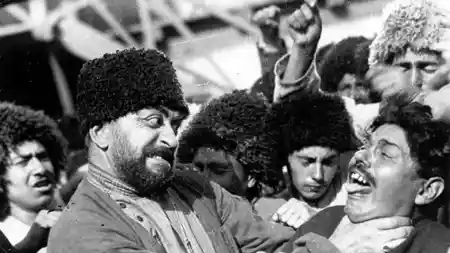
The movie doesn't bother with big exposition dumps about the collectivization policy. Instead, it shows you its effects. You see the communal fields, the shift in how people relate to their land, and the subtle tensions simmering beneath the surface of village life.
There’s a moment, a close-up on an elder’s face, that just screams resignation and a kind of tired hope. It’s quick, but it tells you everything about the mood of the time. You really feel the weight on these folks.
The landscape itself becomes a character. Vast, sometimes unforgiving fields stretch out, emphasizing how small and vulnerable the people seem against the backdrop of these sweeping changes. The wind seems to carry the whispers of uncertainty.
Lätif is full of these tiny, almost overlooked details that really hit you. Like, the way a shared meal becomes this slightly awkward, tense affair. Everyone is just a bit too quiet, and the food feels less like sustenance and more like a shared burden. 🍽️
And then there are these glimpses of Latif just being a kid. Chasing a stray animal, or playing a simple game. These moments are brief, but they offer such a sharp contrast to the adult world’s struggles, making his eventual understanding of the situation even more poignant.
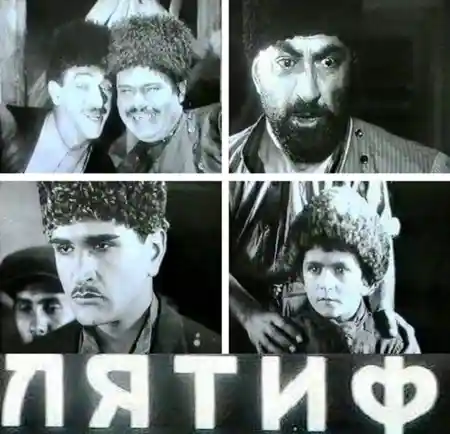
The film’s pacing can feel slow by today’s standards, but it lets you soak in the atmosphere. You’re not rushed; you’re invited to observe, to feel the quiet desperation and resilience of this community.
It’s not trying to preach or give you a neat historical lesson. It’s more like a window into a particular corner of the world during a time of immense upheaval, seen through the most innocent of eyes.
You find yourself wondering how a child can even process such drastic shifts in their entire way of life. It’s a lot to take in. It truly is.
The filmmakers had a real knack for showing, not telling. This is a story where the unspoken carries so much of the narrative weight.
When the credits roll, it doesn’t feel like everything’s neatly tied up. It leaves you with a feeling, a question, rather than a definitive answer. Which, for a film about such complex history, feels exactly right.
Lätif is a testament to the power of human observation, and to how even a small, silent film can leave a really big impression. If you’re patient and open to it, it’s a deeply affecting experience.
Definitely one to seek out if you appreciate cinema that takes its time and trusts its audience to connect the dots. A true gem from a very different era. ✨
IMDb 6.3
1916
Community
Log in to comment.