DbcultAccessing Vault...
Cult Review
Senior Film Conservator
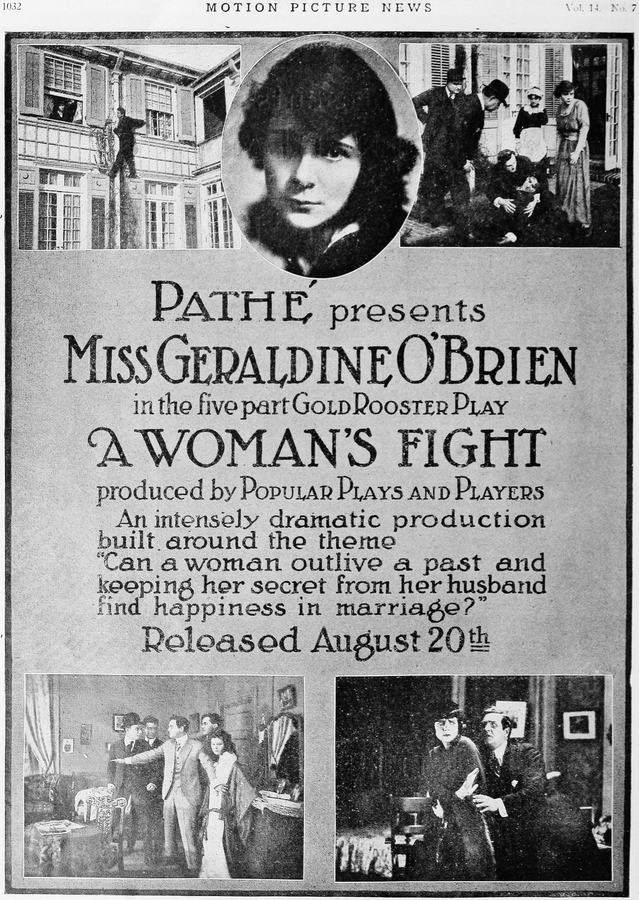
The annals of cinematic history are replete with tales of struggle, triumph, and the human spirit's enduring resilience. Yet, few narratives resonate with the raw, visceral power of 'A Woman's Fight,' a silent era tour de force that, even decades later, continues to provoke contemplation on themes of justice, reputation, and the unyielding strength required to challenge a world determined to silence you. This isn't merely a film; it's a social commentary delivered with the potent visual language unique to its time, a blistering examination of societal structures that often conspired against the vulnerable, particularly women.
At its core, the film presents the harrowing journey of Eleanor Vance, portrayed with breathtaking gravitas by Geraldine O'Brien. Eleanor is not merely a protagonist; she is an archetype of an era, a woman of grace and moral fortitude whose very existence becomes a crucible for the era's prevailing prejudices. Her life, once marked by a quiet dignity and a burgeoning sense of independence, is violently disrupted by the machinations of Silas Croft, a character brought to sinister life by the formidable Thurlow Bergen. Croft is not a cartoon villain; he is a chillingly plausible embodiment of unchecked ambition, a titan of industry whose financial empire is built upon a foundation of ethical compromise and ruthless manipulation. The film masterfully sketches his insidious influence, demonstrating how easily power can corrupt and how swiftly a man of means can orchestrate a downfall.
The conspiracy unfurls with a suffocating precision, entangling Eleanor in a fabricated financial scandal designed not just to ruin her, but to utterly discredit her and seize her family's dwindling assets. The visual storytelling, characteristic of the silent era, conveys the shock and disbelief that ripple through Eleanor's world. O'Brien's performance here is a study in nuanced despair, a silent scream etched across her features as she grapples with the injustice. The film's brilliance lies in its refusal to wallow in melodrama; instead, it portrays Eleanor's initial bewilderment evolving into a steely resolve. It is a slow burn of awakening, where the realization that the system is rigged against her ignites a fierce, unyielding determination to fight back.
The parallels to other films exploring societal condemnation are striking. One might draw comparisons to the stark realism of The Regeneration, which, while focusing on a different kind of societal struggle, shares a common thread of an individual battling the overwhelming tide of their circumstances. Both films, in their own ways, are unflinching in their depiction of a harsh world, yet both also hint at the possibility of human fortitude prevailing. Eleanor's fight is not just for her name, but for her very right to exist with dignity in a society that seems determined to deny it to her.
Aaron Hoffman's writing, while translated through the visual medium of the silent film, speaks volumes. The narrative arc is meticulously crafted, avoiding simplistic resolutions in favor of a grueling, protracted battle. The legal drama elements, though perhaps less explicit than in a modern courtroom thriller, are palpable. The film portrays the courtroom not as a bastion of impartial justice, but as another arena where power and influence often eclipse truth. The skeptical glances, the hushed whispers, the dismissive gestures of those in authority – all these visual cues convey the immense burden Eleanor carries. Her isolation is profound, yet it is precisely this isolation that forge her into a formidable adversary.
Bergen's portrayal of Silas Croft is a masterclass in understated menace. He doesn't rely on overt villainy; instead, his power emanates from a quiet confidence, a belief in his own untouchability. His expressions, often impassive, betray just enough cunning to make him truly terrifying. The contrast between O'Brien's raw vulnerability and Bergen's calculated cruelty creates a dynamic tension that propels the film forward. It’s a compelling study of predator and prey, but with the critical nuance that the 'prey' here possesses an inner strength that the 'predator' consistently underestimates.
The film's visual language is particularly adept at conveying Eleanor's internal state. Close-ups of her determined face, often framed against stark, imposing backdrops of legal institutions or cityscapes, emphasize her lone stand. The use of light and shadow, a hallmark of early cinema, is employed here to great effect, often casting Eleanor in dramatic chiaroscuro, symbolizing her struggle against encroaching darkness. This cinematic artistry elevates 'A Woman's Fight' beyond a mere story; it transforms it into an experience, a visceral journey through the landscape of human injustice.
Eleanor's quest for vindication is not a linear path. It involves painstaking detective work, often undertaken in secret, as she navigates a world where doors are slammed shut in her face. She seeks out obscure witnesses, pieces together fragmented evidence, and confronts those who have been intimidated into silence. The film highlights the immense difficulty of challenging a powerful opponent who controls not only wealth but also information and public perception. This aspect of the narrative resonates with the intricate plotting seen in films like The Mystery of a Hansom Cab, where uncovering the truth requires relentless dedication against a backdrop of societal indifference or active obstruction.
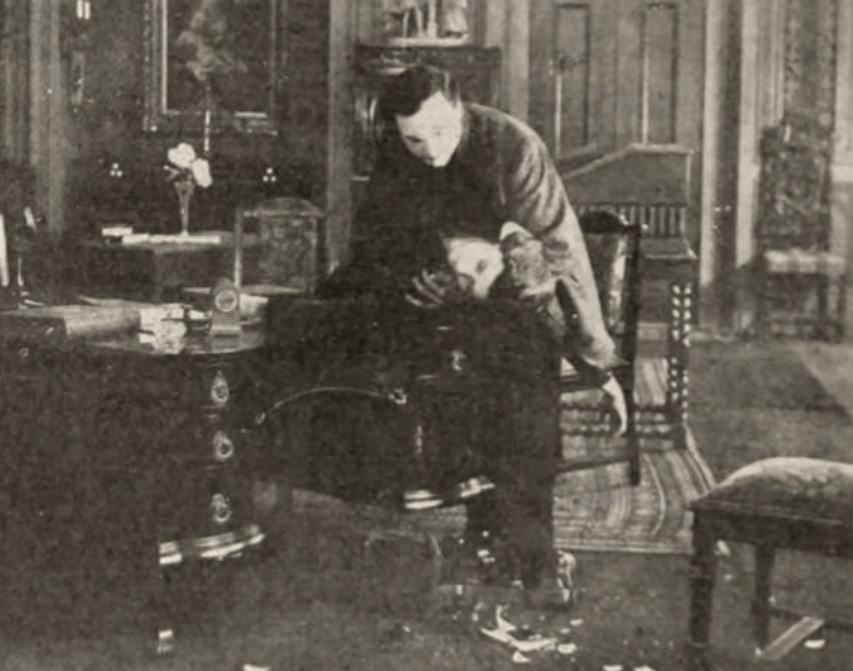
What truly distinguishes 'A Woman's Fight' is its unwavering focus on Eleanor's agency. She is not a damsel in distress awaiting rescue. She is the architect of her own defense, the primary driver of her destiny. This portrayal was groundbreaking for its time, contrasting sharply with many contemporary narratives that often confined female characters to more passive roles. In this regard, it shares a spirit of independent womanhood with films like A Lady of Quality, where the female protagonist also asserts her will and navigates a complex world on her own terms, albeit in a different social context.
The film also subtly critiques the very foundations of public opinion. Eleanor's reputation is initially shattered by rumor and insinuation, demonstrating how quickly society can turn against an individual based on hearsay rather than fact. The struggle to reclaim her good name is as vital as the battle for legal exoneration. It's a fight against the invisible chains of societal judgment, a theme explored with poignant depth in films such as Et Syndens Barn, which similarly delves into the devastating consequences of moral condemnation and the arduous path to redemption or acceptance.
Geraldine O'Brien's performance as Eleanor Vance is nothing short of transcendent. Without the aid of spoken dialogue, she communicates a vast spectrum of human emotion – fear, anger, despair, hope, and ultimately, an unshakeable resolve. Her eyes, often wide with anguish or narrowed with determination, are the windows to Eleanor's soul. Her body language, from the initial slump of defeat to the straightened posture of defiance, tells a story as rich and complex as any spoken word. It is a testament to the power of silent acting, an art form that demanded an extraordinary command of pantomime and facial expression to convey the subtleties of the human condition.
Thurlow Bergen, in his role as Silas Croft, provides the perfect foil. His performance is a masterclass in restrained villainy. He rarely raises his voice (metaphorically speaking, of course, in a silent film), instead relying on a cold, calculating demeanor that is far more menacing than any overt display of anger. The subtle curl of a lip, the dismissive wave of a hand, the predatory glint in his eye – these are the tools Bergen uses to paint a portrait of a man utterly devoid of conscience. The chemistry between O'Brien and Bergen, though often adversarial, is electrifying, creating a palpable sense of stakes and danger.
The direction, while not explicitly attributed to a known figure, demonstrates a keen understanding of pacing and visual storytelling. The film avoids the sometimes ponderous exposition of other early serials like Homunculus, 1. Teil, opting instead for a more focused, character-driven narrative. Each scene builds upon the last, escalating the tension and deepening the audience's investment in Eleanor's plight. The use of intertitles is judicious, providing necessary exposition without interrupting the flow of the visual narrative, allowing the actors' expressions and actions to carry the bulk of the storytelling burden.
'A Woman's Fight' is more than a historical artifact; it's a living testament to the enduring power of narrative to reflect and challenge the human condition. While set in a specific historical context, its themes of injustice, the abuse of power, and the courage required to stand against overwhelming odds remain profoundly relevant. In an age where information can be weaponized and reputations can be destroyed with a click, Eleanor Vance's struggle feels remarkably contemporary. Her fight is not just for herself, but for the principle of truth, for the integrity of the individual against the crushing weight of systemic corruption.
The film leaves a lasting impression, not just for its dramatic intensity, but for its quiet optimism. Despite the immense suffering Eleanor endures, the film ultimately champions the idea that perseverance, combined with an unyielding moral compass, can indeed triumph over adversity. It doesn't offer a sugar-coated ending, but rather a hard-won victory that feels earned and deeply satisfying. This resonates with the spirit of many early films that, despite their often melodramatic trappings, sought to explore deeper moral and ethical questions, often with a hopeful undertone.
For those who appreciate the artistry and profound emotional depth of early cinema, 'A Woman's Fight' stands as a compelling and essential viewing experience. It reminds us that even in silence, stories can roar, and that the fight for justice, though often arduous, is always worth waging. It’s a powerful reminder of the cinematic medium's ability to transcend its technological limitations and deliver a profound, enduring message that echoes across generations. The film's legacy is not just in its dramatic narrative, but in its timeless portrayal of the human spirit's capacity for defiance and ultimately, for triumph.
It is a profound exploration of what it means to truly fight, not just with fists, but with intellect, integrity, and an unshakeable belief in one's own truth. The film's conclusion, while offering a measure of peace, does not erase the scars of the battle, but rather celebrates the strength forged in the crucible of adversity. It is a cinematic triumph that deserves to be rediscovered and celebrated for its timeless power and its poignant, unflinching portrayal of one woman's extraordinary courage.

IMDb 7.4
1931
Community
Log in to comment.