DbcultAccessing Vault...
5.1/10
Senior Film Conservator
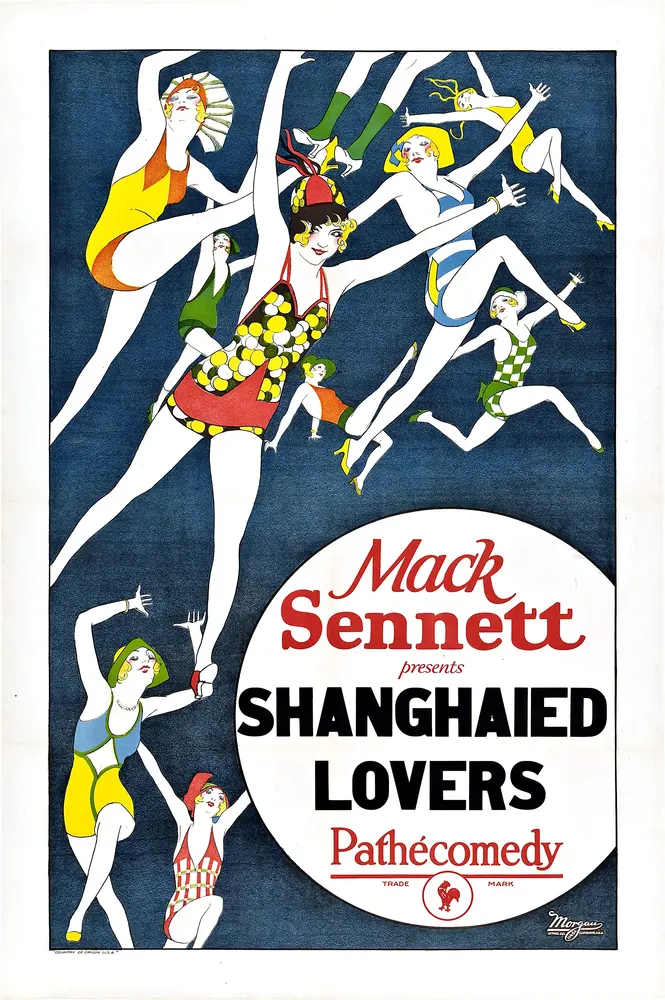
A definitive 5.1/10 rating for a film that redefined the boundaries of cult cinema. Shanghaied Lovers remains a cornerstone of transgressive art.
In the rarefied realm of cinematic storytelling, few films have managed to capture the essence of human resilience in the face of unrelenting adversity with the same level of nuance and complexity as Shanghaied Lovers. This cinematic gem, though largely overlooked by modern audiences, presents a searing indictment of the societal norms that govern the lives of those ensnared in the unforgiving world of 19th-century naval militarism.
The film's narrative is deceptively straightforward: Harry, a young man on the cusp of matrimony, finds himself forcibly conscripted into a life of maritime servitude, precipitating a tumultuous struggle for survival under the tyrannical captain. As he navigates the treacherous waters of his new reality, Harry must contend with the unrelenting cruelty of his captain and the amorous advances of a besotted sailor, whose intentions threaten to upend Harry's already precarious existence.
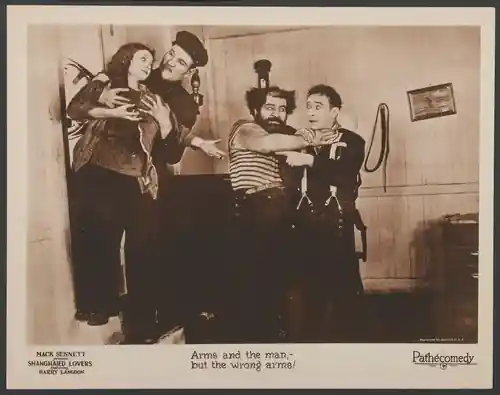
Through its masterful deployment of cinematic tropes and motifs, Shanghaied Lovers recalls the works of D.W. Griffith, particularly The Little Minister, in its exploration of the tensions between individual desire and societal expectation. However, whereas Griffith's oeuvre often privileged a more sentimental approach to storytelling, Shanghaied Lovers adopts a decidedly more cynical tone, one that recalls the works of German Expressionist filmmakers like F.W. Murnau.
The film's cast, comprising Kalla Pasha, Gordon Lewis, and Harry Langdon, delivers a series of nuanced performances that bring depth and complexity to the narrative. The chemistry between the leads is palpable, and their portrayals of the intricate web of relationships that develop on board the ship are both convincing and compelling.
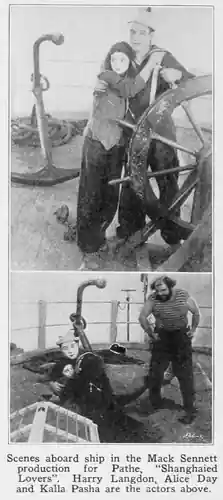
One of the most striking aspects of Shanghaied Lovers is its use of mise-en-scène to convey the claustrophobic atmosphere of life on a 19th-century naval vessel. The cinematography is breathtaking, with a muted color palette that effectively captures the drab, monotonous existence of the sailors. The production design, too, is noteworthy, with a meticulously detailed set that convincingly recreates the cramped, unsanitary conditions of a naval ship.
In terms of themes, Shanghaied Lovers engages with a number of complex issues, including the tensions between individual desire and societal expectation, the corrosive effects of militarism on human relationships, and the ways in which power is exercised and maintained in hierarchical societies. These themes are timely and timeless, and their exploration here is both thought-provoking and deeply unsettling.
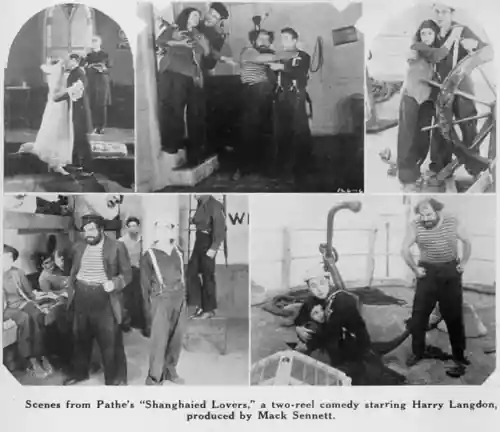
For those familiar with the works of silent-era filmmakers, Shanghaied Lovers will recall New York Luck and Her Tender Feet in its use of comedic tropes and character-driven storytelling. However, whereas these films often privileged a more lighthearted approach to storytelling, Shanghaied Lovers is decidedly more somber, its tone recalling the works of filmmakers like John Ford, particularly The Mutiny of the Elsinore.
The film's influence can also be seen in later works, such as The Marionettes and Diane of the Follies, both of which owe a debt to the innovative storytelling and cinematographic techniques on display here. Indeed, Shanghaied Lovers can be seen as a precursor to the German film Um eines Weibes Ehre, which explores similar themes of love, power, and resistance in a maritime context.
In conclusion, Shanghaied Lovers is a masterpiece of silent-era cinema, a film that presents a scathing critique of the societal norms that govern the lives of those ensnared in the unforgiving world of 19th-century naval militarism. With its nuanced performances, breathtaking cinematography, and thought-provoking themes, this film is a must-see for anyone interested in the history of cinema.
Additional films that provide insight into the historical context and themes of Shanghaied Lovers include Ashes of Vengeance, Outlawed, and So sind die Männer. Each of these films offers a unique perspective on the social and cultural norms of the time, and together they provide a comprehensive understanding of the era in which Shanghaied Lovers was produced.
Ultimately, Shanghaied Lovers is a film that defies easy categorization, a cinematic tour de force that resists straightforward interpretation. It is a testament to the power of cinema to challenge our assumptions and broaden our understanding of the human experience.
IMDb —
1921
Community
Log in to comment.