DbcultAccessing Vault...
7.5/10
Senior Film Conservator
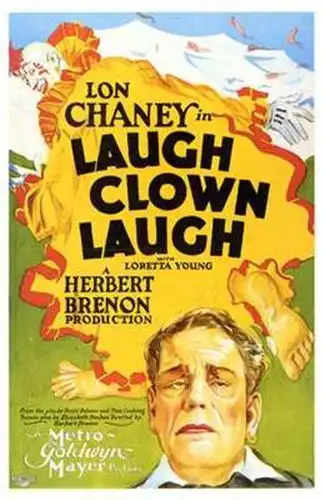
A definitive 7.5/10 rating for a film that redefined the boundaries of cult cinema. Laugh, Clown, Laugh remains a cornerstone of transgressive art.
“Laugh, Clown, Laugh,” a 1928 silent melodrama starring the legendary Lon Chaney, is a film best approached with specific expectations. Is it worth watching today? For dedicated silent film enthusiasts, especially those fascinated by Chaney's unparalleled ability to convey complex inner turmoil through physical performance, absolutely. It’s a showcase for his unique brand of tragic clowning. However, casual viewers seeking a brisk narrative or contemporary emotional resonance might find its pacing challenging and its melodramatic flourishes a touch overwrought. This is a deep dive into silent-era pathos, not a light evening's entertainment.
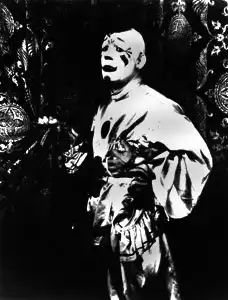
Lon Chaney, as the clown Tito, is the undeniable center of gravity here. He embodies the “Man of a Thousand Faces” moniker not through prosthetics this time, but through sheer, agonizing control of his expressions and body. We see the familiar wide, painted smile of the clown, but through Chaney's eyes, the deep sorrow is palpable. His ability to convey profound heartbreak while his face is locked in a rictus of forced mirth is genuinely unsettling. The famous “laughing sickness” isn't merely a plot device; Chaney makes it a physical manifestation of Tito's internal agony. There's a particular scene where Tito attempts to confess his feelings to Simonetta, his hands subtly clenching and unclenching at his sides, his shoulders hunched, while his painted face struggles to maintain a facade of jocularity. It’s a masterclass in silent film acting, a performance built on contradiction.
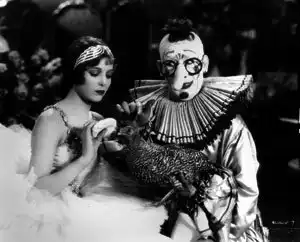
Loretta Young, still very early in her career, plays Simonetta. Her youth is evident. While she possesses a natural charm, her performance often feels constrained, particularly in the film's more dramatic confrontations. She navigates the emotional landscape with a certain earnestness, but lacks the nuanced depth that Chaney brings. Her expressions tend towards broad strokes of confusion or affection, rather than the subtle shifts that would hint at Simonetta's own inner conflict as she grapples with her feelings for both Tito and the Count.
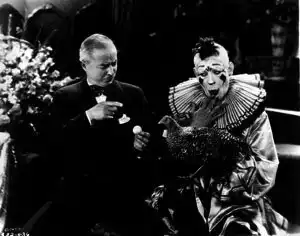
Nils Asther, as Count Luigi, fares better. His portrayal of a melancholic nobleman is suitably brooding, and his initial scenes with Tito, where they bond over shared sorrow, have a genuine, if brief, connection. There’s a quiet dignity to his despair that contrasts effectively with Tito’s more flamboyant anguish. However, once the romantic rivalry kicks in, Asther’s performance leans into the more conventional silent film villain-lite territory, losing some of its initial complexity.
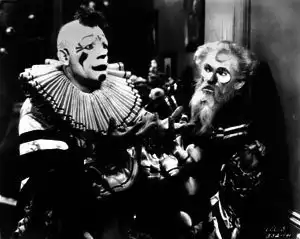
The film’s pacing is, predictably for a 1928 silent feature, deliberate. The first act, establishing Tito’s character and his relationship with the young Simonetta, moves with a gentle, almost pastoral rhythm. However, as the plot introduces the romantic entanglements, the narrative sometimes struggles to maintain momentum. There are stretches where reaction shots linger a beat too long, or where exposition is delivered through title cards that could have been conveyed more dynamically through action. The tonal shifts between the vibrant, bustling circus scenes and the more somber, intimate moments of emotional turmoil can feel abrupt rather than fluid. The film leans heavily into melodrama, as expected, but occasionally tips into a sentimentality that borders on saccharine, particularly in some of the scenes involving Simonetta’s initial naiveté. The final act, however, pulls back from this, escalating the tragedy with a relentless, almost suffocating intensity that effectively builds to its climax.
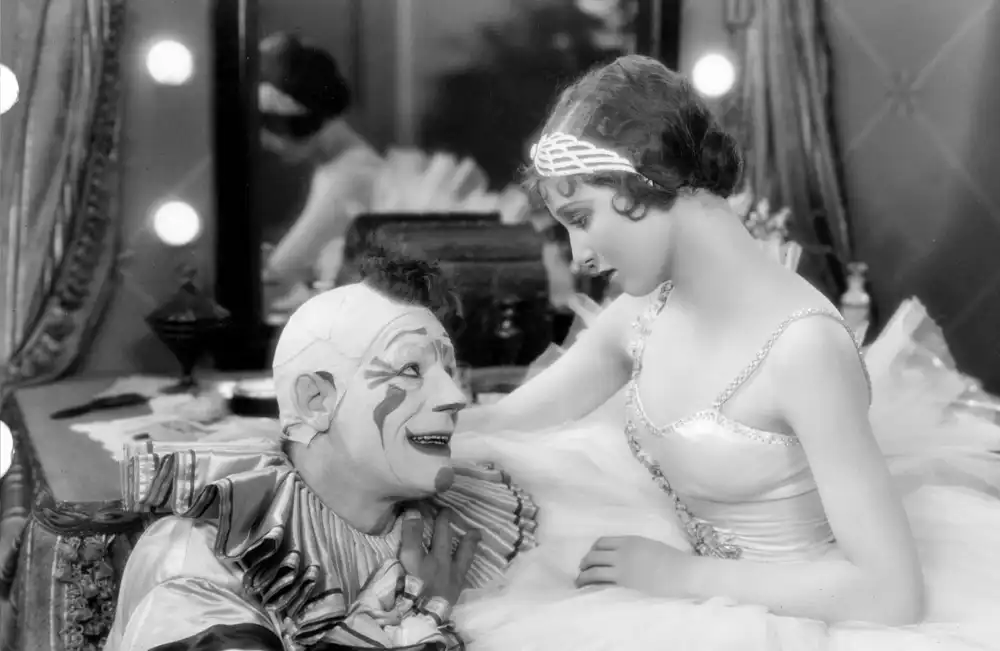
Director Herbert Brenon employs a visual style that underscores the film's thematic contrasts. The circus sequences are vibrant, filled with dynamic crowd shots and the energetic chaos of performers. The lighting in these scenes often feels bright and expansive, emphasizing the public face of Tito's life. In stark contrast, scenes set in Tito's private quarters or the Count's estate are often more subdued, utilizing chiaroscuro lighting to highlight the characters' internal struggles. There’s a recurring visual motif of Tito in his clown makeup, often seen alone, the vibrant colors of his costume stark against a dark, empty background. This framing consistently isolates him, emphasizing his loneliness despite his profession of bringing joy. One particularly effective visual comes during Tito's “laughing sickness” episodes: the camera often pushes in close on his face, allowing the audience to witness the horrifying struggle as his body betrays his mind, the painted smile becoming a grotesque mask of agony. It's a simple but powerful technique that keeps Chaney's raw emotion at the forefront.
The film's undeniable strength lies squarely with Lon Chaney. His performance is a masterclass in silent film acting, carrying the emotional weight of the entire picture. The concept of a clown who cannot stop laughing even in pain is inherently compelling, and Chaney fully commits to its tragic potential. The visual storytelling, particularly in how it contrasts the public spectacle of the circus with private torment, is also a notable strength.
However, “Laugh, Clown, Laugh” is not without its flaws. The script, while providing a compelling framework for Chaney, occasionally falters in its development of the supporting characters, leaving Loretta Young's Simonetta feeling somewhat underdeveloped and reactive. The romantic triangle, while central, sometimes feels more like a plot device to propel Tito's suffering than an organic emotional conflict for all parties involved. The pacing, as mentioned, can drag, particularly in the middle act, where some scenes could have benefited from tighter editing. There’s a certain predictability to the melodramatic arc that, while fitting for the era, can feel a little too telegraphed to modern sensibilities.
Ultimately, “Laugh, Clown, Laugh” is a film that rides almost entirely on the shoulders of Lon Chaney. For those willing to engage with the conventions of silent melodrama and appreciate the raw power of a legendary performer, it offers moments of profound, unsettling pathos. It's a testament to Chaney's unique genius, showcasing his ability to inhabit characters defined by their physical and emotional suffering. While not a perfectly structured or consistently engaging narrative, its strengths, particularly Chaney's unforgettable portrayal of Tito, make it a significant piece of silent film history and a worthwhile watch for serious cinephiles. It stands as a powerful reminder of how much emotion could be conveyed without a single spoken word, when a master was at the helm.
IMDb —
1927
Community
Log in to comment.