DbcultAccessing Vault...
Cult Review
Senior Film Conservator
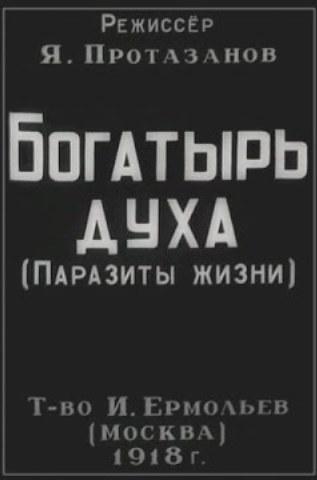
Yakov Protazanov’s cinematic endeavors, particularly a work as thematically potent as Parasites of Life, stand as enduring monuments to early Russian filmmaking’s capacity for profound social critique. Released in what we can surmise to be a tumultuous era, this silent epic doesn't merely tell a story; it dissects the very anatomy of societal dysfunction, laying bare the corrosive effects of unchecked ambition and the insidious nature of exploitation. It’s a film that resonates with an almost uncomfortable prescience, its central metaphor of 'parasitism' extending far beyond mere biological analogy to encapsulate the systemic siphoning of human potential and integrity by those who contribute little but demand everything.
Protazanov, a director whose oeuvre consistently grappled with the moral complexities of his time, here crafts a narrative that feels both intimately personal and sweepingly universal. The film introduces us to Sergei Volkov, a figure emblematic of the visionary idealist, whose intellect is a beacon of hope for humanity. His invention, a revolutionary energy source, promises to liberate society from its dependence on finite, polluting resources. Yet, this very promise becomes his undoing, attracting the predatory gaze of Viktor Krestovsky, an industrial magnate whose empire is built upon the very industries Volkov threatens to disrupt. Krestovsky is no mustache-twirling villain in the simplistic sense; rather, he is a chillingly plausible embodiment of corporate rapacity, a man whose charm and influence are merely tools for his insatiable hunger for power. His interactions with Volkov are a masterclass in psychological manipulation, a slow, deliberate ensnaring of the naive genius in a web of false patronage and feigned admiration.
The brilliance of Protazanov's direction lies in his ability to articulate these intricate power dynamics through the visual language of silent cinema. Every gesture, every meticulously composed frame, every stark contrast in lighting or setting speaks volumes. The opulent, cavernous offices of Krestovsky, often bathed in a stark, almost oppressive light, stand in stark opposition to Volkov's humble, cluttered laboratory, a space brimming with the raw energy of creation but often cast in shadows, symbolizing his impending obscurity. The director's use of mise-en-scène is not merely decorative; it is narrative. He understands that in the absence of spoken dialogue, the environment itself must become a character, reflecting the inner turmoil and external pressures faced by his protagonists. This meticulous attention to visual detail elevates Parasites of Life beyond a simple melodrama, imbuing it with the weight of a profound social document.
The casting, though uncredited in the prompt for individual actors, undoubtedly played a pivotal role in bringing these archetypes to life. One can imagine the actor portraying Volkov imbuing him with a wide-eyed earnestness, a vulnerability that makes his eventual downfall all the more heartbreaking. His physical presence would likely convey a certain intellectual intensity, perhaps a slight awkwardness in social settings, underscoring his detachment from the cutthroat world of industry. Conversely, Krestovsky's portrayal would demand a subtle menace, a facade of civility that barely conceals a ruthless core. The actor would need to convey charisma and cunning, making his betrayal feel not like a sudden shock, but an inevitable consequence of his character's inherent nature. These silent performances, relying on exaggerated yet nuanced facial expressions and body language, would be crucial in conveying the emotional stakes without the aid of dialogue.
Central to the film’s emotional core, and indeed its moral compass, is the character of Anya. As Volkov’s fiancée, she represents the uncorrupted spirit, a grounding force in a world increasingly defined by materialism. Her background, presumably from a less privileged stratum of society, grants her a clarity of vision that Volkov, absorbed in his scientific pursuits, initially lacks. She sees Krestovsky for what he is, a wolf in sheep’s clothing, long before Volkov fully comprehends the extent of the industrialist's perfidy. Anya's journey, from a loving support system to a determined avenger, is perhaps the film's most compelling arc. Her attempts to expose Krestovsky are fraught with peril, highlighting the immense power imbalance between the common individual and the entrenched elite. Her struggle echoes the broader societal battle against injustice, making her a relatable and inspiring figure even as the odds are stacked against her.
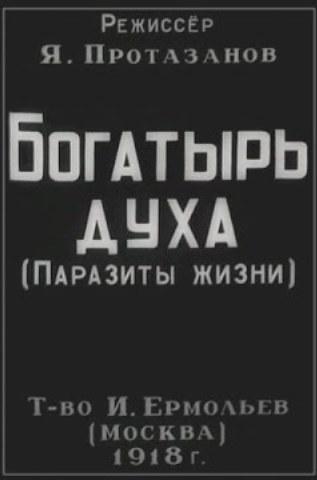
Protazanov's mastery of visual symbolism is evident throughout Parasites of Life. Consider the recurring motif of intricate machinery versus the stark simplicity of human emotion. The gears and levers of Krestovsky's factories, cold and indifferent, symbolize the dehumanizing aspects of industrial capitalism, grinding down individuals for profit. In contrast, the close-ups on Anya's face, conveying her anguish or her fierce resolve, serve as a reminder of the human cost of such systems. The film likely employs striking contrasts in lighting to emphasize moral distinctions: Krestovsky often bathed in artificial, harsh light, perhaps even chiaroscuro to suggest his duplicity, while Volkov and Anya might be shown in softer, more natural light, symbolizing their inherent goodness and vulnerability. The very architecture of the sets, from the grand, intimidating facades of corporate buildings to the intimate, humble interiors of Volkov's home, contribute to the film's overarching message about class and power.
The societal commentary embedded within Parasites of Life places it firmly within the tradition of early Russian cinema that often explored themes of social inequality, moral decay, and the plight of the common person. Protazanov, having worked through the tumultuous period leading up to and following the October Revolution, was uniquely positioned to capture the anxieties and aspirations of a society on the cusp of radical change. His films frequently delved into the psychological complexities of characters caught in the throes of social upheaval, and Parasites of Life is no exception. It serves as a stark reminder that the battle between integrity and avarice is a timeless one, irrespective of political systems or technological advancements. The film, in its essence, questions the very definition of progress when it comes at the expense of human dignity and ethical conduct.
When considering Parasites of Life, one can draw compelling parallels with other cinematic works that explore similar thematic terrains. Its unflinching examination of class struggle and the exploitation of the vulnerable finds a thematic cousin in films like The Barrier, which might also delve into the obstacles faced by individuals against systemic forces, or even The Price Mark, if that film similarly critiques the commodification of human spirit or labor. The narrative tension surrounding Krestovsky's hidden agenda and manipulation of Volkov brings to mind the intricate plotting and suspense found in films such as The Phantom's Secret or the psychological machinations of The House of Mystery. Both of these, if they involve characters operating under false pretenses or within complex schemes, would share a narrative kinship with Protazanov's work here.
Furthermore, the moral quandaries presented in Parasites of Life, particularly Anya's struggle for justice against overwhelming odds, resonate with the ethical dilemmas explored in works like The Sign of the Cross, which often pits individual conviction against powerful, corrupt institutions, or even Witchcraft, if that film delves into themes of persecution and the struggle against irrational or unjust societal forces. While the specifics of their plots may differ, the underlying current of moral fortitude tested by adversity creates a powerful, unifying thread. Protazanov's film also stands as a testament to the power of silent cinema to convey complex ideas without a single spoken word, much like the evocative visual narratives found in other early masterpieces, demonstrating a global artistic language that transcended national boundaries.
The film's exploration of the vulnerability of innovation in the face of ruthless capitalism feels particularly relevant in any era marked by rapid technological advancement and corporate consolidation. The idea that groundbreaking discoveries, meant to benefit all, can be co-opted and weaponized for individual gain is a narrative that continually reemerges in various forms. Protazanov's prescient vision, articulated through the struggles of Sergei and Anya, serves as a timeless cautionary tale. It forces us to confront uncomfortable truths about power, ethics, and the responsibility that comes with both genius and wealth. The tragic, yet ultimately defiant, resolution of Parasites of Life leaves an indelible mark, prompting viewers to reflect on the societal structures that enable such exploitation and the enduring courage required to challenge them.
In its entirety, Parasites of Life is more than just a historical artifact; it is a vibrant, searing piece of social commentary that continues to provoke thought and discussion. Yakov Protazanov, despite the limitations of his era's technology, manages to craft a narrative of profound emotional depth and intellectual rigor. His ability to distill complex societal issues into a compelling human drama, using only the expressive power of images and intertitles, is nothing short of remarkable. The film's legacy lies not just in its artistic merit, but in its unwavering commitment to holding a mirror up to society, exposing its flaws and celebrating the resilience of the human spirit in the face of overwhelming adversity. It reminds us that while the 'parasites' may change their form or their methods, the struggle against exploitation remains a constant thread throughout human history, making Parasites of Life a truly timeless work of cinematic art.
IMDb 6.1
1931
Community
Log in to comment.