DbcultAccessing Vault...
4.6/10
Senior Film Conservator
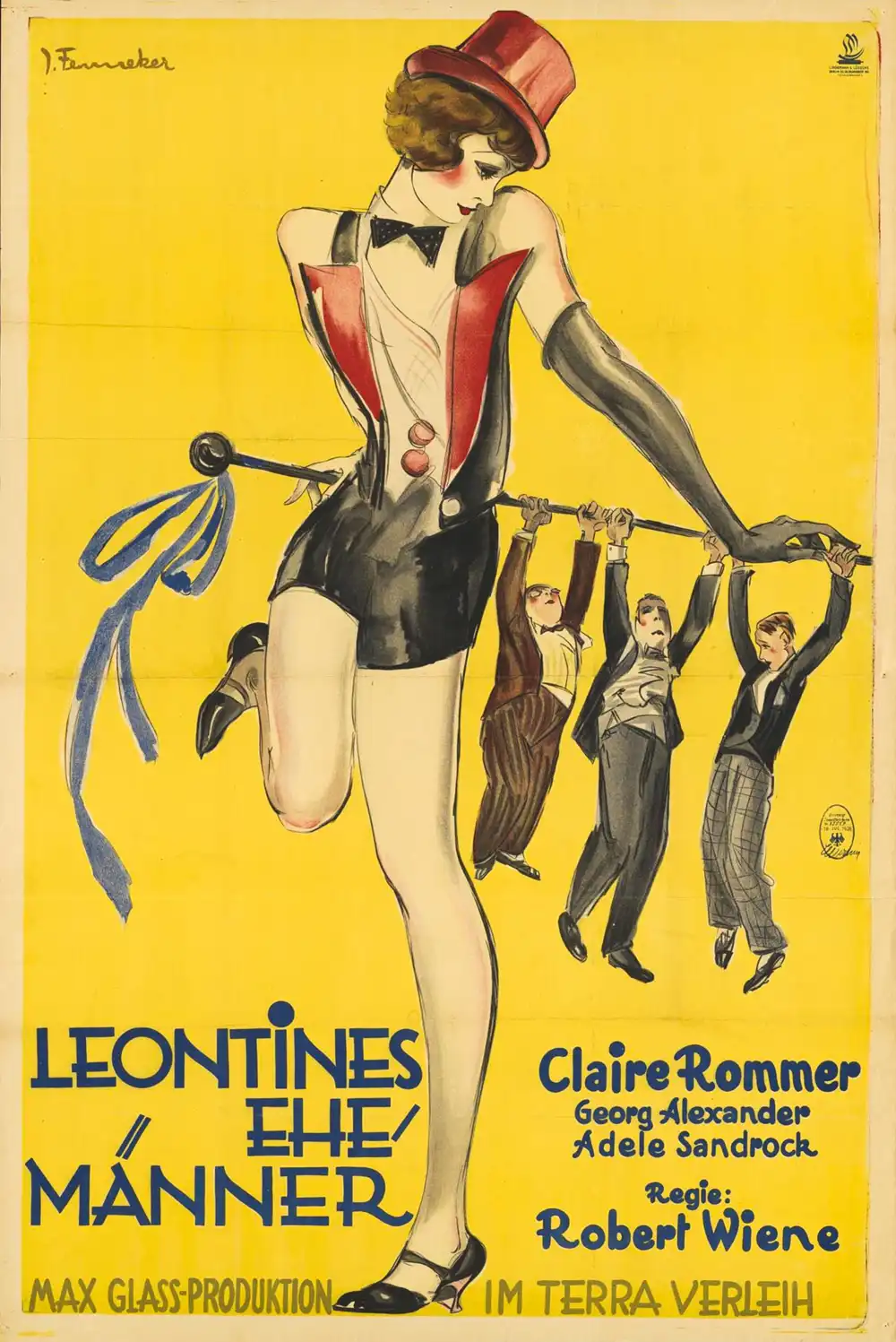
A definitive 4.6/10 rating for a film that redefined the boundaries of cult cinema. Leontines Ehemänner remains a cornerstone of transgressive art.
If you are the kind of person who needs a 'likable' protagonist to enjoy a movie, you should probably skip Leontines Ehemänner. Leontine is, by any modern or vintage standard, a bit of a nightmare. She’s a dancer who marries rich men solely to clear her debts, then gets annoyed when they expect her to actually live with them. It’s a cynical premise, but honestly, it’s way more refreshing than the usual sentimental fluff from this era. It’s worth a watch if you enjoy high-society farces where everyone is at least 40% terrible.
Claire Rommer plays Leontine with this constant, restless energy. In the early scenes, when she’s looking at her unpaid bills, she doesn’t look stressed. She looks like she’s solving a mildly annoying crossword puzzle. There’s a specific moment where she’s packing her bags to go marry the Marquis Verrac, and she tosses a silk scarf over her shoulder with such casual indifference that you immediately know the Marquis is doomed. It’s a great bit of physical character work.
The movie hits a bit of a wall once they get to the castle. Luigi Serventi, playing the Marquis, is supposed to be boring, but he might be too good at it. He has this stiff, upright posture that makes him look like he’s swallowed a yardstick. You get why Leontine wants to leave, but the scenes of them sitting at this absurdly long dinner table just drag. There’s a shot of a servant standing in the background that lasts so long I started wondering if it was a cardboard cutout. It wasn't, he eventually blinked, but the pacing in these middle sections feels like the film is stuck in the same mud as Leontine’s marriage.
Things pick up significantly when Georg Alexander shows up. If you’ve seen him in Sein größter Bluff, you know the vibe—he’s the human equivalent of a popped champagne cork. He has this way of entering a room that makes everything feel slightly more chaotic and interesting. The chemistry between him and Rommer is much sharper than anything she has with the Marquis. They have this quick, overlapping way of moving around each other that feels much more natural than the staged 'romance' beats earlier in the film.
I noticed the costumes are doing a lot of the heavy lifting here. Leontine’s hats are increasingly ridiculous as the movie goes on, almost like her level of frustration is measured by the height of her headwear. There’s one hat in the second act that looks like a structural engineering project. It’s distracting in a good way.
There is a weird edit about forty minutes in during a garden party scene. One second Leontine is talking to a group of women, and the next, there’s a jarring jump cut to her standing alone by a fountain. It feels like a chunk of dialogue was ripped out at the last minute, leaving this awkward silence that the music doesn't quite cover up. It’s one of those moments where you can see the seams of the production.
Adele Sandrock shows up as well, and as usual, she’s playing a formidable older woman who seems to be judging everyone in the room. She has this specific look—head tilted back, eyes narrowed—that makes the Marquis look like a terrified schoolboy. It’s a trope, but she’s so good at it that I found myself waiting for her to come back on screen whenever the plot focused too much on the Marquis’s 'boring' hobbies.
The movie reminds me a bit of Die Boxerbraut in how it handles its lead female character. There’s this refusal to make her a victim. Leontine isn't trapped; she’s just inconvenienced. The stakes never feel life-or-death, which might be why some people find it trivial. But there’s something nice about a movie that’s just about a woman wanting to have a good time and being willing to break a few hearts (and bank accounts) to do it.
The ending feels a little rushed, like they realized they were running out of film and had to wrap up three different subplots in five minutes. It’s not exactly a satisfying emotional conclusion, but for a movie about a woman who treats husbands like disposable tissues, a neat ending would have felt fake anyway. It’s a bit messy, the middle is too slow, and the Marquis is a total snooze, but Claire Rommer makes the whole thing move.
IMDb —
1913
Community
Log in to comment.