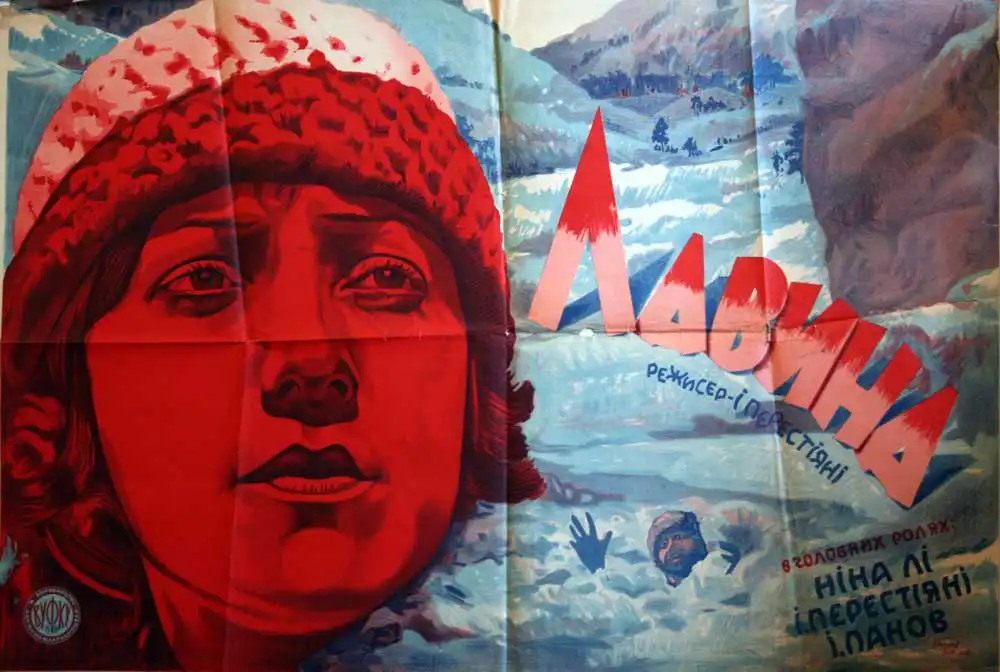
Alright, so if you're not usually into really old movies, like *really* old ones, then
Lavina might be a tough sell today. But for folks who dig into cinema history, or maybe just want to see some early Eastern European filmmaking, there's *something* here. Don't come expecting slick production, obviously. It’s definitely not for the TikTok generation, let’s put it that way. 🕰️
The story is pretty simple, really. It’s about this village, and things just start to unravel. A small argument, maybe over land or a stray animal, just keeps snowballing. You see how easy it is for misunderstandings to just *explode*.
Ivane Perestiani, who also wrote some of it, plays this older, stoic character, a community elder maybe. He’s got this intense stare that really sells the gravitas of the situation. You don't need dialogue when his eyes are doing all that work. 👀
Nikolai Panov, on the other hand, plays someone much younger and more impulsive. His character is always rushing into things, and you can almost feel the tension building around him. It makes you wonder if he’s going to be the spark that sets everything off.
The camera work... well, it's pretty static a lot of the time. The scene where the villagers are gathered in the town square, arguing about *something* — the camera just *sits* there. It goes on about 20 seconds too long, and the silence starts to feel awkward rather than emotional. Almost like the director forgot to yell “cut.”
But then there are these moments of unexpected beauty. A shot of the river, for instance, just flowing past, while all this human drama is happening. It’s a nice contrast, feels almost poetic without trying too hard. Or the way the light hits the dusty roads in the afternoon. *Really* lovely.
One thing that stuck with me was this recurring shot of a specific old, rickety wooden cart. It shows up in almost every major scene, sometimes just in the background. Honestly, it feels more like a character, a silent witness to all the trouble brewing, than some of the actual people. Like, that cart has *seen things*.
And that goat! There’s this one goat in the market scene that just *stares* right into the lens for a solid ten seconds. Like, it knows something we don't. It's a small detail, totally out of place, but it made me chuckle. You just don't see stuff like that in movies today. 🐐
The film gets noticeably better once it stops taking itself *so* seriously in the middle act. There's a chase scene, or what passes for one back then, and it's almost comical. The intensity just kind of... deflates into a frantic run around some fields. It’s endearing, in a way.
The pacing is tricky. Some parts just really drag. Then suddenly, everything speeds up, and you’re trying to keep track of who’s yelling at whom. It’s not smooth. But hey, this is early cinema, right? It’s part of the charm, I guess. Or the challenge.
You can almost feel the movie trying to convince you this moment matters, especially during some of the more dramatic confrontations. The music swells, people gesture wildly. It's *a lot*. Sometimes a little too much.
It's an interesting watch if you're into the history. Not exactly a Sunday afternoon popcorn flick. But there are little glimpses of real humanity, real struggle, even through the older film techniques. Kind of like finding an old, faded photograph that still tells a powerful story. If you liked the feel of
Dakarguli saundje, you might find similar vibes here. Just be prepared for a different rhythm.