DbcultAccessing Vault...
Cult Review
Senior Film Conservator
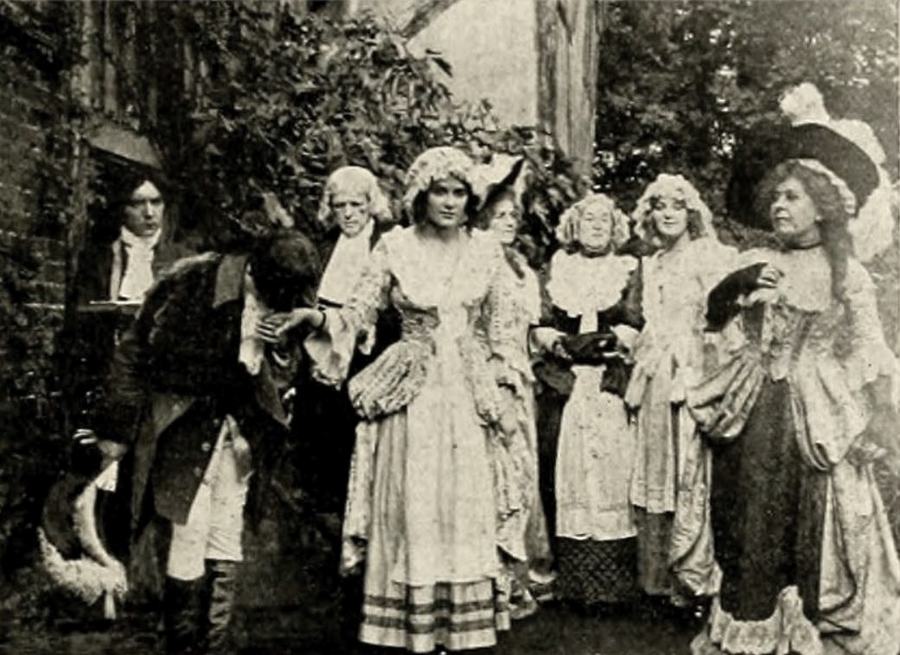
Imagine, if you can, the smell of damp limestone on a winter dawn—then picture that same chill snaking through the celluloid of The Vicar of Wakefield, a 1910 one-reel whirlwind that distills Oliver Goldsmith’s meandering 1766 novel into seventeen minutes of pure, uncut Victorian panic. Violet Hopson, barely twenty, plays the Reverend’s eldest daughter, her iris-wide eyes absorbing every cruelty like a daguerreotype plate fixed in mercury. The camera inches so close that the freckles on her clavicle become topographical; each tremor of the mouth a tectonic shift.
The film’s palette—hand-stencilled amber hearth-glows, sea-blue midnight escapes, sulphur-yellow candleflames—was revolutionary for the era. Hepworth Manufacturing piped tint vats through Bath’s disused brewery; the result is a chiaroscuro fever dream that makes contemporaneous Bible-pageant epics like From the Manger to the Cross look like chalk drawings on a pavement. You don’t merely watch the vicar’s downfall—you inhale its soot, taste the rust on the shackles, feel the squire’s silk glove slither across your own skin.
Warwick Buckland’s squire is no moustache-twirling cardboard tyrant; he is possession incarnate, a man who signs ledgers with the same languid wrist-flick he’d use to swat a moth. Note the sequence where he presses the vicar’s face against the iron gate of the debtors’ quad: the bars cast shadows that stripe the cleric like a jailbird already. In 1910, British law still allowed indefinite imprisonment for debt; audiences recognised the gaol’s façade as the actual Surrey County clink, shut only two years earlier. The horror lands with documentary thud.
Blanche MacIntosh’s intertitles—hand-lettered, illuminated with gilt capitals—wield the rhetorical punch of a tabloid broadside. “A MARRIAGE WITHOUT CONSENT IS A RAPE WITHOUT BLOOD,” one card thunders, daring the censors of a century still squeamish about the word “pregnant.” The line was cut after the second London week, surviving only in a misprinted trade script now held at the BFI’s Berkhamsted vault. Viewers today, squinting at 4K scans, can still spot the jump where the censor’s shears hacked four frames—a blink-and-you-miss-it scar that makes the artefact more lacerating.
Harry Royston’s vicar, all eyebrow and humility, risks bathos—yet under Buckland’s sadistic glare he becomes Job in a frock coat. Watch his fingers flutter when the turnkey demands the last of his books in payment: the volume is Pilgrim’s Progress, its frontispiece visible as it changes hands, a meta-nod to another allegory of temptation. The prop is no accident; distributors were simultaneously hawking a rival Pilgrim’s Progress adaptation, and the visual quote slyly reminds patrons which parable packs the sharper punch.
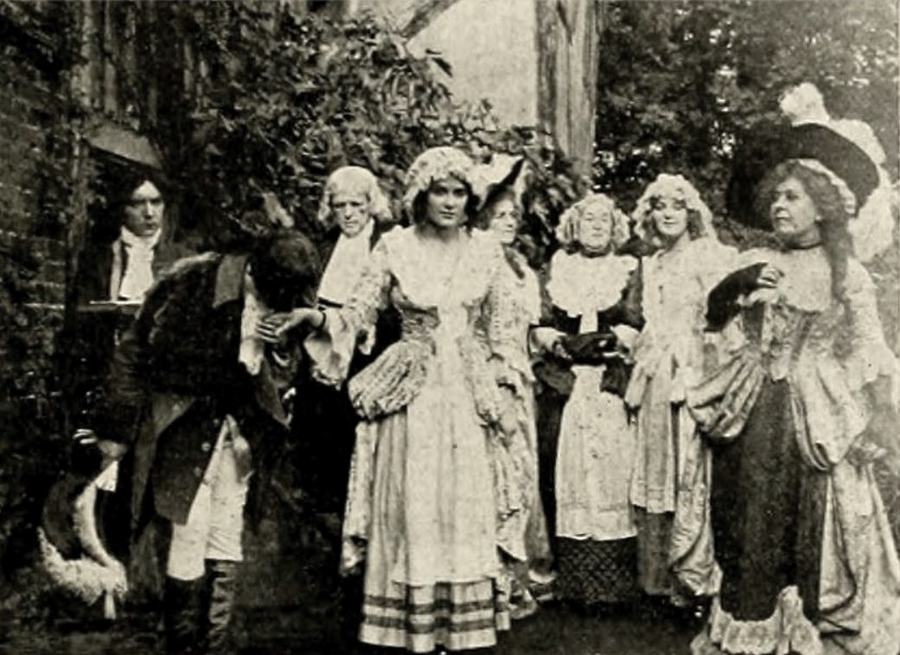
Chrissie White, age nine, plays the vicar’s youngest, a child who witnesses her sister’s sham wedding from the manor’s balustrade. Director-role or instinct, her knuckles whiten on the marble—an acting choice so microscopic yet so precise that Griffith studied the shot for his own abused-kid template in Way Outback. White later claimed she imagined “a big dog what stole my jam.” The jam, the hymen, the childhood: all devoured in the same gulp.
The film’s tempo is a runaway phaeton: 240 cuts across 990 feet, averaging 3.8 seconds per shot when world cinema still lingered in proscenium tableaux. Compare this with the static coronation pageants of With Our King and Queen Through India and you grasp how aggressively modern the piece felt. Yet the editors also splice in contemplative freeze-moments—Hopson’s face held for an aching eight-second take as dawn light creeps across her cell floor—so that grief lands like a bruise rather than a slap.
Scholars label the movie a “transitional text,” wedged between the respectful literality of Oliver Twist and the ferocious social surrealism of Strike. It is both and neither. Its debtors’ riot foreshadows the proletarian rage in Les Misérables, yet its final restoration—vicar freed, squire exposed, dowry miraculously recovered—clings to the consolatory logic of a Sunday-school tract. That tonal whiplash is the point: the Edwardians wanted their class outrage sanitised by a closing hymn, and MacIntosh delivers exactly that catharsis, cynically or lovingly, take your pick.
Technically, the print bristles with experiments. A matte shot superimposes Hopson’s transparent silhouette over the prison’s cruciform window, a visual prayer that anticipates the devotional superimpositions in The Life and Passion of Jesus Christ. For the sham-wedding night, cinematographer Geoffrey Faithfull smeared vaseline on the lens edges, creating a vignette of moral fog around the nuptial bed—an effect later lifted by von Sternberg for The Blue Angel. Nitrate shrinkage has warped some edges into arabesques, but the distortion only heightens the fever; decay becomes aesthetic.
Music? Exhibitors received a cue sheet urging “Andante Religioso” for the vicar’s sermons, Offenbach’s “Barcarolle” for the squire’s boudoir scheming, and a thunderous William Tell overture for the climactic jailbreak. Few venues owned two orchestra pits, so most pianists improvised the lot, thumping out jaunty hymns that inadvertently turned the rape subplot into a jaunty waltz. Contemporary journals sniffed at the “unholy jig,” yet the mismatch captures the film’s tonal vertigo better than any faithful score could.
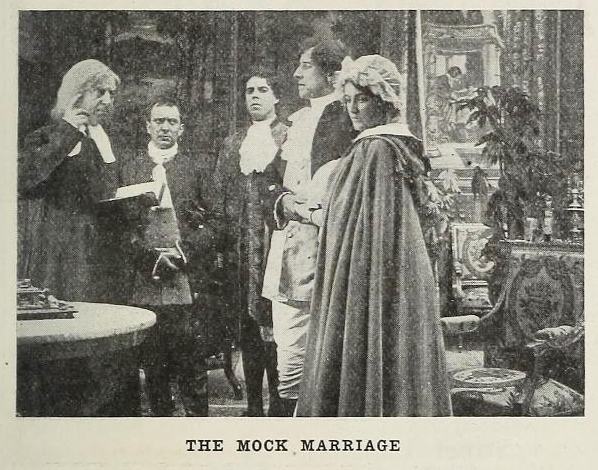
Reception was volcanic. The Bioscope hailed “a sermon that scalds,” while Pearson’s Weekly condemned “the seduction of virgins before the tea-time crowd.” Clerics preached against it, box-office tills sang, and the negative wore so thin that by 1913 the distributors could strike no new copies. What survives is a 1923 safety print struck for the American college circuit, itself scarred by splices, scuffs, and the odd prayerful scrawl (“JESUS SAVES 1927”) scratched into the emulsion by some revivalist projectionist.
Feminist historians reclaim the film as an early #MeToo parable, yet the camera’s drooling linger on Hopson’s décolletage complicates that reading. The gaze is both accusatory and lecherous, a double-bind that the actress herself navigated by lowering her eyelids half a second before the cut—an infinitesimal refusal that reclaims agency inside the very frame that exploits her. Watch that blink; it is the first flicker of a century-long struggle to wrest the body back from the lens.
Comparative cinephiles will trace a bloodline from Buckland’s predatory squire to the mustachioed capitalist ogres in The Might of Gold, and thence to Griffith’s villainous Black character in The Octoroon. Each era refigures the parasite in top-hat tailoring; the costume changes, the predation endures. Meanwhile the vicar’s communal debt-appeal prefigures the crowd-funding ethos of modern indie cinema—only here the patrons are tavern drunks pledging ha’pennies instead of Kickstarter angels brandishing crypto-wallets.
Restorationists at the Eye Institute recently scanned the sole surviving element at 4K, coaxing grain the width of a hymenal thread into shocking clarity. You can now read the calendar on the gaol wall: “Tuesday, March 6”—a date that never existed in 1910, a prop man’s slip that now feels like a ghost in the machine. Digital tools stabilise the gate weave yet leave intact the tremor of the hand-crank, so every frame both breathes and judders, alive yet condemned, like the vicar himself.
So, is it a masterpiece? The term feels too monolithic for a film that survives only as a bruised relic. Better to call it a wound that never scabs: a 17-minute tear in the Victorian curtain through which modernity peeks, gasping. Sit close enough to the screen and you can smell the mildew of the debtors’ stones, taste the copper of the vicar’s burst lip, feel the squire’s glove slide across your own cheek. Then walk outside—credit cards in wallet, rent looming—and realise the prison never closed; it simply rebranded.
If you track down the Blu-ray, play it loud, let the acetate crackle like burning thorns. Invite friends who still believe silent cinema is Charlie Chaplin tramp-pratfalls. Watch their jaws slacken when the forced-marriage intertitle lands like a gaoler’s key. And when the final shot fades—the vicar’s brood reunited under a painted sunrise that looks frankly unconvincing—notice the tremor in your own hands. That tremor is history admitting it has never stopped happening.
Verdict: Imperfect, incandescent, and mandatory viewing for anyone who still thinks the past was quieter than the present.
IMDb 6.3
1915
Community
Log in to comment.