DbcultAccessing Vault...
4.6/10
Senior Film Conservator
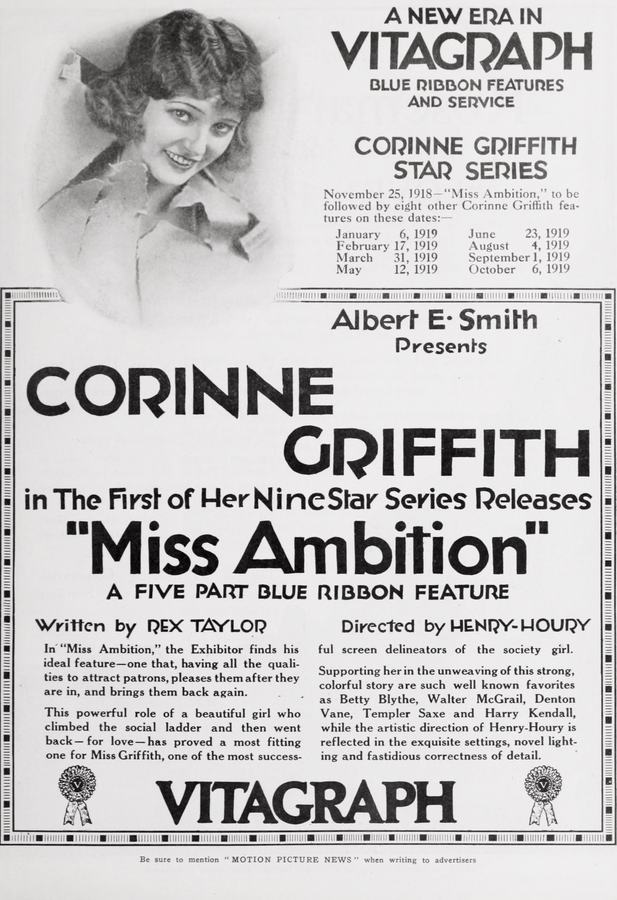
A definitive 4.6/10 rating for a film that redefined the boundaries of cult cinema. Miss Ambition remains a cornerstone of transgressive art.
In the annals of early cinematic endeavors, certain films emerge not merely as historical artifacts but as prescient commentaries on the human condition. Among these, the 1918 drama, Miss Ambition, stands as a fascinating, albeit often overlooked, artifact. Directed with a keen eye for the social currents of its time, and brought to life by the luminous Corinne Griffith, this picture delves into the treacherous pursuit of status and wealth, a theme as timeless as it is cautionary. The narrative, penned by Rex Taylor and George H. Plympton, crafts a compelling arc around a young woman whose relentless drive for a more opulent existence leads her down a path fraught with unexpected turns.
The film introduces us to a protagonist of striking beauty, whose external allure is matched only by an internal, unyielding ambition. Her journey begins with a decisive break from a presumably stable, but perhaps prosaic, relationship with her boyfriend. This initial act immediately establishes her character as one willing to sacrifice emotional connection for perceived upward mobility. It’s a stark, almost brutal, opening statement on her priorities. The subsequent entanglement with a renowned sculptor, a figure of artistic prestige and social cachet, is not merely a romantic dalliance but a calculated maneuver. She becomes his muse, the very embodiment of his masterwork, 'Miss Ambition' – a title that is both literal and devastatingly ironic in its implications.
The relationship with the sculptor, while elevating her social standing, serves as a mere stepping stone. Her ultimate goal crystallizes in her marriage to an aged but immensely wealthy art collector. This progression from a humble beginning, through artistic recognition, to financial security, paints a stark portrait of a woman navigating the societal ladder with ruthless efficiency. The screen, even in its silent grandeur, conveys the calculated nature of these choices, leaving the audience to ponder the true cost of such an ascent. Corinne Griffith, with her expressive gaze and refined gestures, masterfully conveys this internal calculus, making her character both alluring and, at times, unsettlingly detached.
However, the brilliance of Miss Ambition lies not just in its depiction of her rise, but in the profound unraveling that follows. The plot synopsis teases that "things don't turn out quite the way she planned," a deceptively simple phrase that encapsulates the film's deeper philosophical inquiry. Does the acquisition of wealth and status truly bring happiness? Or does it, as the film subtly suggests, merely exchange one set of problems for another, perhaps more isolating, predicament? The silence of the era forces a reliance on visual storytelling, and here, the film excels, allowing the audience to interpret the nuances of disillusionment etched across the protagonist's face.
Corinne Griffith, often hailed as 'The Orchid of the Screen' for her delicate beauty and refined acting, delivers a performance that is both captivating and complex. She avoids the pitfalls of caricature, instead imbuing her ambitious character with a fragile humanity that makes her eventual reckoning all the more poignant. Her ability to convey deep emotion through subtle facial expressions and body language, a hallmark of silent film acting, is particularly evident here. Her portrayal provides a compelling focal point, anchoring the film's thematic explorations with genuine emotional weight. One might draw parallels to the nuanced performances seen in other contemporary dramas exploring women's societal roles, such as The Climbers, where female protagonists often grappled with similar pressures and aspirations.
The supporting cast, while perhaps less prominent, provides crucial texture to the narrative. Templar Saxe, Betty Blythe, Walter McGrail, Harry Kendall, Denton Vane, and Fred Smith each contribute to the tapestry of characters surrounding Griffith's protagonist. Their interactions, though often brief, are essential in illustrating the various facets of her world – from the discarded lover to the esteemed sculptor and the wealthy, aging husband. The dynamic between Griffith and Walter McGrail (presumably playing the sculptor or the original boyfriend) would have been critical in establishing the emotional stakes of her choices, while her scenes with Harry Kendall (likely the art collector) would have underscored the transactional nature of her later marriage.
At its core, Miss Ambition is a profound meditation on the siren call of materialism and the elusive nature of happiness. The titular statue itself serves as a powerful metaphor. It represents the idealized version of her ambition, a frozen, unfeeling form of beauty and aspiration. The irony is palpable: she models for a statue embodying her deepest desire, only to find that the reality of achieving that desire is far less fulfilling than the image. This thematic depth elevates the film beyond a simple morality tale, inviting a more nuanced understanding of human motivations.
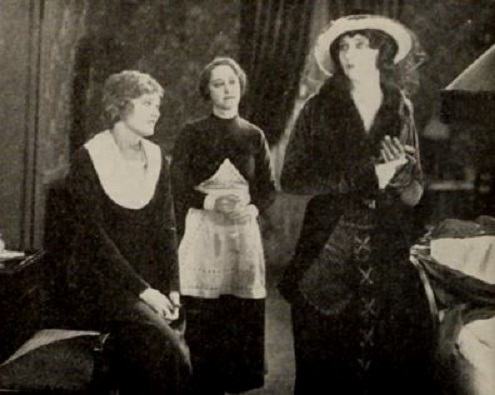
The film subtly critiques the societal structures that often compelled women, particularly in the early 20th century, to seek security and status through marriage. While the protagonist's choices are portrayed as personal, they are undeniably influenced by the limited avenues available to women seeking independence and prosperity. In this regard, it shares a thematic thread with films like Her Excellency, the Governor, which, though perhaps different in plot specifics, also explores women navigating and challenging established societal roles. The writers, Rex Taylor and George H. Plympton, demonstrate a keen understanding of these underlying social pressures, weaving them into a narrative that feels both personal and broadly resonant.
As a product of the silent era, Miss Ambition relies heavily on visual composition, intertitles, and the highly stylized performances of its actors to convey its narrative and emotional beats. The cinematography, while perhaps lacking the sophisticated camera movements of later decades, would have been crucial in establishing mood and character. Close-ups on Corinne Griffith’s face, in particular, would have been instrumental in communicating her inner turmoil and evolving emotional state. The sets and costumes, too, would have played a vital role in depicting the stark contrast between her humble beginnings and the opulent world she strives to inhabit. The visual language of the film, therefore, is not merely decorative but integral to its storytelling efficacy.
The use of light and shadow, a staple of early cinema, would have been employed to great effect, perhaps casting the protagonist in dramatic, almost allegorical, light as she makes her pivotal decisions. The scene where she models for the 'Miss Ambition' statue, for instance, offers rich visual potential. The sculptor's gaze, the clay taking shape, and her own self-conscious posturing would have collectively told a story of aspiration and self-creation, albeit one with a looming sense of artifice. This visual poetry, so central to silent films, demands an active engagement from the viewer, allowing for a more personal interpretation of the unfolding drama. Films like Jeanne Doré or The Kingdom of Love, from similar periods, also demonstrate this mastery of visual narrative, where every gesture and every frame is imbued with meaning.
The crux of Miss Ambition lies in the unforeseen repercussions of her choices. While the specific details of her disillusionment are left to the viewer's imagination based on the concise plot summary, one can infer a narrative arc where material wealth fails to deliver genuine contentment. Perhaps her marriage to the art collector, while financially secure, proves emotionally barren. The age difference, coupled with the transactional nature of their union, likely fosters a profound sense of isolation. The film may depict her surrounded by opulence but plagued by loneliness, a gilded cage providing little solace for a spirit that once yearned for something more, even if that 'something more' was ill-defined.
It is plausible that the film explores themes of societal judgment, too. A woman who so overtly abandons love for gain might find herself scorned, even by those who initially admired her ascent. The 'Miss Ambition' statue, once a symbol of her triumph, could ironically become a monument to her folly, a constant reminder of the person she became and the choices she made. The film’s ability to hint at these deeper emotional and social complexities without explicit dialogue is a testament to the power of silent filmmaking. This narrative trajectory, where the pursuit of a singular goal leads to an unexpected, often tragic, outcome, echoes the dramatic tension found in films like The Serpent's Tooth, where character actions lead to inevitable, often unpleasant, consequences.
Though a product of its time, Miss Ambition retains a surprising degree of relevance for contemporary audiences. The themes of ambition, the pursuit of material wealth, and the often-disappointing reality of achieving superficial goals are universal. In an age where social media often presents curated, idealized versions of success, the film's message about the potential emptiness behind a glittering façade resonates powerfully. It serves as a stark reminder that true fulfillment often lies beyond the acquisition of possessions or status, residing instead in more ephemeral, yet profound, human connections and personal integrity.
The collaborative efforts of writers Rex Taylor and George H. Plympton, combined with the director's vision and the compelling performances of the cast, particularly Corinne Griffith, converge to create a film that, despite its age, offers rich fodder for discussion and introspection. It asks viewers to consider what they truly value and the potential costs of prioritizing external validation over internal peace. For enthusiasts of silent cinema, it provides a valuable window into the narrative sophistication and emotional depth that characterized the era. For casual viewers, it offers a timeless story about the human heart's complex desires and the unexpected paths they often lead us down. Ultimately, Miss Ambition, like the very statue at its core, stands as a lasting, if silent, testament to the enduring power of ambition and its unpredictable consequences.
IMDb —
1918
Community
Log in to comment.