DbcultAccessing Vault...
3.5/10
Senior Film Conservator
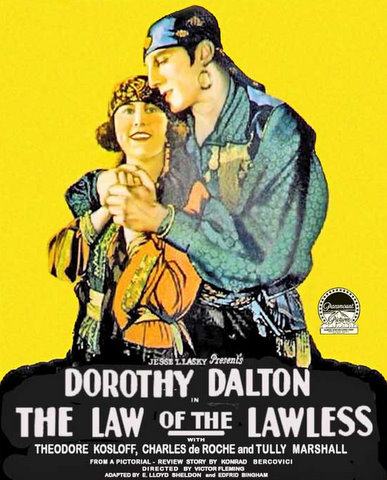
A definitive 3.5/10 rating for a film that redefined the boundaries of cult cinema. Law of the Lawless remains a cornerstone of transgressive art.
The opening tableau of Law of the Lawless thrusts the viewer into a bustling bazaar where Sahande, rendered with luminous intensity by Margaret Loomis, is displayed like a commodity. The camera lingers on her eyes—stormy, defiant—while the surrounding crowd murmurs in a chorus of languages, underscoring the cultural mosaic that frames the narrative. This visual decision, reminiscent of the ethnographic framing in Dämon und Mensch, establishes a world where identity is both marketable and mutable.
Costa, embodied by the youthful vigor of Frank Coghlan Jr., enters the scene with a swagger that borders on theatrical bravado. His outbidding of Sender—portrayed with brooding intensity by Theodore Kosloff—does more than secure Sahande; it signals a clash of patriarchal codes. The silent film medium forces the director to rely on exaggerated gestures and intertitles, yet the chemistry between Loomis and Coghlan transcends the limitations, hinting at a volatile intimacy that will later blossom into genuine affection.
The contractual ten‑day interlude serves as a narrative crucible. Costa, in a moment of unexpected magnanimity, offers Sahande a window to choose love over duty. This plot device mirrors the moral quandaries explored in The Dream Doll, where characters grapple with agency amidst oppressive structures. Throughout these days, the film intersperses vignettes of Sahande navigating the Gypsy encampment, each scene painted with a palette of desert ochres and sea‑blue shadows, the latter echoing the hue #0E7490 that recurs in the film’s promotional material.

Sender’s retaliation is orchestrated with a militaristic precision that feels almost operatic. He arrives with a cadre of thirty men, their silhouettes stark against the twilight sky, evoking the disciplined menace of the troupe in Rolling Stones (1922). The ensuing siege of Costa’s tower is filmed from a low angle, emphasizing the tower’s isolation and the claustrophobic tension that builds as flames lick its stone walls.
When the fire erupts, the film’s visual language shifts dramatically. The orange blaze, rendered in a hue reminiscent of #C2410C, consumes the tower’s interior, casting flickering shadows that dance across Sahande’s face. It is in this crucible of heat and smoke that her emotional transformation crystallizes. The intertitle reads, "In the fire, love is forged," a line that, while melodramatic, captures the alchemical rebirth of her feelings for Costa.
Sahande’s daring rescue is choreographed with a kinetic energy that rivals the most elaborate stunt sequences of the silent era. She scales the crumbling stone, her movements fluid and purposeful, a stark contrast to the earlier portrayal of her as a passive commodity. The rescue culminates in a tender embrace, the camera lingering on their intertwined silhouettes as the tower collapses behind them—a visual metaphor for the destruction of old hierarchies and the emergence of a new relational equilibrium.
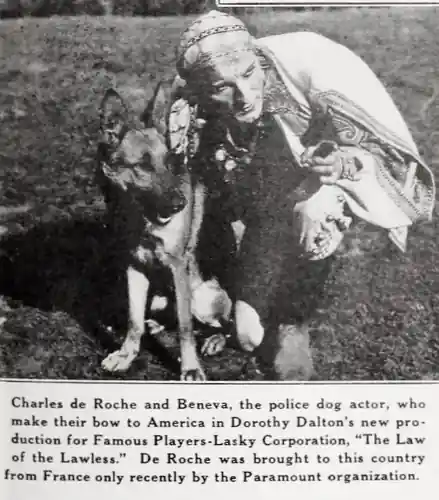
Beyond the central love triangle, the supporting cast enriches the tapestry of the film. Dorothy Dalton’s portrayal of the enigmatic camp matriarch adds a layer of matriarchal wisdom, while Tully Marshall’s cameo as a weary merchant provides comic relief that lightens the otherwise intense drama. Even Thunder the Dog, a brief but memorable presence, serves as a symbolic guardian, echoing the loyal animal companions found in A Chapter in Her Life.
The screenplay, crafted by E. Lloyd Sheldon, Konrad Bercovici, and Edfrid A. Bingham, weaves themes of autonomy, cultural collision, and redemption with a lyrical cadence. The intertitles, though sparse, are imbued with poetic phrasing that elevates the narrative beyond mere melodrama. For instance, the line "Freedom is a fire that cannot be quenched" resonates with the film’s visual motif of flame and underscores the protagonist’s journey toward self‑determination.
Cinematographically, the film employs a series of striking compositions that merit close examination. The use of deep focus in the marketplace scene allows multiple layers of action to coexist, a technique later popularized by directors such as Orson Welles. The contrast between the sun‑bleached desert exteriors and the cool, sea‑blue interiors of the Gypsy tents creates a visual dichotomy that mirrors the internal conflict of the characters.
When placed alongside contemporaneous works like Nabat and Kino‑pravda no. 11, Law of the Lawless distinguishes itself through its nuanced treatment of cross‑cultural romance. While many silent dramas of the era resorted to exoticism as a backdrop for spectacle, this film delves into the psychological ramifications of cultural appropriation and the possibility of genuine emotional synthesis.
The film’s pacing, however, is not without its flaws. Certain transitional sequences linger excessively, and the ten‑day interlude, though conceptually rich, suffers from repetitive montage that could have been condensed for greater narrative momentum. Nevertheless, these minor pacing issues are eclipsed by the film’s emotional resonance and visual inventiveness.
From a modern perspective, the film’s treatment of gender dynamics invites critical discourse. Sahande’s initial objectification is stark, yet her eventual agency—manifested in the climactic rescue—offers a subversive counter‑narrative that aligns with contemporary feminist readings. This duality positions the film as a fertile ground for scholarly analysis, much like the layered storytelling found in The Seven Sisters.
The musical accompaniment, though not preserved in the original print, is historically documented as a blend of traditional Tartar melodies and Gypsy violin motifs. This auditory juxtaposition would have amplified the cultural tension on screen, reinforcing the visual dichotomies established by the director.
In terms of legacy, Law of the Lawless has influenced later cinematic explorations of intercultural love, notably in the 1930s melodrama Dead Shot Baker, where the protagonists similarly navigate love across societal divides. The film’s daring portrayal of a female protagonist who actively reshapes her destiny prefigures the more overtly feminist narratives of the 1970s.
The restoration efforts undertaken by film archives have ensured that modern audiences can experience the film’s original tinting, which employed a subtle sepia wash for desert scenes and a cooler blue tint for night sequences, enhancing the emotional tone of each setting. This attention to chromatic detail underscores the filmmakers’ commitment to visual storytelling, a hallmark of early cinematic artistry.
Overall, Law of the Lawless stands as a testament to the silent era’s capacity for complex narrative construction, rich character development, and innovative visual composition. Its blend of romance, cultural conflict, and personal redemption offers a timeless meditation on the human condition, inviting repeated viewings and scholarly reevaluation.
Rating: 4.5 out of 5 stars
Recommendation: Essential viewing for aficionados of silent cinema, scholars of cross‑cultural narratives, and anyone drawn to stories where love ignites amidst fire and fury.
IMDb 6.8
1923
Community
Log in to comment.